Skip to content
Foundations rebuilt, and the first new thing is here: search across every topic, entity, and event.Try search
European Oil Markets
11JUN

OPEC adds 188kbd into 37-year output low

3 min read
08:58UTC

OPEC+ voted on Sunday 7 June to pump 188kbd more crude in July, the third hike running, into a month its 11 members produced the least oil in 37 years.

EconomicDeveloping
Key takeaway

OPEC+ is defending its price-setting credibility, not balancing a market it can no longer supply.

OPEC+ ratified a 188kbd July output increase at the 41st ministerial video conference on Sunday 7 June, the third consecutive hike, with August and September already signalled. OPEC+ is the wider producer group led by Saudi Arabia and Russia that sets monthly quotas. The decision lands against the cartel's own collapse: its 11 remaining members produced 16.33mbd (million barrels per day) in May, down 1.22mbd on the month, the lowest in 37 years. The hike restores roughly 15% of a single month's lost output, a ratio near 1:6.5.

The member detail shows where the barrels went. Iran fell 710kbd to 2.34mbd, Kuwait dropped 310kbd to 490kbd, under a fifth of pre-war volume, and Saudi Arabia eased 240kbd to 6.57mbd. The UAE, outside OPEC's quota framework since 1 May, added 300kbd to 2.44mbd and now sits beyond the agreement entirely.

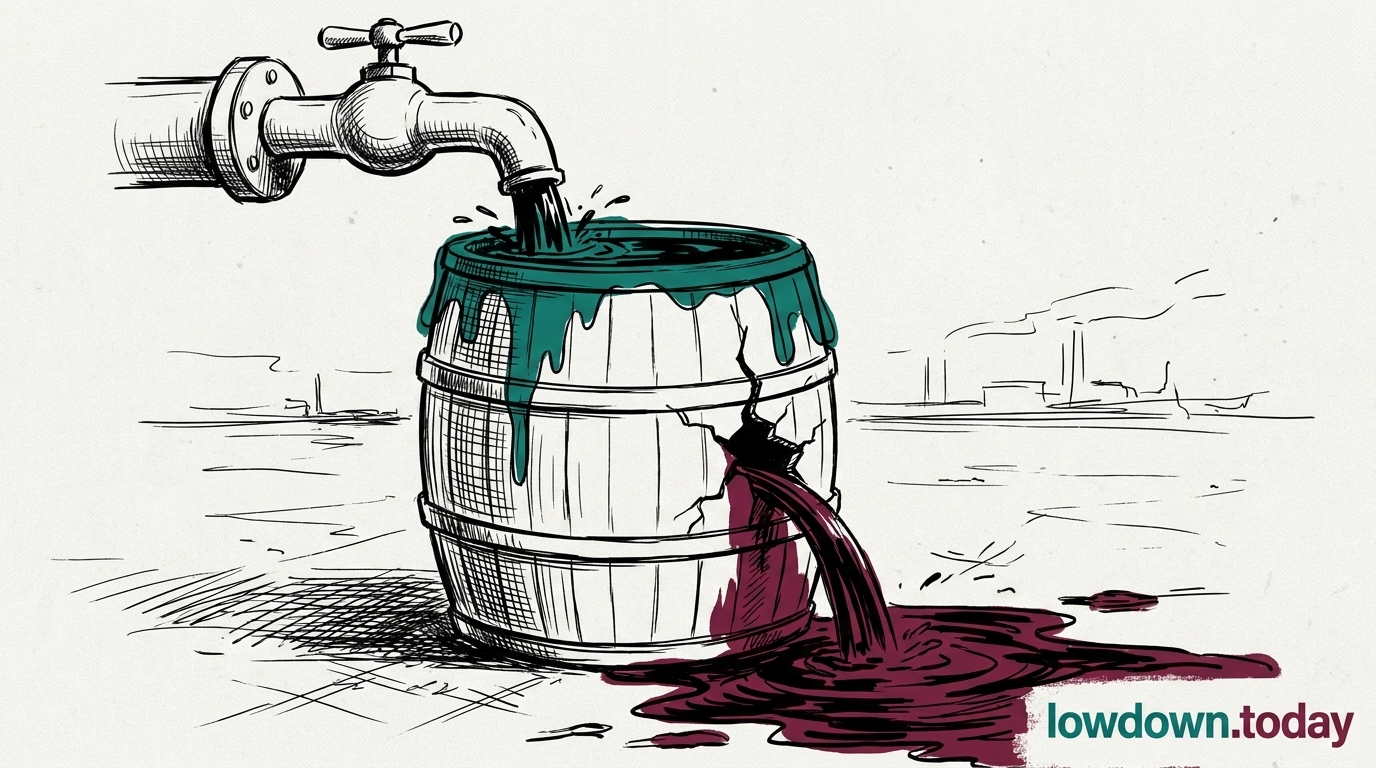
The market had expected this vote to pass despite collapsing group output ; the new fact is the freshly quantified gap between paper and physical. OPEC's spare capacity enforced cohesion in 2020, when Saudi Arabia could switch idle barrels on. In 2026 the binding constraint runs the other way: a member base physically unable to lift, so the quota describes a fiction the schedule cannot revise fast enough to correct.

For a spreads desk the read is that the barrels OPEC voted to add do not exist, so the hike moves the flat price as a signal but commits no supply behind it. Set against the China demand hole that compressed the Brent-Dubai exchange-for-swaps last week , the market is short of physical crude at both ends, with quota arithmetic that cannot close the gap.


Deep Analysis

In plain English

OPEC+ is a group of major oil-producing countries that coordinate how much oil they pump. Pumping more oil generally pushes prices down; pumping less keeps them up. On 7 June, these countries voted to add 188,000 barrels a day of oil to July output, the third month running they have approved such an increase. The catch is that they are already producing far less oil than normal because the Strait of Hormuz, the narrow sea channel most Gulf oil must pass through, is currently being blockaded. So the increase largely plugs a gap rather than flooding the market with new supply.

Deep Analysis
Root Causes

Saudi Arabia's willingness to vote hikes against its own fiscal breakeven reflects two structural pressures. The UAE's May 2026 OPEC exit removed Riyadh's biggest coalition constraint. With the UAE operating outside the quota framework and adding 300kbd independently, every barrel the Saudis withhold merely cedes market share to a neighbour who has already opted out.

The OPEC+ compliance architecture has broken down in parallel: Russia is producing 200-500kbd above quota, Kazakhstan is 322kbd long on Tengiz expansion, and Iraq has been chronically non-compliant for years. Voting hikes while compliance deteriorates allows Riyadh to maintain the appearance of quota leadership without actually constraining competitors who are already ignoring their ceilings.

What could happen next?
  • Consequence

    Each successive 188kbd hike locks in a larger nominal paper supply overhang that will deflate spot prices sharply once Hormuz delivery constraints lift.

    Medium term · Assessed
  • Risk

    Saudi Arabia running below its fiscal breakeven of $108-111 for multiple quarters risks Vision 2030 budget pressure and potential policy reversal to deeper cuts.

    Medium term · Assessed
  • Precedent

    The UAE's out-of-quota expansion while fellow OPEC+ members vote hikes they cannot deliver normalises a two-tier cartel structure where exit is the credible alternative to quota compliance.

    Long term · Reported
First Reported In

Update #6 · OPEC's quota is fiction at a 37-year low

Hellenic Shipping News· 8 Jun 2026
Read original
Causes and effects
This Event
OPEC adds 188kbd into 37-year output low
The cartel is now adding paper barrels no member can physically lift, which turns the quota into a price signal rather than a supply commitment and changes how spreads desks read every flat-price spike.
Different Perspectives
European Commission / EU energy regulators
The EU 21st sanctions package, announced 26 May, targets shadow-fleet tankers and banks but has not accelerated a resolution of the ISAB ownership question. A 27 June GL 131F lapse without OFAC issuing a transaction licence creates a supply-security problem for Med products that Brussels cannot solve unilaterally.
China state refiners
Chinese seaborne crude imports remain at a decade-low 6.78mbd as of May, with negative refining margins keeping state refiners on domestic stocks. Iranian Light moved to a discount to Brent, confirming the EFS compression reflects a demand hole rather than a reopened supply route.
Saudi Arabia / OPEC+ chair
Saudi Arabia ratified the third consecutive 188kbd July hike on 7 June at a Brent print over $10 below its $108-111 fiscal breakeven. Actual output runs near 70% of pre-conflict levels, so the quota increase is a signalling move rather than a physical-supply addition.
CFTC-tracked Brent managed-money desks
Managed-money Brent net position printed -57,280 contracts for the week to 2 June, a 109,000-contract swing into short from the prior +52,000 long; the book is crowded short into $8.43/bbl backwardation with a flat price that has already round-tripped to $92.69.
Med Aframax freight market
TD19 Med Aframax held near the WS228 level logged on 6 June with no new Ceyhan cargo confirmation arriving to soften it. The freight bid is pricing continued Med supply tightness, not a resolved backstop.
Italy / ISAB / Golden Power review
Energy minister signalled conditional Golden Power approval for Ludoil's ISAB acquisition on 4 June, clearing Rome's foreign-investment gate. An OFAC transaction licence has not followed, leaving the 320kbd Priolo Gargallo refinery inside the sanctions perimeter as 27 June approaches.