Skip to content
You can now search across every topic, entity and event.What's new
European Oil Markets
4JUN

Three P&I clubs pull Gulf war risk cover

4 min read
10:20UTC

Three major P&I clubs cancelled war risk coverage for the Persian Gulf. Even if the fighting stops tomorrow, commercial ships cannot legally transit.

EconomicDeveloping
Key takeaway

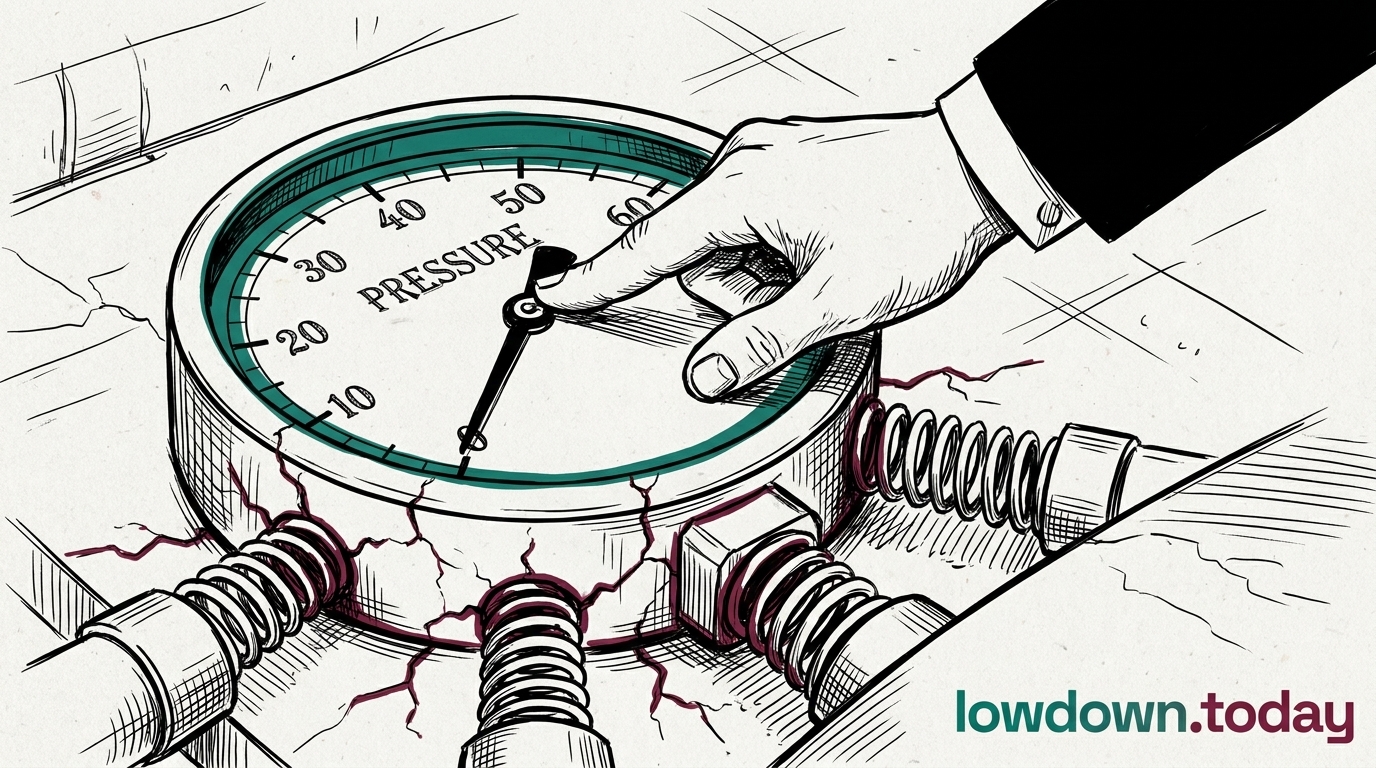
The insurance withdrawal creates an autonomous financial blockade that operates on its own institutional timeline and will outlast any ceasefire by weeks, accumulating economic damage past the political end-point of the conflict.

American Steamship Owners Mutual P&I, London P&I Club, and Skuld (Assuranceforeningen) — three of the world's major Protection & Indemnity clubs — issued cancellation notices for War risk coverage across the Persian Gulf and Gulf of Oman, effective approximately 72 hours from 2 March.

P&I insurance underwrites third-party liability for commercial shipping: crew injury, pollution, cargo damage. Without active P&I coverage, a vessel cannot be financed by any major maritime bank or commercially operated by any major shipping line. When CMA CGM, Maersk, Nippon Yusen, Mitsui, and Kawasaki Kisen halted Hormuz transits on 1 March , those were operational decisions — reversible within hours if conditions changed. The P&I cancellations are structural. Reinstatement requires a full syndicated risk reassessment across multiple underwriting syndicates. Each club must individually evaluate the residual threat environment, consult reinsurers, and recalculate exposure.

The last comparable insurance withdrawal from the Persian Gulf occurred during the Iran-Iraq Tanker War of 1984–1988, when Iraqi and Iranian forces attacked more than 400 commercial vessels. The collapse of War risk coverage drove the US Navy's Operation Earnest Will in 1987 — Kuwait re-flagged eleven tankers under the American flag because they could no longer obtain commercial insurance at any price. Coverage was not fully restored until months after the August 1988 ceasefire. The current conflict has produced more severe disruption in four days than the Tanker War generated across four years, because the Tanker War left the strait itself passable; this one has not.

The cancellation creates a second closure of the strait of Hormuz — financial rather than military — that diplomats cannot negotiate away. Iran's Expediency Council secretary Mohsen Rezai declared the strait 'officially open' on 28 February while simultaneously designating US warships as 'legitimate targets.' The declaration satisfied no insurer and no shipowner. A ceasefire, when it comes, stops the fighting. It does not reinstate P&I coverage. The economic damage to global energy supply chains will persist on the insurance market's timeline, not the battlefield's.


Deep Analysis

In plain English

Ships need insurance to dock at ports, secure bank financing for their voyages, and get cargo owners to load their goods. Without it, the entire commercial shipping system seizes up legally and financially. Three of the world's biggest ship insurance clubs have pulled coverage from the Persian Gulf. Even if a peace deal were signed today, ships could not simply sail back through the Strait of Hormuz — each club would have to conduct a full risk review and vote to reinstate, a process that takes weeks. The military blockade and the financial blockade are running on different clocks, and the financial one cannot be ended by a ceasefire.

Deep Analysis
Synthesis

The insurance withdrawal creates a structural asymmetry in conflict resolution: hostilities can end by political decision at any moment, but the economic blockade runs on institutional infrastructure — JWC area listings, syndicate risk committees, International Group of P&I Clubs consensus processes — that does not respond to government timelines. The longer the JWC listing persists, the more shipping companies will re-route infrastructure: new port contracts, alternative supply relationships, long-term logistics arrangements. Some of this reorientation will not revert when coverage resumes, meaning the conflict imposes persistent structural changes on global shipping patterns beyond its military duration.

Root Causes

P&I clubs operate on annual policy years with war risk exclusions triggered by Joint War Committee Listed Areas designations. The Persian Gulf was likely already on the JWC Listed Areas following prior tensions; the formal cancellation notices represent clubs activating pre-existing contractual rights rather than making a novel underwriting judgement. Reinstatement requires JWC delisting, which requires consensus across Lloyd's market underwriters — a body that has historically lagged military developments by two to eight weeks. This structural lag is not a market failure; it is a designed feature of prudential risk management.

What could happen next?
2 consequence2 risk1 meaning
  • Consequence

    Alternative Cape of Good Hope routing adds 10–14 days voyage time and approximately $1–1.5 million additional bunker cost per VLCC round trip, reducing effective global tanker capacity regardless of Hormuz traffic levels.

    Immediate · Assessed
  • Risk

    The weeks-long insurance reinstatement lag means economic disruption accumulates past any ceasefire date, creating a political economy of continued pain that may not align with military or diplomatic objectives.

    Short term · Assessed
  • Meaning

    The withdrawal demonstrates that financial market infrastructure — not only military action — can function as a blockade mechanism, establishing a precedent with implications for how future conflicts in strategically critical waterways are prosecuted.

    Long term · Suggested
  • Risk

    Shipping companies re-routing through alternative corridors are establishing new port contracts and logistics chains; a portion of this infrastructure reorientation will persist after Hormuz reopens, permanently altering Gulf export dependency.

    Medium term · Suggested
  • Consequence

    LNG and crude oil importers in South Korea, Japan, and India — the primary Hormuz-dependent economies — face acute near-term supply disruption irrespective of military outcome or ceasefire timing.

    Immediate · Assessed
First Reported In

Update #14 · Natanz unverified; Hormuz sealed

Insurance Business· 3 Mar 2026
Read original
Different Perspectives
Kuwait
Kuwait
Kuwait absorbed the Iranian strike that knocked generating units offline at a combined power-and-desalination plant on 17 July, the event that finally moved freight and insurance in lockstep with Brent. The strike hit essential civilian infrastructure, not a trading desk's benchmark.
Asian buyers (Singapore)
Singapore's middle distillates rose 12% month-to-date to 8.91m barrels and fuel oil passed 19m barrels on a 105% net-import surge, buyers retaining barrels as the East-West arbitrage window narrows. Cargoes are being stockpiled ahead of further Hormuz-driven freight repricing rather than released west.
Austria (Coreper holdout)
Vienna is blocking the same package over roughly EUR 2bn of frozen Russian assets earmarked for Raiffeisen, a domestic banking dispute with no connection to the oil cap racing toward its 23 July expiry. The linkage forces the whole package to wait on a bilateral compensation fight.
Greece (Coreper holdout)
Athens is holding the 21st sanctions package at the 22 July Coreper vote over Russian LNG re-export rights, a condition unrelated to the oil price cap itself, leaving the $44.10 freeze one day from expiry without a deal. Greece's own tanker registry gives it a direct stake in how any shadow-fleet measures are drafted.
Marine underwriters (Gulf war-risk)
Hull war-risk cover for Hormuz transits widened to a 3-10% band on 17 July with 5% the emerging norm, up from a 3-4% baseline set in late June, the first repricing in six weeks to track a flat-price move rather than lag it. Cover resets on actuarial evidence of loss, not on diplomatic or price signals.
Money managers (CFTC-tracked)
The CFTC's week-to-14-July snapshot, released 17 July, showed WTI managed-money net long collapsing 69% to 19,783 contracts and a standalone 60,141-contract net short on Brent Last Day (NYMEX). Both readings predate the Kuwait strike and the 20 July escalation, so any covering since is not yet visible in public data.