Skip to content
You can now search across every topic, entity and event.What's new
European Oil Markets
29MAY

One Greek owner runs Hormuz blockade

4 min read
14:36UTC

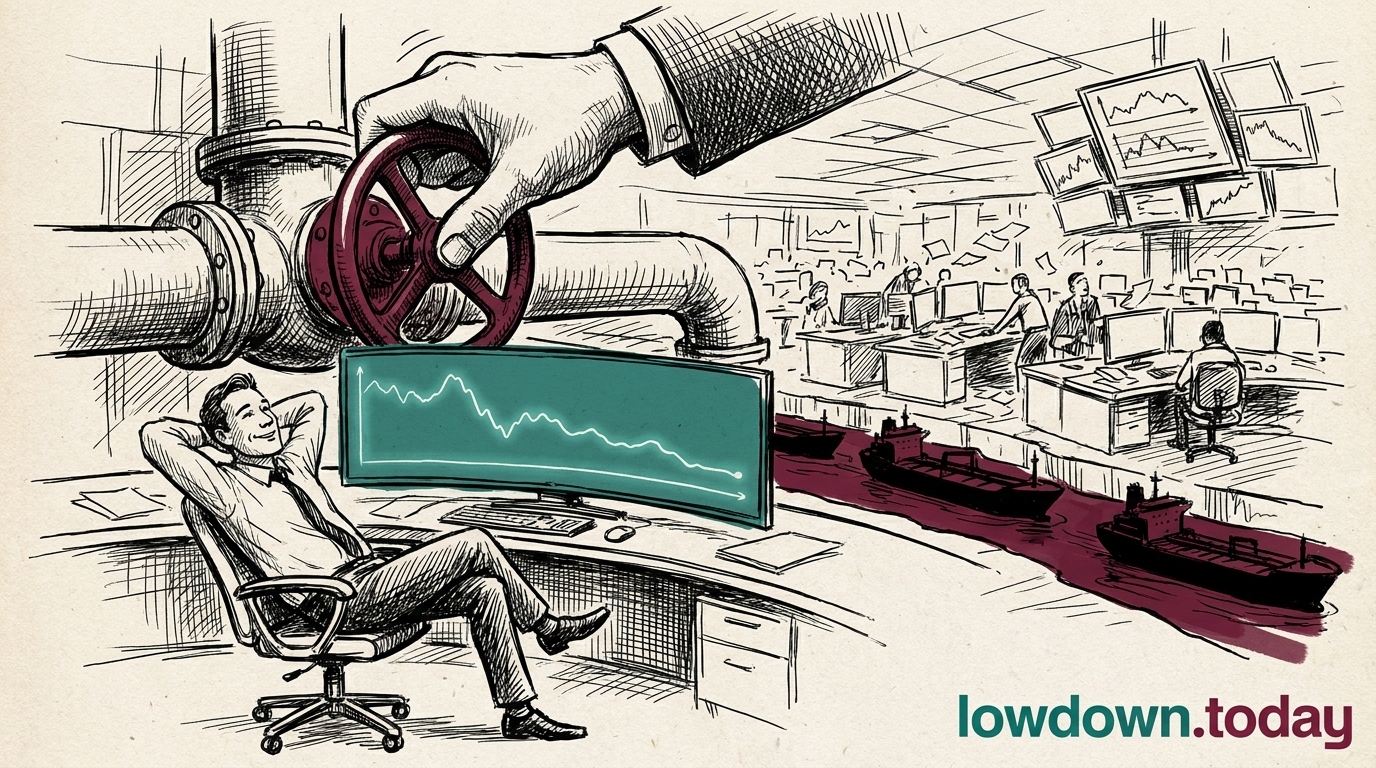
Five Dynacom tankers have now transited the world's most dangerous waterway at four times the normal charter rate, with armed guards and transponders dark. No other major shipping company has followed.

EconomicDeveloping
Key takeaway

One Greek billionaire is providing more Hormuz transits than all major shipping lines combined.

The Smyrni, a tanker operated by Greek shipowner George Prokopiou's Dynacom, transited the strait of Hormuz on Friday with its automatic identification system transponder switched off and armed guards on deck 1. It is the company's fifth vessel to pass through the strait since the IRGC declared on 10 March that "not a litre of oil" would transit . No other major shipping company has followed.

Dynacom is chartering vessels for the run at $440,000 per day — roughly four times pre-war rates. The premium reflects the hazard. The International Maritime Organisation's cumulative tally since 28 February counts 19 vessels attacked and at least 7 seafarers killed . Six commercial vessels were struck within a 14-hour window last week across 200 kilometres of water from Hormuz to Iraq's Basra terminal . US Navy officials have described the strait as an Iranian "kill box" with pre-registered fire zones . Prokopiou is sailing into that.

The economics explain why. At $440,000 per day, the charter sounds extreme — until measured against the cargo. Brent closed Friday at $103.14 . A single VLCC carrying 2 million barrels is worth over $200 million at that price. The daily charter is a fraction of a percent of the cargo value. Greek shipowners have run contested waterways before: during the Iran-Iraq tanker war of 1984–88, Greek-flagged vessels continued operating in the Persian Gulf when others withdrew, and owners who stayed earned outsized returns. Prokopiou is following that playbook — pricing political risk as a commercial opportunity rather than a deterrent.

But Dynacom's transits are an anomaly, not a reopening. 11.7 million barrels of Iranian crude have flowed through Hormuz since 28 February, all bound for China, tracked by TankerTrackers.com co-founder Samir Madani via satellite . Chinese-operated vessels broadcast their nationality and receive de facto IRGC protection . The blockade has a two-tier structure: open for Chinese-linked commerce, functionally closed for everyone else. Dynacom's Greek-flagged tankers occupy a third category — vessels betting that the IRGC will not risk an escalation with a NATO-member state's commercial fleet while its primary adversary remains the United States Navy. That bet has held five times. Daily transits remain in single digits against a historical average of 138 . the strait is not open. One company is running the odds.

Deep Analysis

In plain English

Ships are normally required by international maritime law to broadcast their position via AIS — the maritime equivalent of a GPS tracker — so other vessels and coastguards can locate them in emergencies. Dynacom is switching this off to avoid being targeted, accepting a significant legal and safety risk in exchange for extraordinary charter rates. Armed guards on deck can deter pirates but offer little protection against Iranian missiles or drones. The fact that no other major shipping company has followed signals how most of the industry is currently assessing that risk: too high to accept.

Deep Analysis
Synthesis

Dynacom's AIS-off, armed-guard transits are a private-sector improvisation filling the operational void that Trump's unformed Hormuz coalition (Event 8) has left. Together the two events illustrate the distance between announced policy and market reality: the strait is not protected by an allied coalition; it is being tested by a single Greek shipowner acting outside standard maritime law.

Root Causes

When war-risk insurance becomes unaffordable or unavailable, only self-insuring operators with sufficient private capital can absorb voyage risk. George Prokopiou's fleet scale enables self-insurance across individual voyages — a market-failure dynamic, not individual risk appetite. The gap left by insurance-market withdrawal can only be filled by operators who do not need the market at all.

Escalation

An IRGC attack on a Greek-flagged vessel would raise NATO Article 5 applicability questions in a Gulf conflict for the first time. Greece's NATO membership was not a legally relevant factor during the 1987 Tanker War; the current conflict's higher political temperature makes that legal question less predictable to avoid.

What could happen next?
  • Risk

    An IRGC attack on a Dynacom vessel would test NATO Article 5 applicability in a Gulf conflict for the first time, with unpredictable escalatory consequences.

    Immediate · Suggested
  • Consequence

    Major shipping lines' continued refusal to transit will accelerate oil supply tightening in European and Asian markets dependent on Gulf crude.

    Short term · Assessed
  • Precedent

    AIS-off transit with armed guards may become the industry standard protocol for conflict-zone passages, normalising surveillance evasion in commercial shipping law.

    Long term · Suggested
  • Meaning

    Dynacom's singular role illustrates the complete absence of any functioning state-led convoy or escort mechanism in the Hormuz strait at this time.

    Immediate · Assessed
First Reported In

Update #36 · Israel plans full Litani seizure

Bloomberg· 15 Mar 2026
Read original
Causes and effects
This Event
One Greek owner runs Hormuz blockade
Dynacom's solo transits reveal a selective blockade: the strait is closed to most commercial traffic but open to those willing to pay war premiums and accept the risk. The absence of followers confirms the market does not regard the passage as safe — one company's risk appetite is not freedom of navigation.
Different Perspectives
Greek shipping registries
Flag states dominating the tanker fleet await the EU's 15 July cap-freeze vote. A formula unlock toward $75 would loosen the ceiling squeezing insurance and crewing costs on their registered hulls.
US money managers
US money managers
NYMEX WTI managed-money net long fell 23% to +64,041 in the week to 7 July, trimming length into the rally on doubt the Hormuz premium survives without freight or war-risk confirmation.
European refiners (ARA)
ARA refiners are capturing an $80/bbl US diesel crack as Russian gasoil loadings collapsed to 234kbd before Novak's 31 July export ban even bites, widening the arbitrage straight into refining margins.
OPEC+
OPEC+
The seven-member group confirmed a fourth consecutive 188kbd August hike on 5 July, defending market share even though Saudi Arabia's $108-111/bbl breakeven means every added barrel costs Riyadh revenue it cannot recoup.
Indian refiners
Indian refiners
Refiners kept lifting discounted Urals as the India/Baltic split widened past $9-10 a barrel on 7 July. A wider Urals-Brent gap means cheaper feedstock locked in against Baltic buyers.
Russia
Russia
Urals traded $48.95-55.12 on 12-13 July, below Moscow's $59 budget floor even as Brent gained $6. Oil and gas fund roughly 30% of federal revenue, and Novak's diesel export ban is rationing a shrinking export base.
