Skip to content
You can now search across every topic, entity and event.What's new
European Oil Markets
29MAY

CENTCOM blockade hits 44 vessels, 69m barrels

3 min read
14:36UTC

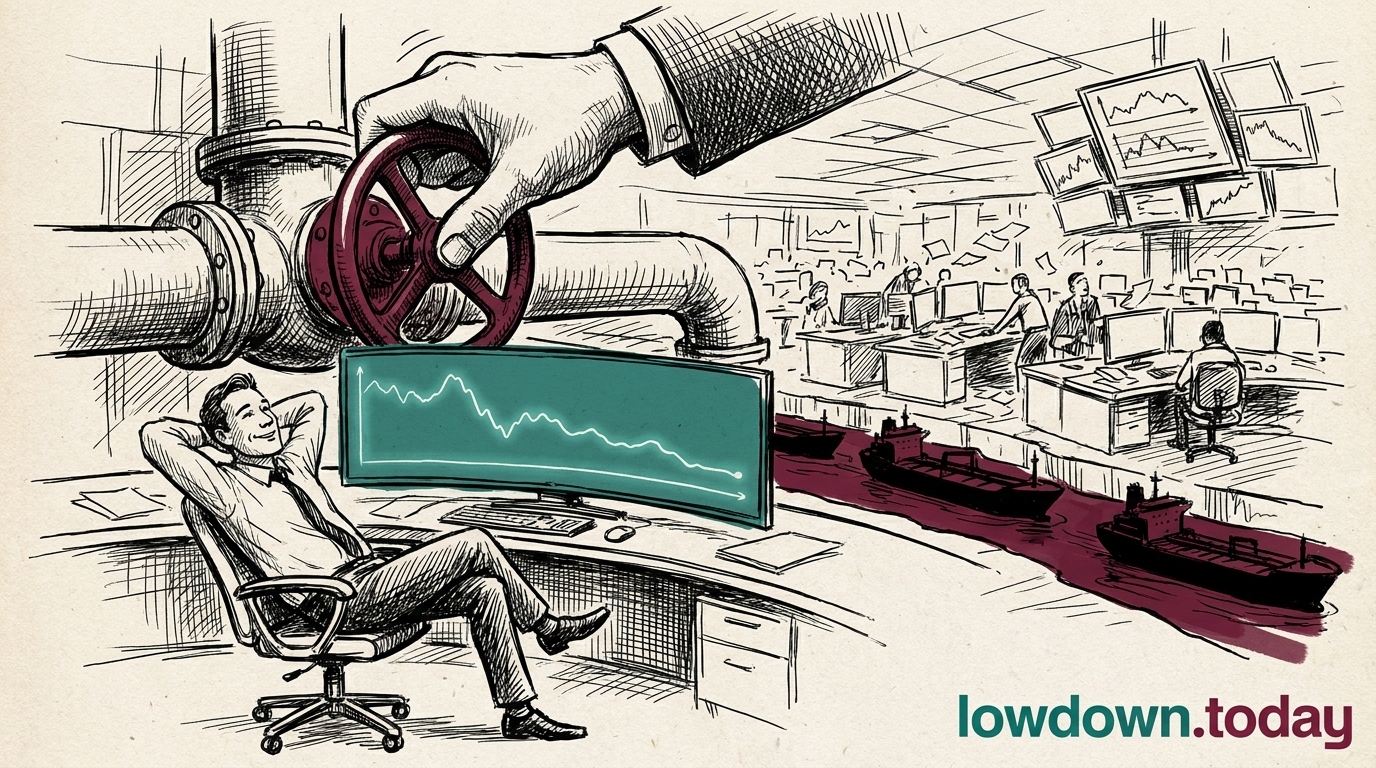
Adm Brad Cooper told reporters on 30 April 2026 that CENTCOM has redirected 44 commercial vessels, 41 of them tankers, carrying 69 million barrels of crude under the US blockade since 28 February.

EconomicDeveloping
Key takeaway

CENTCOM has redirected 44 vessels and 69 million barrels of crude, six more than Day 60.

Admiral Brad Cooper, commander of US CENTCOM (Central Command), stated on 30 April 2026 that 44 commercial vessels, 41 of them tankers, carrying 69 million barrels of crude have been turned around at sea under the US blockade since the start of the conflict 1. CENTCOM is the US joint command responsible for Middle East operations and the operational owner of the Hormuz blockade; Cooper's tally is the first public economic accounting of the redirections.

Cooper had logged 38 vessels on Day 60 , and six further redirections have entered the count since. The pace is unchanged from the prior week despite the simultaneous WPR political theatre on Capitol Hill. Six of the additional vessels carried cargo Cooper described as bound for Iran; the rest carried Iranian crude outbound. The 69 million barrels translates to roughly one week of global Brent demand removed from the spot market by US naval action alone.

Cooper's figure landed on the same afternoon the State Department launched the Maritime Freedom Construct to coordinate the rerouting that CENTCOM has been performing for 64 days without it. Cooper's tally is the instrument that the diplomatic hub announcement is layered over rather than the basis for a new arrangement.


Deep Analysis

In plain English

The US Navy has been physically stopping oil tankers at the entrance to the Strait of Hormuz and forcing them to turn back since the Iran conflict began on 28 February 2026. On 30 April, the US military's top commander for the Middle East, Admiral Brad Cooper, gave the first public count of how many ships have been stopped: 44 vessels, of which 41 were tankers carrying oil. Those 41 tankers were collectively carrying 69 million barrels of crude oil. At current prices, that is roughly $8.5 billion worth of oil that never reached its buyers. For context: the world uses about 100 million barrels of oil per day in normal times. The 69 million barrels stopped over 64 days is less than one day's global supply. The bigger economic effect comes from ships choosing to go the long way around Africa rather than risk being stopped, a detour that adds weeks to the journey and millions in fuel costs per voyage.

What could happen next?
  • Consequence

    The 69-million-barrel figure establishes a public baseline against which future blockade economics will be measured; any acceleration or deceleration will now be visible in Cooper's cumulative count updates.

  • Risk

    The 44-vessel tally, if maintained at 0.7 redirections per day, would reach approximately 100 vessels by Day 120, a milestone at which aggregate supply disruption could force Asian buyers to seek alternative long-term supply arrangements outside the Persian Gulf.

First Reported In

Update #85 · "Not at war": three claims, no treaty

ROGTEC Magazine· 1 May 2026
Read original
Different Perspectives
Greek shipping registries
Flag states dominating the tanker fleet await the EU's 15 July cap-freeze vote. A formula unlock toward $75 would loosen the ceiling squeezing insurance and crewing costs on their registered hulls.
US money managers
US money managers
NYMEX WTI managed-money net long fell 23% to +64,041 in the week to 7 July, trimming length into the rally on doubt the Hormuz premium survives without freight or war-risk confirmation.
European refiners (ARA)
ARA refiners are capturing an $80/bbl US diesel crack as Russian gasoil loadings collapsed to 234kbd before Novak's 31 July export ban even bites, widening the arbitrage straight into refining margins.
OPEC+
OPEC+
The seven-member group confirmed a fourth consecutive 188kbd August hike on 5 July, defending market share even though Saudi Arabia's $108-111/bbl breakeven means every added barrel costs Riyadh revenue it cannot recoup.
Indian refiners
Indian refiners
Refiners kept lifting discounted Urals as the India/Baltic split widened past $9-10 a barrel on 7 July. A wider Urals-Brent gap means cheaper feedstock locked in against Baltic buyers.
Russia
Russia
Urals traded $48.95-55.12 on 12-13 July, below Moscow's $59 budget floor even as Brent gained $6. Oil and gas fund roughly 30% of federal revenue, and Novak's diesel export ban is rationing a shrinking export base.