Skip to content
You can now search across every topic, entity and event.What's new
European Oil Markets
31JUL

Hellfire disables a cargo ship's engine

3 min read
09:33UTC

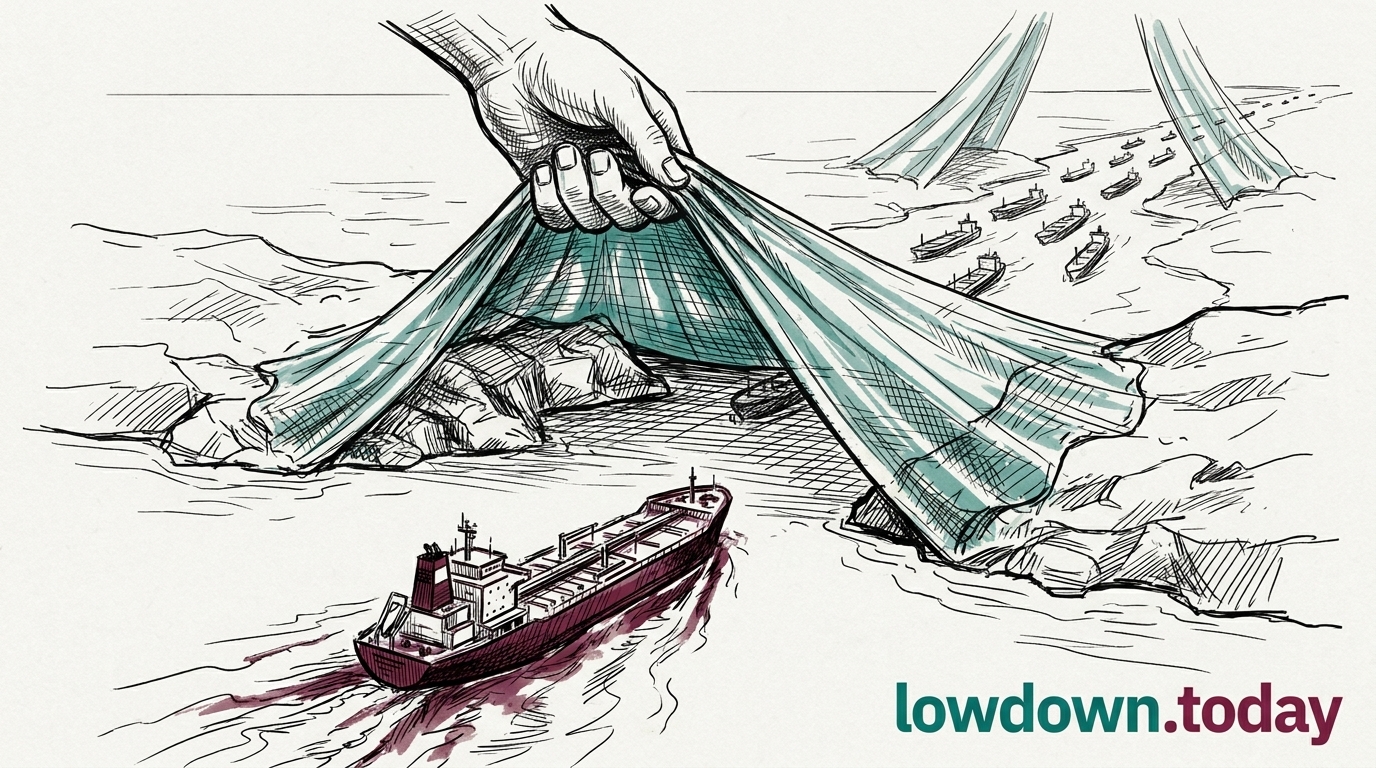
CENTCOM fired a Hellfire missile into the engine room of the Gambian-flagged M/V Lian Star in the Gulf of Oman around 30 May, the blockade's first disabling of a commercial hull by munition.

EconomicDeveloping
Key takeaway

The blockade crossed a threshold: from redirecting ships to destroying a civilian hull's ability to move.

CENTCOM (US Central Command) disabled the Gambian-flagged bulk carrier M/V Lian Star in the Gulf of Oman around Saturday 30 May, firing a Hellfire missile into its engine room after the crew ignored more than 20 blockade warnings 1. The Hellfire is a US precision air-to-ground missile. CENTCOM is the US combatant command that has run the Hormuz blockade since mid-April.

CENTCOM disabled the ship rather than seizing it, leaving its civilian crew aboard a powerless hull, and its cumulative redirection count reached 116 vessels. Every prior interdiction had turned ships away or boarded them.

This is the first time the 90-day blockade has crossed into disabling a commercial hull by munition. The rules of engagement have hardened beyond the Bandar Abbas strikes on Iranian naval targets , which hit military boats and a missile site rather than a merchant ship.

The shift changes the risk calculus for civilian shipping near the blockade zone. A disabled hull adrift with crew aboard also widens Washington's legal exposure under maritime law, where a powerless ship in a busy strait is itself a hazard to other traffic.


Deep Analysis

In plain English

US forces fired a Hellfire missile (a precision weapon normally used to destroy tanks or targeted vehicles) into the engine room of a cargo ship, leaving it unable to move. In 90 days of blockade operations, CENTCOM had previously boarded or redirected 115 vessels. This is the first time it destroyed a commercial vessel's propulsion using a missile. Lian Star's crew, stranded on a powerless hull, cannot leave under their own power. The ship is registered in Gambia, not Iran, meaning the US struck a third-country commercial vessel. Under international maritime law, firing on a non-combatant commercial vessel requires proportionality and exhaustion of lesser means; CENTCOM issued more than 20 warnings before firing.

Deep Analysis
Root Causes

The Lian Star disabling reflects a rules-of-engagement progression that began at redirection (week 1), moved to boarding (week 2), then to Iranian-hull disabling (week 3), and has now reached third-flag hull disabling (week 11). Each step was preceded by a specific compliance failure. The Lian Star's crew ignored more than 20 warnings, which CENTCOM treated as sufficient justification for escalation to munition.

The underlying structural driver is that the blockade's earlier deterrent credibility eroded: 116 cumulative redirections still produced vessels attempting to run the zone. CENTCOM needed a cost-imposing action that fell short of sinking to restore deterrence without triggering a humanitarian crisis.

What could happen next?
  • Precedent

    Third-flag commercial vessels are now subject to propulsion-kill rules of engagement if they attempt to run the blockade zone after 20 warnings, a doctrinal expansion CENTCOM has not formally published.

    Immediate · Assessed
  • Risk

    Gambia as flag state faces liability questions for its vessels in the blockade zone; smaller flag-state registries may accelerate flag-switching away from the Gulf.

    Short term · Assessed
  • Consequence

    Lloyd's of London's war-risk underwriting committee will need to price a new risk category: propulsion-destruction of insured hulls by US munition, not just mine or missile damage from hostile actors.

    Short term · Assessed
First Reported In

Update #113 · Trump signs nothing as a Hellfire hits a hull

CBS News· 31 May 2026
Read original
Different Perspectives
Sanctions compliance officer reviewing a Lukoil International GmbH bid
OFAC's amended FAQ 1224 gives a compliance desk its first published standard: full severance from Lukoil and a US-jurisdiction blocked account for sale proceeds. The conditions name neither ISAB nor Italy, so a Priolo Gargallo-linked bid answers a different question than a Neftochim Burgas or Petrotel Ploiesti one.
Managed-money funds on Brent Last Day
CFTC data for the week to 21 July showed managed money flipping 74,400 contracts to a net long of 15,665 against 1,410 short on the Brent Last Day contract, code 06765T. A fund that held that short through July has now covered it, and the spent short base raises the bar for the next leg higher.
Saudi crude exporters
Saudi-linked tanker transits through Bab el-Mandeb fell to about 7.5 a day after the 24 July underwriting withdrawal, pushing more barrels onto the longer route round the Cape or through the Yanbu terminal. Every diverted barrel ties up a ship for longer, and a fleet that turns slower charges more.
Tanker owners on the Bab el-Mandeb route
Lloyd's-market syndicates withdrew war-risk cover from Saudi-linked hulls on 24 July, leaving owners of that class of vessel to sail Bab el-Mandeb uninsured or not at all. Tanker transits on the route fell to roughly 7.5 a day, and cover, once withdrawn, does not return on a shipowner's timetable.
Eni
Eni
Eni's board approved second-quarter results on 29 July, swinging refining EBIT to a EUR0.08bn profit from a year-earlier loss even as group profit doubled, and named Red Sea freight cost as a cap on that improvement. A refiner absorbing higher shipping costs on Saudi-linked crude while its numbers improve treats the freight line as a drag, not a crisis.
Asian buyers (India, Japan, China, South Korea)
Asian refiners are absorbing 62% of Yanbu's 3.75m b/d flow, the bulk of Saudi Arabia's rerouted crude now clearing east rather than into the Atlantic basin. That destination split leaves Asian buyers more exposed to any single Yanbu-specific disruption than under the kingdom's normal multi-terminal export pattern.



