Skip to content
You can now search across every topic, entity and event.What's new
European Oil Markets
26MAY

Trump ranks blockade above Iran bombing

4 min read
08:52UTC

Donald Trump told Axios on 29 April that the blockade outperforms the bombing campaign, while Marco Rubio rejected Iran's two-phase ceasefire text and tightened the US nuclear condition on Fox News.

EconomicDeveloping
Key takeaway

Trump ranked blockade above bombing; Rubio set a permanent nuclear prohibition, both by broadcast.

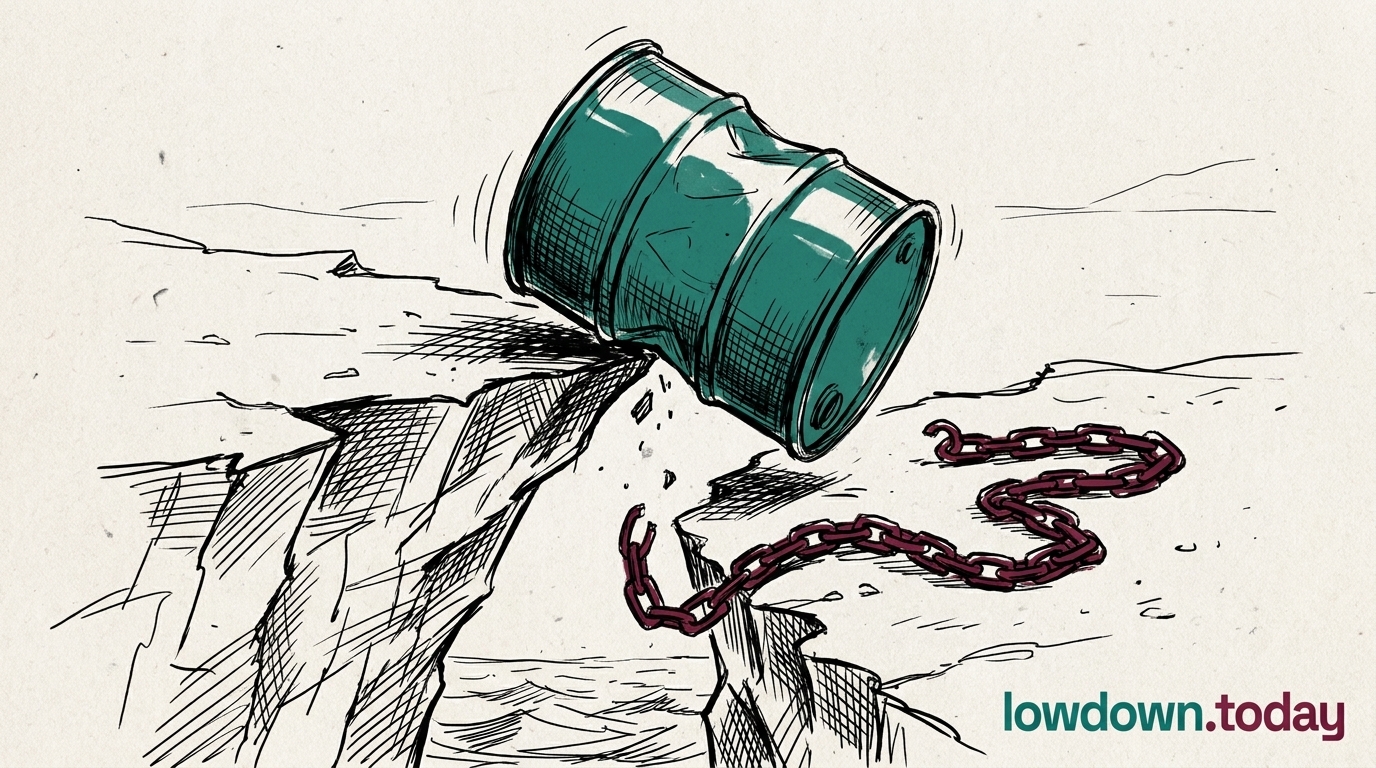
Donald Trump told Axios on 29 April that "the blockade is somewhat more effective than the bombing. They are choking like a stuffed pig" 1. Within hours he posted on Truth Social that Iran must "cry uncle", with an AI-rendered image of himself carrying an assault rifle. The same day, Secretary of State Marco Rubio appeared on Fox News and rejected the two-phase ceasefire text Iran had conveyed via Pakistan on 28 April . Rubio called the proposal "better than expected" but insufficient, with the new US condition: "definitively prevent them from sprinting towards a nuclear weapon at any point" 2.

Trump's ranking inverts the operational picture US officials have painted since 28 February. Through March and April the campaign was framed as a bombing operation with a maritime tail; CENTCOM's vessel-redirection count was logged as enforcement of the blockade rather than the centrepiece. The Axios line moves the blockade ahead of the bombing in the President's own framing, putting the Strait of Hormuz, the IRGC fast-attack craft tracked by Sentinel-2 , and the LPG SEVAN seizure at the operational core. It also matches the line Russia used to declare the campaign unlawful at the Kremlin meeting with Araghchi on 25 April .

Rubio's wording shifts the bargaining ground harder than Trump's. Iran's earlier negotiating position offered a verifiable freeze on enrichment with a return to JCPOA-style monitoring. Washington had previously demanded only no nuclear weapon. Rubio's version, "definitively prevent... at any point", removes the temporal qualifier that made any enrichment programme negotiable. A definitive bar at any point reads as a permanent prohibition on the latent capacity Iran has accumulated; IAEA Director-General Rafael Grossi confirmed on 23 April that Iran holds 440.9 kg of 60% uranium that cannot currently be verified . Rubio's condition asks Iran to surrender that stockpile and the underlying knowledge.

Trump's earlier Truth Social post on 25 April had told Tehran to "call us" ; Pakistan's revised text was the call. The rejection arrived not in a signed executive instrument or a State Department communique but in a cable interview and a Fox News appearance. Trump and Rubio are running the institutional response through television while the document trail stays empty.


Deep Analysis

In plain English

Iran offered a deal in two stages. In stage one, Iran would reopen the Strait of Hormuz, the narrow waterway through which a fifth of the world's oil travels. In stage two, the two sides would talk about Iran's nuclear programme. Trump and his Secretary of State Marco Rubio said no. They want Iran to agree on the nuclear question before the blockade ends. Trump told Axios that the blockade is working better than the bombing and that Iran is suffering. Rubio also raised the bar: the US now demands Iran permanently give up any ability to build a nuclear weapon, going beyond a promise not to build one right now. Iran has not agreed to that, and its ceasefire proposal did not include it.

Deep Analysis
Root Causes

Pakistan's role as sole diplomatic conduit creates a structural vulnerability: Iran's ceasefire text must pass through Islamabad, where Pakistan's own interests (a $3 billion Saudi debt-assistance package, a strategic partnership with China) shape what gets transmitted. The two-phase proposal Iran submitted on 28 April may already reflect Pakistani editorial mediation rather than Iran's unfiltered position.

Rubio's tightened "at any point" condition reflects the IAEA's lockout since the 11 April Majlis vote (which suspended all cooperation 221-0). Without inspectors on the ground, IAEA Director General Rafael Grossi confirmed on 23 April that Iran holds 440.9 kg of 60%-enriched uranium with no verification of its status or location.

Trump's blockade preference over bombing reflects the domestic political asymmetry: naval operations generate fewer US casualties and less media-visible destruction than continued air strikes, but impose equivalent or greater economic pressure on Iran, whose oil exports depend on maritime access.

What could happen next?
  • Consequence

    Rubio's tightened nuclear condition moves the US floor past any prior Iran framework, including the 2015 JCPOA's enrichment architecture.

    Long term · High
  • Risk

    Pakistan's mediating role becomes untenable if the US publicly rejects proposals Islamabad has invested diplomatic capital in conveying.

    Short term · Medium
  • Consequence

    Trump's public ranking of blockade over bombing signals US military posture has shifted from kinetic to economic coercion as the primary instrument.

    Immediate · High
  • Risk

    Iran's IRGC hardline faction, which reads blockade as an act of war, gains domestic authority to escalate if the civilian leadership's ceasefire offer is publicly dismissed.

    Immediate · Medium
First Reported In

Update #84 · Department named, war unsigned

Axios· 30 Apr 2026
Read original
Causes and effects
This Event
Trump ranks blockade above Iran bombing
A new substantive condition and a new strategic ranking arrived by interview rather than executive order, hardening US demands without producing any signed paper to anchor a ceasefire negotiation.
Different Perspectives
Greek shipping registries
Flag states dominating the tanker fleet await the EU's 15 July cap-freeze vote. A formula unlock toward $75 would loosen the ceiling squeezing insurance and crewing costs on their registered hulls.
US money managers
US money managers
NYMEX WTI managed-money net long fell 23% to +64,041 in the week to 7 July, trimming length into the rally on doubt the Hormuz premium survives without freight or war-risk confirmation.
European refiners (ARA)
ARA refiners are capturing an $80/bbl US diesel crack as Russian gasoil loadings collapsed to 234kbd before Novak's 31 July export ban even bites, widening the arbitrage straight into refining margins.
OPEC+
OPEC+
The seven-member group confirmed a fourth consecutive 188kbd August hike on 5 July, defending market share even though Saudi Arabia's $108-111/bbl breakeven means every added barrel costs Riyadh revenue it cannot recoup.
Indian refiners
Indian refiners
Refiners kept lifting discounted Urals as the India/Baltic split widened past $9-10 a barrel on 7 July. A wider Urals-Brent gap means cheaper feedstock locked in against Baltic buyers.
Russia
Russia
Urals traded $48.95-55.12 on 12-13 July, below Moscow's $59 budget floor even as Brent gained $6. Oil and gas fund roughly 30% of federal revenue, and Novak's diesel export ban is rationing a shrinking export base.



