Skip to content
You can now search across every topic, entity and event.What's new
European Oil Markets
26MAY

Iran oil exports fall below 300,000 bpd

3 min read
08:52UTC

Kpler and Lloyd's List data put Iran's oil exports below 300,000 barrels a day in May, down from 1.84m before the war. Some 67m barrels sit stranded in the Gulf.

EconomicAssessed
Key takeaway

Iran's oil exports have collapsed to one-sixth of pre-war volume, with 67m barrels stranded in the Gulf.

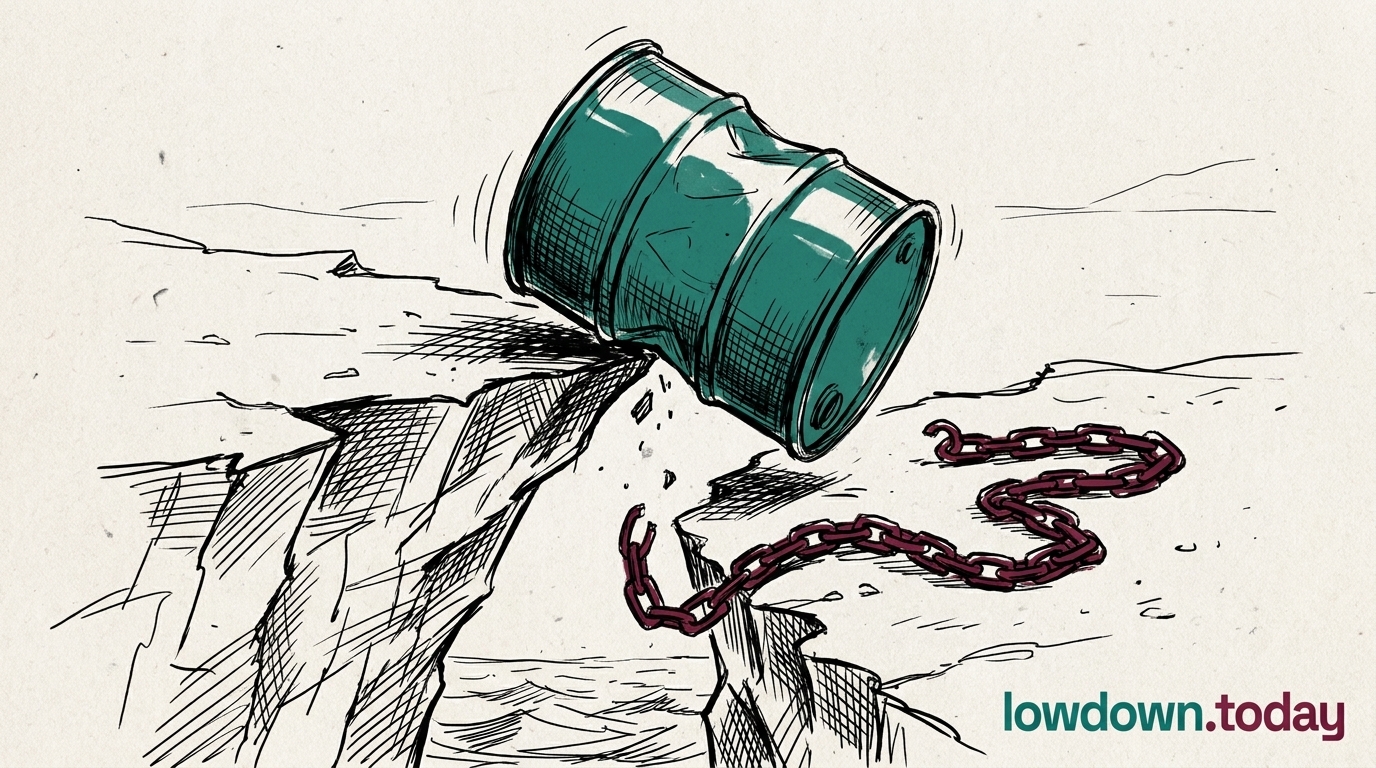
Kpler trade intelligence and Lloyd's List maritime data found Iran's oil exports fell below 300,000 barrels per day in May 2026, down from 1.84m bpd before the war began, roughly one-sixth of the pre-blockade flow 1. The lost revenue since April runs to about $5.8bn, and some 67m barrels sit stranded inside the Gulf, unable to clear the blockade.

The collapse is the revenue consequence of CENTCOM's 121-vessel naval blockade . Ship-tracking measures cargoes that move, so the figure is anchored outside Tehran's control: hard for Iran to inflate, hard for outsiders to dispute.

At a conservative $90 a barrel, Iran's monthly oil income has now fallen below what Saudi Arabia spends in a single day. Read alongside the 77.2 per cent inflation print, the two numbers approach the squeeze from opposite ends, Tehran's own statistics and independent vessel data, and meet on the same floor under the war's economic cost.


Deep Analysis

In plain English

Before the war, Iran sold roughly 1.84 million barrels of oil per day on the international market. That oil was a major source of government revenue. By May 2026, exports had fallen below 300,000 barrels per day, less than one sixth of the pre-war level, because CENTCOM is blocking most tankers from carrying Iranian oil and buyers are too nervous to participate. As a result, 67 million barrels are sitting in ships and storage inside the Gulf, unable to move. Iran has lost approximately $5.8bn in revenue since April. This does not directly affect most Western consumers because global supply has been partly replaced by Saudi and other OPEC production, but it does keep Brent crude elevated above the pre-war price and contributes to higher fuel bills across the importing world.

What could happen next?
  • Consequence

    Iran's daily government revenue from oil has fallen from roughly $145m to roughly $25m, a structural deficit that makes negotiated settlement economically urgent for Tehran.

    Immediate · Assessed
  • Risk

    The 67 million stranded barrels will create a price-suppression spike when any deal permits their release, potentially dropping Brent by $8-15 per barrel in a single trading session.

    Medium term · Reported
  • Opportunity

    China's pre-war Iranian crude contracts give Beijing leverage in any post-deal commodity arbitrage; Chinese absorption of stranded barrels may accelerate Iran's economic recovery faster than sanctions relief alone.

    Medium term · Reported
First Reported In

Update #119 · Trump's Iran deal: 95% done, 0% signed

Al Jazeera· 6 Jun 2026
Read original
Different Perspectives
Greek shipping registries
Flag states dominating the tanker fleet await the EU's 15 July cap-freeze vote. A formula unlock toward $75 would loosen the ceiling squeezing insurance and crewing costs on their registered hulls.
US money managers
US money managers
NYMEX WTI managed-money net long fell 23% to +64,041 in the week to 7 July, trimming length into the rally on doubt the Hormuz premium survives without freight or war-risk confirmation.
European refiners (ARA)
ARA refiners are capturing an $80/bbl US diesel crack as Russian gasoil loadings collapsed to 234kbd before Novak's 31 July export ban even bites, widening the arbitrage straight into refining margins.
OPEC+
OPEC+
The seven-member group confirmed a fourth consecutive 188kbd August hike on 5 July, defending market share even though Saudi Arabia's $108-111/bbl breakeven means every added barrel costs Riyadh revenue it cannot recoup.
Indian refiners
Indian refiners
Refiners kept lifting discounted Urals as the India/Baltic split widened past $9-10 a barrel on 7 July. A wider Urals-Brent gap means cheaper feedstock locked in against Baltic buyers.
Russia
Russia
Urals traded $48.95-55.12 on 12-13 July, below Moscow's $59 budget floor even as Brent gained $6. Oil and gas fund roughly 30% of federal revenue, and Novak's diesel export ban is rationing a shrinking export base.