Skip to content
You can now search across every topic, entity and event.What's new
European Oil Markets
20JUL

Brent settles $105.33, war's biggest week

3 min read
10:00UTC

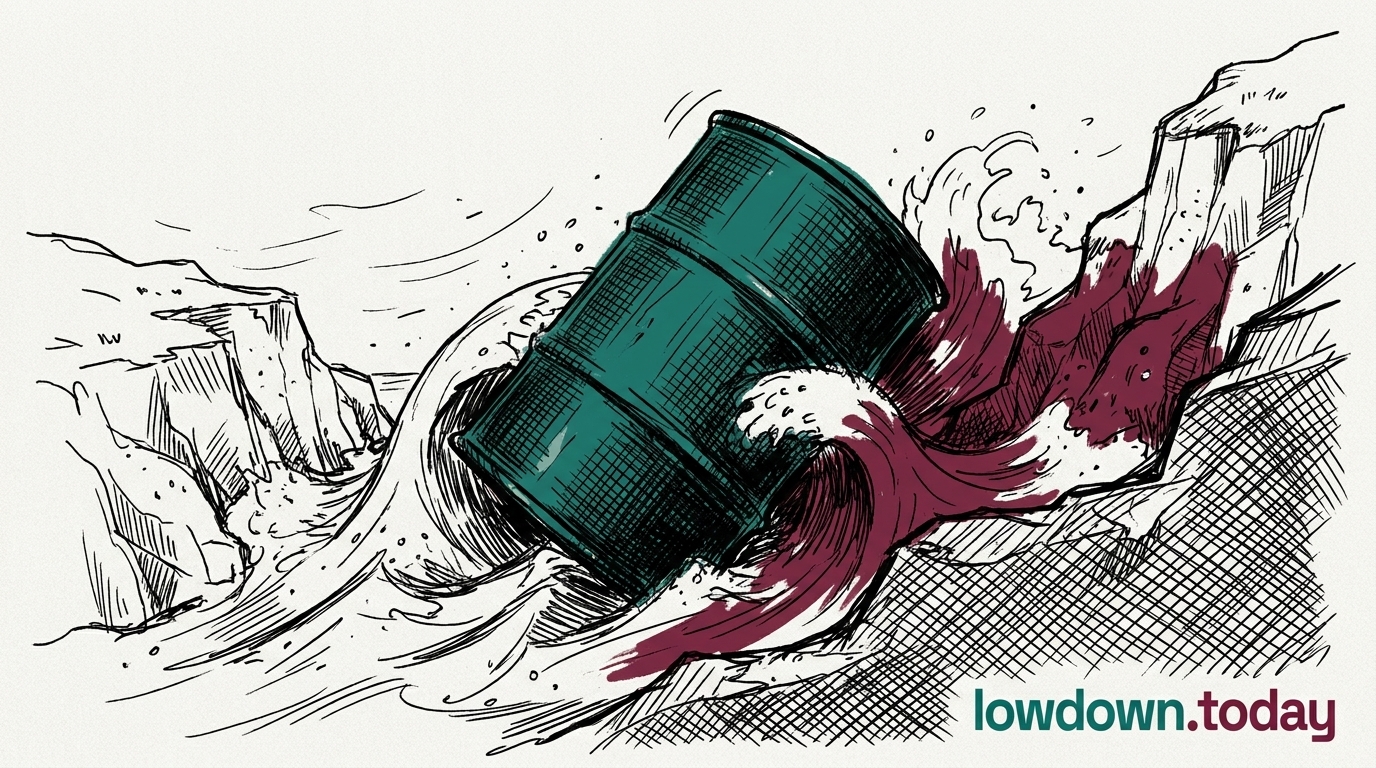
Brent crude closed Saturday 25 April at $105.33 per barrel, up roughly 16% on the week despite an indefinite ceasefire announced five days earlier.

EconomicDeveloping
Key takeaway

Brent's biggest week of the war registers a market that has stopped pricing the ceasefire and begun pricing the carriers.

Brent Crude settled at $105.33 per barrel on Saturday 25 April, the largest weekly gain (roughly 16%) since the war began and approximately 57% above the pre-war baseline of about $67 1. The settlement came five days after the indefinite ceasefire announcement that briefly knocked the contract back. Brent is the global crude benchmark used to price two-thirds of the world's traded oil; a move of this scale on a ceasefire week is a market correction against the underlying assumption.

Brent has now ignored two pieces of de-escalation paper inside a fortnight: the indefinite-ceasefire announcement and the Lebanon ceasefire extension on 23 April . Traders are pricing the inverse of the diplomatic track; the carrier concentration in CENTCOM AOR, the IRGC's verbal escalation and the AIS-blank Hormuz transits are now the dominant inputs.

Insurance, not navies, sets the structural floor under the price. With the major Protection and Indemnity clubs out of Iranian waters and war-risk premiums into double-digit millions per trip, the cost of moving a barrel through the strait has stepped up regardless of whether kinetic events occur on a given day. For European and UK forecourt prices, $105 Brent through the bank-holiday window keeps pump prices elevated; for Indian, Korean and Japanese refiners pricing forward cargoes, the unpriceable insurance leg is now the binding cost driver.


Deep Analysis

In plain English

Oil prices track closely with what is happening in the Strait of Hormuz because roughly one-fifth of all the oil the world uses each day normally passes through that narrow waterway. When it is effectively closed, oil companies have to find other routes or buy from different suppliers, which costs more. On top of that, the shipping companies that carry oil have to pay enormous insurance premiums just to attempt a transit, adding further costs. The price at the petrol station reflects these extra costs within a few weeks. At $105 a barrel, you are paying roughly 20-25% more to fill your car than before the conflict started in late February.

What could happen next?
  • Meaning

    At $105/bbl sustained for three months, **UK** and **EU** inflation forecasts for mid-2026 will need upward revision of roughly 0.4-0.7 percentage points, complicating central bank rate-setting ahead of summer monetary policy meetings.

    Short term · Assessed
  • Meaning

    The 16% weekly gain sets a new psychological floor for oil-market participants: each subsequent failed diplomatic round is now priced as a new price plateau rather than a temporary spike.

    Short term · Assessed
  • Meaning

    Sovereign wealth funds in Gulf states whose budget breakeven sits at $87-95/bbl (Saudi Arabia and UAE) are now running significant surpluses that give them more patience than Western consumers to wait for a negotiated resolution.

    Short term · Assessed
First Reported In

Update #80 · Three carriers, zero instruments

Angle360· 26 Apr 2026
Read original
Different Perspectives
Kuwait
Kuwait
Kuwait absorbed the Iranian strike that knocked generating units offline at a combined power-and-desalination plant on 17 July, the event that finally moved freight and insurance in lockstep with Brent. The strike hit essential civilian infrastructure, not a trading desk's benchmark.
Asian buyers (Singapore)
Singapore's middle distillates rose 12% month-to-date to 8.91m barrels and fuel oil passed 19m barrels on a 105% net-import surge, buyers retaining barrels as the East-West arbitrage window narrows. Cargoes are being stockpiled ahead of further Hormuz-driven freight repricing rather than released west.
Austria (Coreper holdout)
Vienna is blocking the same package over roughly EUR 2bn of frozen Russian assets earmarked for Raiffeisen, a domestic banking dispute with no connection to the oil cap racing toward its 23 July expiry. The linkage forces the whole package to wait on a bilateral compensation fight.
Greece (Coreper holdout)
Athens is holding the 21st sanctions package at the 22 July Coreper vote over Russian LNG re-export rights, a condition unrelated to the oil price cap itself, leaving the $44.10 freeze one day from expiry without a deal. Greece's own tanker registry gives it a direct stake in how any shadow-fleet measures are drafted.
Marine underwriters (Gulf war-risk)
Hull war-risk cover for Hormuz transits widened to a 3-10% band on 17 July with 5% the emerging norm, up from a 3-4% baseline set in late June, the first repricing in six weeks to track a flat-price move rather than lag it. Cover resets on actuarial evidence of loss, not on diplomatic or price signals.
Money managers (CFTC-tracked)
The CFTC's week-to-14-July snapshot, released 17 July, showed WTI managed-money net long collapsing 69% to 19,783 contracts and a standalone 60,141-contract net short on Brent Last Day (NYMEX). Both readings predate the Kuwait strike and the 20 July escalation, so any covering since is not yet visible in public data.