Skip to content
You can now search across every topic, entity and event.What's new
European Oil Markets
16JUL

The carriers that did not leave

2 min read
09:39UTC

The USS Abraham Lincoln and USS George H.W. Bush held station in the Gulf on 18 June with no drawdown order, as the blockade they backed came down.

EconomicDeveloping
Key takeaway

Trump opened the one lock that was free and kept the carriers that cost Iran.

The USS Abraham Lincoln and USS George H.W. Bush held station in The Gulf on 18 June, with no CENTCOM drawdown order to accompany the blockade wind-down . The two carrier strike groups are the heaviest US naval presence in the region and the standing threat behind every clause of the deal.

The week's single instrument-level move was the blockade lift, and it was the cheapest one on the board: reversible, costless to the United States, and insufficient on its own to reopen a strait that insurers and minesweepers keep shut. Everything else the Memorandum of Understanding obligates, sanctions relief, weapons verification, reconstruction money and the strait's physical reopening, sits in a final agreement nobody has drafted.

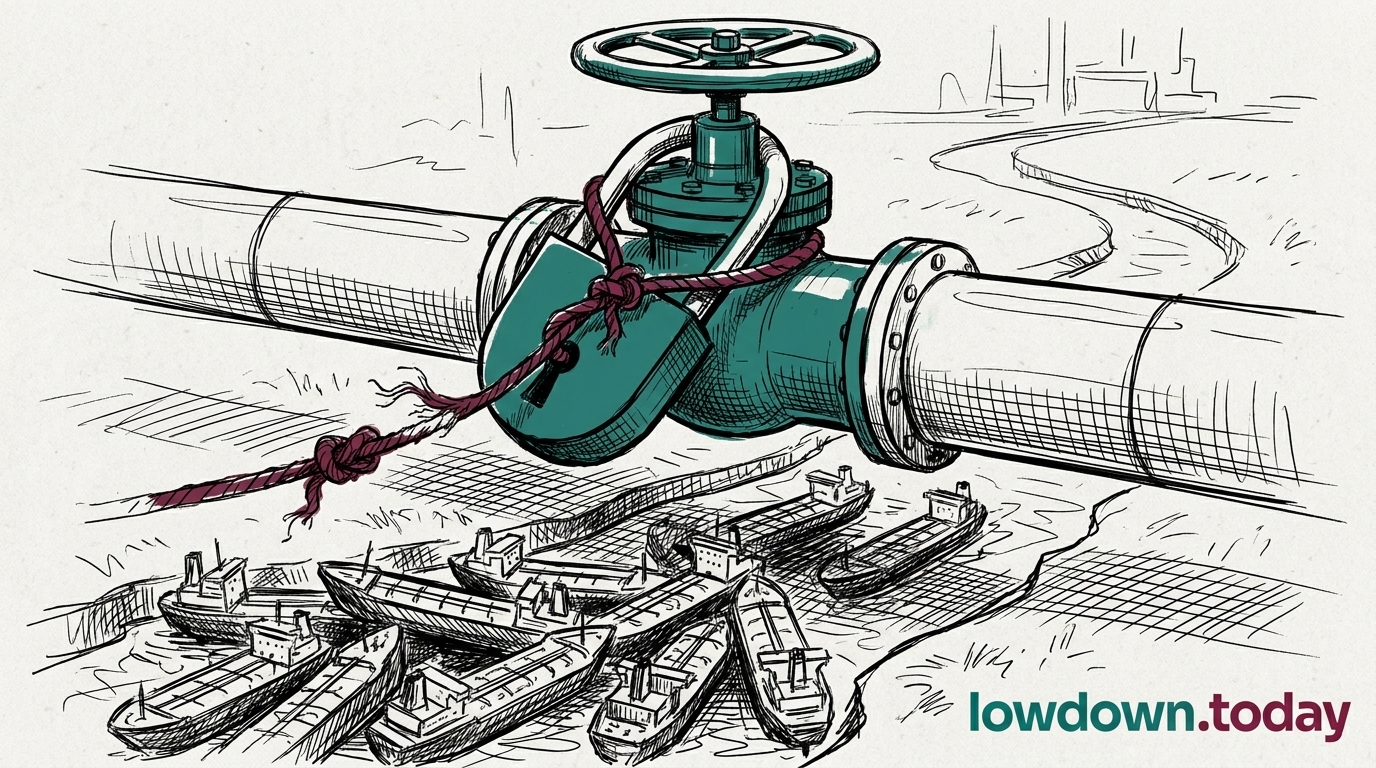
Keeping the carriers on station makes the asymmetry literal. Trump gave up the lever that constrained Iran at no cost to America and retained the one that constrains Iran at a cost to Iran. Across every stage of this deal the pattern has held: the civilian side signs, the powers that matter, the Revolutionary Guard Corps, the carriers, the London underwriters, commit to nothing. The week the deal happened, the only lock that opened was the one Washington held the key to.


Deep Analysis

In plain English

The United States has two of its largest warships, aircraft carriers called the Abraham Lincoln and the George H.W. Bush, sitting in the Persian Gulf. On 18 June, the US said it was stopping its naval blockade of Iranian ports. But it did not order those two ships to leave. Think of it this way: the security guard stopped checking bags at the door, but stayed standing there. The threat of reimposing the blockade remains because the military machinery to do it is still in place. For Iran's government, two US carriers on its doorstep after a supposed peace deal is a constant reminder that the US can reimpose pressure immediately if negotiations go badly.

Deep Analysis
Root Causes

The carrier holdover reflects a structural feature of US power projection: carrier strike groups are the most expensive and visible form of American military presence, and withdrawing them signals strategic disengagement more clearly than almost any other action. Trump's administration made a deliberate decision that ending enforcement (cheap) and withdrawing carriers (expensive in signalling terms) were separate decisions, each with its own calculus.

CENTCOM issued no drawdown order by design. Two carriers on station can resume enforcement within hours if Iran defaults on Phase 2 commitments. That re-imposition option is the structural underpinning of US coercive leverage during the 60-day window.

Escalation

The carrier holdover is the single most important structural signal of US intent in the Phase 2 window. Its continued presence without drawdown order means the 60-day negotiating period runs under implicit threat of re-escalation, which is Washington's design but carries the risk that Tehran uses it as justification for its own maximum-resistance positions.

What could happen next?
  • Consequence

    The two carriers on station without a drawdown order maintain US re-imposition capability through the entire 60-day Phase 2 window, providing coercive leverage on nuclear and sanctions negotiations.

    Short term · Assessed
  • Risk

    Iran may read the carrier holdover as evidence that the US views the MOU as a tactical pause rather than a genuine settlement, potentially hardening its nuclear positions in Phase 2 on the grounds that the war has not actually ended.

    Short term · Assessed
  • Opportunity

    A partial carrier drawdown from two to one strike group would cost the US minimal operational capability while providing Iran a concrete de-escalation signal that could ease the Phase 2 nuclear access negotiations.

    Short term · Reported
First Reported In

Update #132 · Trump lifted the blockade, not the strait

Wikipedia (aggregated CENTCOM statement)· 19 Jun 2026
Read original
Different Perspectives
Indian refiners
Indian refiners
Indian refiners kept lifting discounted Urals as the India/Baltic price split widened past $9-10 a barrel, a gap that only grows as GL X1's Iranian wind-down cuts an alternative discounted grade off the market by 17 July. Cheaper Russian feedstock is being locked in while it lasts.
Chinese refiners
Chinese refiners
Chinese refiners gain leverage as the Urals-Brent discount widens, since Beijing's state buyers already source discounted Russian barrels near the fiscal floor unaffected by Western insurance costs. A wider discount, if it holds past 23 July, lets them lock in cheaper term contracts regardless of the cap's outcome.
US money managers (CFTC-tracked)
Managed money trimmed WTI net length into the rally, positioning that reflects doubt the Hormuz premium survives without freight or war-risk confirmation. The Brent-WTI spread widening almost entirely on the Brent leg supports that scepticism about a broad-based repricing.
OPEC+ (Saudi-led subgroup)
Saudi Arabia is defending market share through a fourth straight 188kbd August hike even as OPEC's own July MOMR cut 2026 demand growth for the fourth consecutive month. At a $108-111 fiscal breakeven, every added barrel costs Riyadh revenue it cannot recoup, so the hike reads as a positioning signal, not a demand bet.
Greek shipping registries
Greece, backed by Cyprus and Malta, is pushing a three-month cap-freeze compromise against the Commission's freeze to January 2027 ahead of the 23 July vote. Athens' and Valletta's combined tanker registrations mean a shorter review gives their insurers more frequent chances to reprice risk on Russian cargoes.
Russia (Deputy PM Alexander Novak)
Novak extended the diesel export restriction to producers on 8 July, the first producer-binding curb of the war, protecting the domestic pump price ahead of any refinery repair timeline. Urals still trades below Russia's $59 budget floor even as Brent gained, so the ban trades export revenue for fiscal stability at home.