Skip to content
You can now search across every topic, entity and event.What's new
European Oil Markets
16JUL

Saudi tankers moved, Hormuz stayed shut

2 min read
09:39UTC

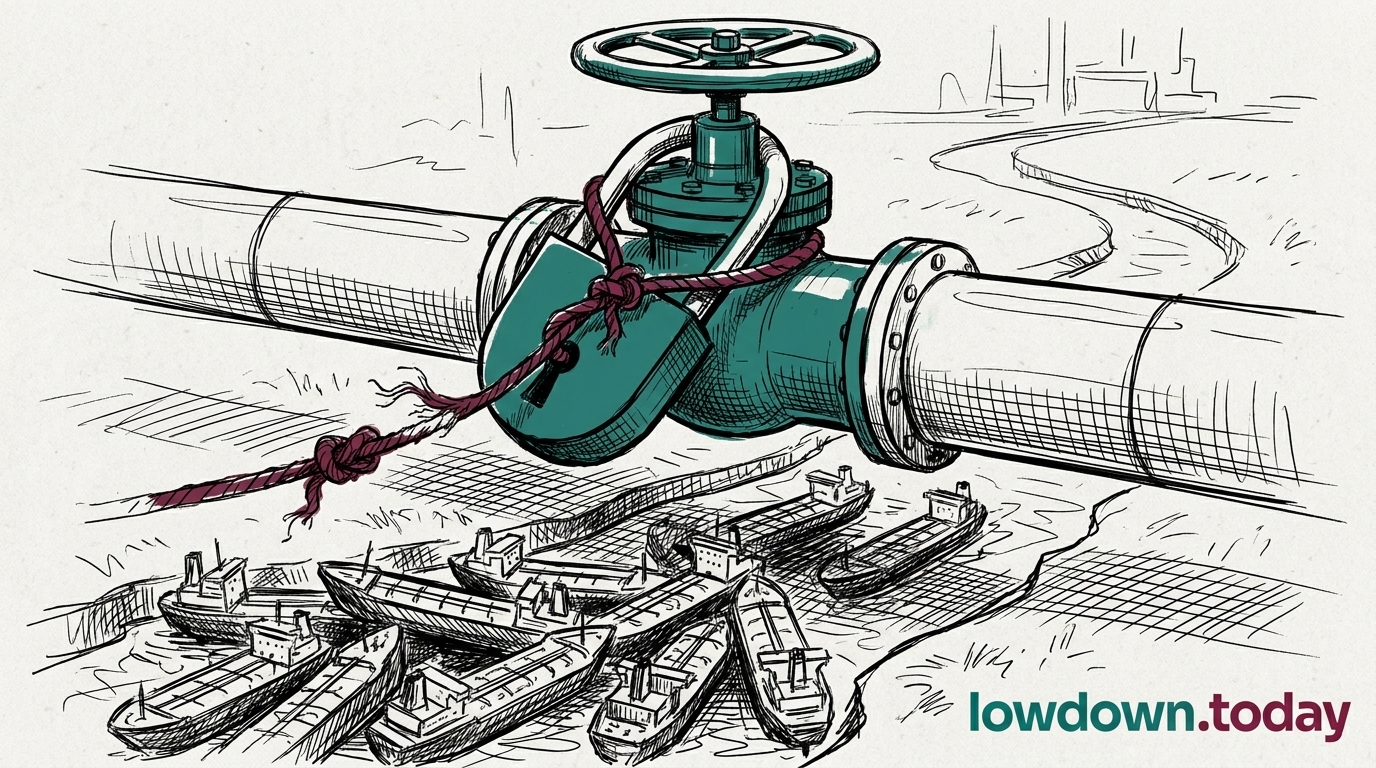
Three Saudi VLCCs reactivated their transponders and positioned roughly 10 million barrels near Hormuz on 19 June, the first such movement since the war began, yet zero eastbound transits completed.

EconomicDeveloping
Key takeaway

Three Saudi tankers probed Hormuz with 10 million barrels, but zero transits completed and Brent held near $80.

Three Saudi-owned very large crude carriers (VLCCs), the largest class of oil tanker, reactivated their AIS transponders in the Gulf of Oman on 19 June and moved or positioned roughly 10 million barrels near the Strait of Hormuz, the first Saudi tanker movement since the conflict began 1. AIS is the automatic tracking signal ships switch off to hide and on to be seen, so reactivating it is itself a public gesture. the strait still did not reopen.

The Lloyd's Market Association (LMA), the body that represents Lloyd's syndicates, said safety rather than insurance availability was suppressing traffic 2. The navigable channel remains uncleared, no minesweeping has been reported, and tracking data showed zero completed eastbound transits by Saturday 20 June. The movement reads as Gulf producers testing the water commercially, not as barrels flowing: the carriers approached a strait that has logged no foreign-flag transit since the war shut it , even after CENTCOM ended its blockade enforcement on 18 June .

Brent Crude, the global oil benchmark, held near $80 a barrel, little changed from its $78.66 close on 18 June , as the market priced the repositioning as a signal rather than a supply unlock 3. Roughly a fifth of seaborne oil normally passes through Hormuz, so a price that barely moved on the first tanker movement in months is the market saying the same thing the LMA did: until the mines are cleared, the barrels stay stranded in the Gulf of Oman.


Deep Analysis

In plain English

Very large crude carriers, known as VLCCs, are among the largest ships in the world, each carrying around two million barrels of oil. Three Saudi-owned VLCCs switched on their tracking transponders and moved near the Strait of Hormuz on 19 June, the first time Saudi tankers have moved toward the strait since fighting began. This looked like progress, but the ships did not actually pass through the strait. The Lloyd's Market Association, which represents British insurers who set shipping industry standards, said the problem is not insurance, which the Lloyd's consortium now offers, but physical safety: the channel has not been swept for mines, and nobody has officially declared it safe. Riyadh sends roughly 9-10 million barrels a day through Hormuz in normal times, giving Saudi Arabia as much to lose from a closed strait as any country. Moving three VLCCs into position on 19 June signals that Saudi planners expect the channel to open soon. Three VLCCs switched on their transponders and moved into position; none had passed through the strait by 20 June.

Deep Analysis
Root Causes

The VLCC repositioning reflects Saudi calculation that the political conditions for Hormuz reopening have advanced enough to justify moving assets into position, even before the physical channel is cleared. CENTCOM ended its 66-day blockade on 18 June; the Saudi decision to reactivate AIS the following day is a deliberate signal to markets that Riyadh expects commercial traffic to follow.

The divergence between the financial opening (blockade lifted, Lloyd's consortium launched, CENTCOM enforcement ended) and the physical closure (mines uncleared, zero transits, LMA safety warning) reflects the lag between political decisions and operational reality that has characterised the entire Hormuz closure. Floating mines require a minimum 40-50 days to sweep at standard naval minesweeping rates; a full channel clearance extends to six months.

What could happen next?
  • Consequence

    Saudi Arabia repositioning three VLCCs near Hormuz on the day after the blockade lift signals Riyadh's expectation of a near-term transit window; if that expectation proves wrong, Saudi pressure on the US for a faster safety resolution will intensify.

  • Risk

    The LMA's confirmation that zero eastbound transits completed by 20 June means the Brent price near $80 incorporates a supply-resumption premium that has no physical cargo behind it, reprising the gap that opened on 18 June (ID:4310).

First Reported In

Update #133 · Lebanon froze the Iran deal

CNBC· 20 Jun 2026
Read original
Different Perspectives
Indian refiners
Indian refiners
Indian refiners kept lifting discounted Urals as the India/Baltic price split widened past $9-10 a barrel, a gap that only grows as GL X1's Iranian wind-down cuts an alternative discounted grade off the market by 17 July. Cheaper Russian feedstock is being locked in while it lasts.
Chinese refiners
Chinese refiners
Chinese refiners gain leverage as the Urals-Brent discount widens, since Beijing's state buyers already source discounted Russian barrels near the fiscal floor unaffected by Western insurance costs. A wider discount, if it holds past 23 July, lets them lock in cheaper term contracts regardless of the cap's outcome.
US money managers (CFTC-tracked)
Managed money trimmed WTI net length into the rally, positioning that reflects doubt the Hormuz premium survives without freight or war-risk confirmation. The Brent-WTI spread widening almost entirely on the Brent leg supports that scepticism about a broad-based repricing.
OPEC+ (Saudi-led subgroup)
Saudi Arabia is defending market share through a fourth straight 188kbd August hike even as OPEC's own July MOMR cut 2026 demand growth for the fourth consecutive month. At a $108-111 fiscal breakeven, every added barrel costs Riyadh revenue it cannot recoup, so the hike reads as a positioning signal, not a demand bet.
Greek shipping registries
Greece, backed by Cyprus and Malta, is pushing a three-month cap-freeze compromise against the Commission's freeze to January 2027 ahead of the 23 July vote. Athens' and Valletta's combined tanker registrations mean a shorter review gives their insurers more frequent chances to reprice risk on Russian cargoes.
Russia (Deputy PM Alexander Novak)
Novak extended the diesel export restriction to producers on 8 July, the first producer-binding curb of the war, protecting the domestic pump price ahead of any refinery repair timeline. Urals still trades below Russia's $59 budget floor even as Brent gained, so the ban trades export revenue for fiscal stability at home.