Skip to content
You can now search across every topic, entity and event.What's new
European Oil Markets
16JUL

OFAC opens Iran waiver second track

4 min read
09:39UTC

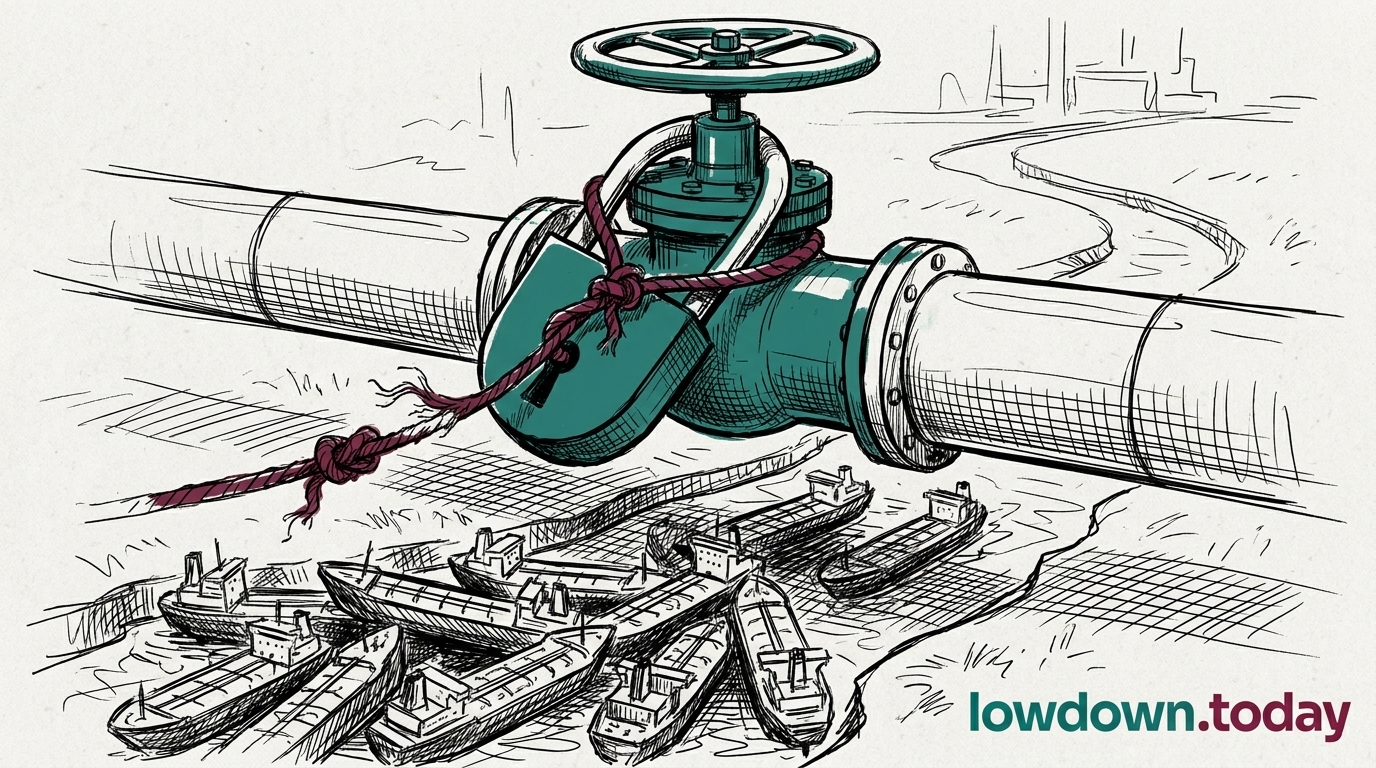
OFAC published Iran General Licence V on 10 June, quietly extending Iranian crude clearance a week before the 17 June Russian waiver lapses and splitting the sanctions calendar onto two tracks at once.

EconomicDeveloping
Key takeaway

OFAC's Iran GL V extends Iranian crude clearance on a separate calendar from the 17 June Russian waiver expiry.

OFAC (Office of Foreign Assets Control) published Iran General Licence V in the Federal Register on 10 June (document 2026-11614), alongside fresh Iran SDN designations the same day. 1 OFAC is the US Treasury arm that writes and enforces sanctions, and a General Licence is the carve-out that lets specified transactions proceed without breaching them. GL V is the successor to GL U, which authorised Iranian crude loaded by 20 March through a 19 April expiry that has since lapsed; GL V extends that delivery and sale chain to a later cutoff.

The waiver plumbing now runs on two tracks simultaneously. Russia's General License 134C covers in-transit Russian crude only through 17 June , and Secretary of State Marco Rubio's 5 June line that Washington wants the Russian waivers ended as soon as possible framed that date as the binding event for the market. Yet OFAC extended a parallel Iranian authorisation a week before it, a move desks pricing the Russian clock alone have largely missed.

The GL 134 series and the Iran GL series run on independent calendars, so reading only the Russia leg misprices what stranded supply remains legally clearable after 17 June. If Iranian barrels stay in compliant transit while Russian cover expires, the supply withdrawn from the market is smaller than a single-clock reading implies. The exact GL V loading-cutoff and expiry terms were not retrievable while OFAC's pages were blocked, leaving the precise size of that residual window open. 2

Deep Analysis

In plain English

When the US places sanctions on a country, it sometimes issues special permissions called general licences that allow specific types of trade to continue for a limited period while the broader prohibition phases in. Think of them as temporary exceptions with expiry dates. The US Treasury office that manages sanctions (called OFAC) published one of these permissions for Iranian oil on 10 June. Separately, there is an existing permission for Russian oil expiring on 17 June. Now two different permission clocks are running at once one for Iranian oil, one for Russian and they expire on different dates. Trading desks mostly know about the Russian deadline, but the Iranian one, running quietly alongside it, means more oil can still legally move than the market had assumed.

Deep Analysis
Root Causes

OFAC published Iran GL V on 10 June because three structural pressures made a single-track shutdown politically and economically unworkable.

First, calendar risk from the Russia GL 134 series. Rubio's 5 June statement committed to ending Russian waivers, making a GL 134D politically difficult. Publishing an Iran GL V a week before the Russian clock stops provides OFAC a second legally clearable crude channel as the first closes, preventing a simultaneous shutdown of both authorisation tracks.

Second, the Iran nuclear talks context. Publishing GL V alongside fresh SDN designations signals both tracks of US Iran policy in one action enforcement of the maximum-pressure sanctions perimeter and continued authorisation of the wind-down corridor consistent with keeping negotiating leverage without triggering a physical supply shock.

Third, the OPEC+ supply gap. With actual OPEC+ output 9.58mbd below February levels, OFAC faces political pressure to avoid a supply shock from simultaneous closure of all sanctioned-crude authorisation windows. A second track provides price-shock insurance.

What could happen next?
  • Risk

    Desks pricing only the GL 134C 17 June expiry may be caught short if GL V keeps a residual Iranian crude corridor open, mispricing the net available supply reduction after the Russian waiver lapses.

    Immediate · Assessed
  • Consequence

    OFAC's dual-track architecture makes the clearable-supply picture harder to read from external data alone, increasing the bid for information on GL V's exact loading-cutoff terms once OFAC pages become accessible.

    Short term · Assessed
  • Precedent

    Publishing a new Iran GL on the same day as fresh SDN designations establishes OFAC's paired carrot-and-stick approach as the standard enforcement template, separating enforcement tightening from supply-corridor closures going forward.

    Medium term · Reported
First Reported In

Update #7 · Distillate deficit deepens as runs max out

Federal Register / OFAC· 11 Jun 2026
Read original
Different Perspectives
Indian refiners
Indian refiners
Indian refiners kept lifting discounted Urals as the India/Baltic price split widened past $9-10 a barrel, a gap that only grows as GL X1's Iranian wind-down cuts an alternative discounted grade off the market by 17 July. Cheaper Russian feedstock is being locked in while it lasts.
Chinese refiners
Chinese refiners
Chinese refiners gain leverage as the Urals-Brent discount widens, since Beijing's state buyers already source discounted Russian barrels near the fiscal floor unaffected by Western insurance costs. A wider discount, if it holds past 23 July, lets them lock in cheaper term contracts regardless of the cap's outcome.
US money managers (CFTC-tracked)
Managed money trimmed WTI net length into the rally, positioning that reflects doubt the Hormuz premium survives without freight or war-risk confirmation. The Brent-WTI spread widening almost entirely on the Brent leg supports that scepticism about a broad-based repricing.
OPEC+ (Saudi-led subgroup)
Saudi Arabia is defending market share through a fourth straight 188kbd August hike even as OPEC's own July MOMR cut 2026 demand growth for the fourth consecutive month. At a $108-111 fiscal breakeven, every added barrel costs Riyadh revenue it cannot recoup, so the hike reads as a positioning signal, not a demand bet.
Greek shipping registries
Greece, backed by Cyprus and Malta, is pushing a three-month cap-freeze compromise against the Commission's freeze to January 2027 ahead of the 23 July vote. Athens' and Valletta's combined tanker registrations mean a shorter review gives their insurers more frequent chances to reprice risk on Russian cargoes.
Russia (Deputy PM Alexander Novak)
Novak extended the diesel export restriction to producers on 8 July, the first producer-binding curb of the war, protecting the domestic pump price ahead of any refinery repair timeline. Urals still trades below Russia's $59 budget floor even as Brent gained, so the ban trades export revenue for fiscal stability at home.
