Skip to content
You can now search across every topic, entity and event.What's new
European Oil Markets
16JUL

Iran and Oman draft Hormuz bilateral

2 min read
09:39UTC

Esmaeil Baghaei told his weekly Tehran press conference on 18 May that Iran and Oman were 'in continuous consultations' to design a new bilateral Hormuz transit mechanism, following an expert-level meeting in Muscat the previous week.

EconomicDeveloping
Key takeaway

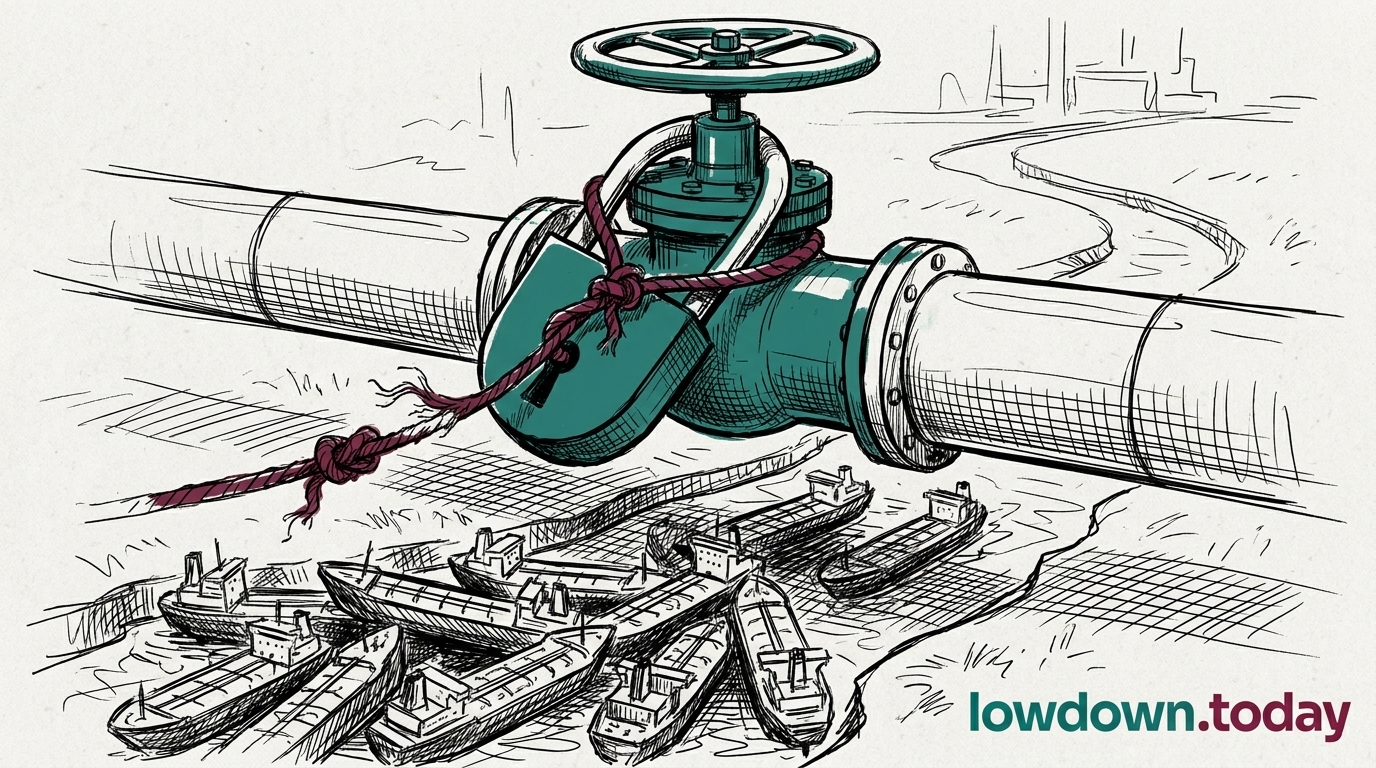
Muscat drafting a Hormuz mechanism with Tehran would convert a unilateral toll into a treaty Western planners must negotiate around.

At his weekly Tehran press conference on 18 May 2026, Esmaeil Baghaei, spokesman for Iran's Foreign Ministry, said Iran and Oman were 'in continuous consultations' on a bilateral Hormuz transit mechanism, after an expert-level technical meeting in Muscat the previous week, Euronews reported 1. Baghaei's weekly briefing is the primary on-the-record channel for Iran's diplomatic positions; this one extended a bilateral channel Tehran had only previously disclosed in the context of guiding Indian vessels through Hormuz minefields .

Oman shares administration of the strait of Hormuz with Iran under a 1968 bilateral agreement signed before UNCLOS was drafted. That historical priority matters for the legal architecture: a co-signed Iran-Oman transit system cannot be dismissed as a unilateral Iranian imposition the way the PGSA-only mechanism can, and it directly confronts the UNCLOS Article 38 freedom-of-navigation foundation the 26-nation coalition has been resting on .

The Muscat track also reframes Oman's diplomatic posture. Muscat has historically been the back-channel host for US-Iran talks rather than a co-administrator of pressure. Drafting a transit mechanism with Tehran rather than mediating between Tehran and Washington places Oman closer to Iran's institutional architecture than to the coalition's. If a written agreement emerges, the freedom-of-navigation argument coalition planners have been making becomes a treaty dispute between two sovereigns who share the strait, not a corridor-opening operation against an isolated obstructor. The shift is the kind of legal repositioning that, once signed, is hard to reverse with hardware.


Deep Analysis

In plain English

Iran and Oman are working on a deal to manage who gets through the Strait of Hormuz. Oman is a small Gulf state that borders the southern half of the strait. It has a long history of acting as a go-between it hosted the secret talks that produced the 2015 Iran nuclear deal. What makes Oman useful here is geography: its waters cover part of the strait's main shipping lane, so any arrangement that runs through Muscat has a legal foundation that Iran's own permit body lacks. A deal here would be harder for the US-led coalition to dismiss than Iran's unilateral toll.

Deep Analysis
Root Causes

Oman's value in this negotiation stems from a geographic fact that no political decision can alter: its territorial waters extend to the southern half of the strait's navigable channel. Any transit mechanism that runs through Omani coordination therefore operates partly inside Omani sovereign space, giving it a jurisdictional basis the PGSA's Chinese-yuan portal lacks.

A second structural driver is Iran's need for a face-saving exit from the PGSA mechanism. The PGSA generates compliance dilemmas but cannot be physically enforced against a coalition with Wedgetail AEW&C and Charles de Gaulle overhead. A bilateral Oman arrangement lets Tehran claim the PGSA succeeded diplomatically rather than retreating under pressure.

Third, Oman has an independent economic interest in Hormuz stabilisation: its LNG export revenue from Qalhat runs through the strait, and prolonged disruption costs Muscat directly.

Escalation

The Iran-Oman bilateral process is de-escalatory at the procedural level it provides a forum for managing the strait short of kinetic confrontation. Its risk is that it could harden Iran's claim to joint-administrative authority over the strait if a deal is signed before the coalition has agreed its own rules of engagement.

What could happen next?
  • Opportunity

    A signed Iran-Oman transit protocol would give the 26-nation coalition a legal text to engage with rather than a unilateral Iranian claim to refuse.

    Short term · 0.68
  • Risk

    If Oman signs a bilateral mechanism that implicitly validates the PGSA's jurisdictional claims, Gulf Cooperation Council cohesion faces a significant test.

    Medium term · 0.61
  • Precedent

    A functioning Oman-Iran co-administration of Hormuz would restructure the strait's legal governance for decades, regardless of how the 2026 conflict ends.

    Long term · 0.55
First Reported In

Update #102 · Iran signs Hormuz toll; Trump posts a cancelled strike

Euronews· 19 May 2026
Read original
Different Perspectives
Indian refiners
Indian refiners
Indian refiners kept lifting discounted Urals as the India/Baltic price split widened past $9-10 a barrel, a gap that only grows as GL X1's Iranian wind-down cuts an alternative discounted grade off the market by 17 July. Cheaper Russian feedstock is being locked in while it lasts.
Chinese refiners
Chinese refiners
Chinese refiners gain leverage as the Urals-Brent discount widens, since Beijing's state buyers already source discounted Russian barrels near the fiscal floor unaffected by Western insurance costs. A wider discount, if it holds past 23 July, lets them lock in cheaper term contracts regardless of the cap's outcome.
US money managers (CFTC-tracked)
Managed money trimmed WTI net length into the rally, positioning that reflects doubt the Hormuz premium survives without freight or war-risk confirmation. The Brent-WTI spread widening almost entirely on the Brent leg supports that scepticism about a broad-based repricing.
OPEC+ (Saudi-led subgroup)
Saudi Arabia is defending market share through a fourth straight 188kbd August hike even as OPEC's own July MOMR cut 2026 demand growth for the fourth consecutive month. At a $108-111 fiscal breakeven, every added barrel costs Riyadh revenue it cannot recoup, so the hike reads as a positioning signal, not a demand bet.
Greek shipping registries
Greece, backed by Cyprus and Malta, is pushing a three-month cap-freeze compromise against the Commission's freeze to January 2027 ahead of the 23 July vote. Athens' and Valletta's combined tanker registrations mean a shorter review gives their insurers more frequent chances to reprice risk on Russian cargoes.
Russia (Deputy PM Alexander Novak)
Novak extended the diesel export restriction to producers on 8 July, the first producer-binding curb of the war, protecting the domestic pump price ahead of any refinery repair timeline. Urals still trades below Russia's $59 budget floor even as Brent gained, so the ban trades export revenue for fiscal stability at home.