Skip to content
You can now search across every topic, entity and event.What's new
European Oil Markets
16JUL

IMO starts to evacuate 11,000 mariners

3 min read
09:39UTC

The International Maritime Organisation launched a coordinated evacuation of roughly 11,000 stranded seafarers from the Persian Gulf on 23 June, working with Iran, Oman and the United States as transits hit a war-high of 36.

EconomicDeveloping
Key takeaway

The IMO began moving 11,000 stranded crews as Hormuz transits recovered to a war-high 36 a day.

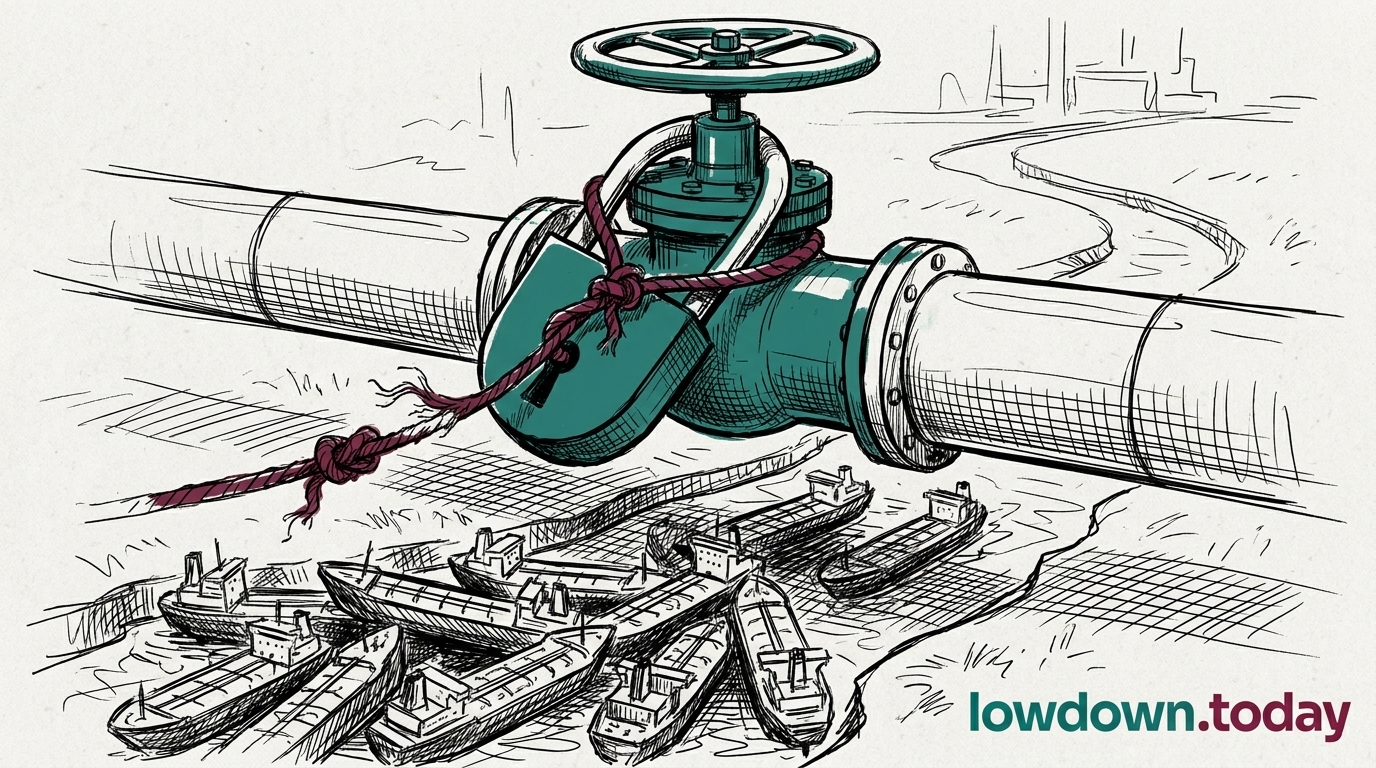
The International Maritime Organisation (IMO), the UN agency responsible for the safety of international shipping, began a coordinated evacuation of roughly 11,000 stranded seafarers from the Persian Gulf on 23 June, operating with Iran, Oman and the United States together 1. Fourteen seafarers have died during the months of closure since the IRGC declared Hormuz shut . Denmark joined the international maritime mission the same day.

These are crews left at anchor for months while the diplomatic and legal fight over the strait played out above them. No committee on paper can move them; the evacuation is the first physical relief they have had.

The operation became possible only because the waterway cracked partly open. Transits recovered to a war-high 36 vessels on Monday 22 June, up from just 12 on the day General License X authorised Iranian oil sales , creating the operational window the IMO needed. That recovery still runs at barely a third of the pre-war rate near 94 a day, so the evacuation describes a strait that is reopening for rescue rather than for trade.


Deep Analysis

In plain English

About 11,000 people work on ships that have been stuck in the Persian Gulf since the conflict began in late February. Fourteen of those workers have died during the months of closure. The International Maritime Organisation; the United Nations agency responsible for shipping safety; launched a formal evacuation on 23 June to get those stranded workers home. The number of ships actually moving through the Strait of Hormuz rose to 36 on 22 June, up from just 12 a week earlier. That improvement created enough of an opening for the evacuation to begin. Still, 36 ships a day is less than 40% of the normal 94 that used to pass through before the conflict. Mines in the water and the lack of shipping insurance are the main reasons the strait has not fully reopened yet.

Deep Analysis
Root Causes

The 11,000 stranded seafarers accumulated because P&I (Protection and Indemnity) insurance withdrawal on 15 March 2026; triggered by BIMCO's CONWARTIME clause; cut the legal liability chain: owners could not insure vessel entry, so they could not send relief crews in, and could not evacuate stranded ones without uninsured risk.

The IMO evacuation operates under a state-to-state framework (Iran, Oman, US), bypassing the commercial insurance barrier by treating evacuation vessels as quasi-governmental craft.

The fourteen deaths; a figure the IMO has not broken down by cause; likely combine delayed medical evacuation (no helicopter access within the closure zone), heat stress (Gulf summer temperatures reaching 48°C in the vessel engine rooms), and at least one incident of crew violence under prolonged confinement. The ITF documented all three causes in the 2020 COVID seafarer abandonment crisis, which stranded 400,000 globally for 18 months.

What could happen next?
  • Consequence

    Repatriation of 11,000 seafarers removes the primary humanitarian leverage Iran and the IRGC held over shipping-dependent states like India and the Philippines, reducing Tehran's ability to use crew welfare as a negotiating chip.

  • Risk

    If transit rates fall back below 15 vessels per day before mine clearance is certified, a second cohort of replacement crews entering under the post-evacuation framework will face the same stranding risk, extending the humanitarian crisis into August.

First Reported In

Update #137 · Iran and Oman claim the strait; US says no

International Maritime Organisation· 24 Jun 2026
Read original
Different Perspectives
Indian refiners
Indian refiners
Indian refiners kept lifting discounted Urals as the India/Baltic price split widened past $9-10 a barrel, a gap that only grows as GL X1's Iranian wind-down cuts an alternative discounted grade off the market by 17 July. Cheaper Russian feedstock is being locked in while it lasts.
Chinese refiners
Chinese refiners
Chinese refiners gain leverage as the Urals-Brent discount widens, since Beijing's state buyers already source discounted Russian barrels near the fiscal floor unaffected by Western insurance costs. A wider discount, if it holds past 23 July, lets them lock in cheaper term contracts regardless of the cap's outcome.
US money managers (CFTC-tracked)
Managed money trimmed WTI net length into the rally, positioning that reflects doubt the Hormuz premium survives without freight or war-risk confirmation. The Brent-WTI spread widening almost entirely on the Brent leg supports that scepticism about a broad-based repricing.
OPEC+ (Saudi-led subgroup)
Saudi Arabia is defending market share through a fourth straight 188kbd August hike even as OPEC's own July MOMR cut 2026 demand growth for the fourth consecutive month. At a $108-111 fiscal breakeven, every added barrel costs Riyadh revenue it cannot recoup, so the hike reads as a positioning signal, not a demand bet.
Greek shipping registries
Greece, backed by Cyprus and Malta, is pushing a three-month cap-freeze compromise against the Commission's freeze to January 2027 ahead of the 23 July vote. Athens' and Valletta's combined tanker registrations mean a shorter review gives their insurers more frequent chances to reprice risk on Russian cargoes.
Russia (Deputy PM Alexander Novak)
Novak extended the diesel export restriction to producers on 8 July, the first producer-binding curb of the war, protecting the domestic pump price ahead of any refinery repair timeline. Urals still trades below Russia's $59 budget floor even as Brent gained, so the ban trades export revenue for fiscal stability at home.