Skip to content
You can now search across every topic, entity and event.What's new
European Oil Markets
16JUL

A week, no US Iran order signed

2 min read
09:39UTC

For a full week to 7 July the White House signed no Iran instrument and OFAC named no Iranian target, even as Treasury issued fresh sanctions across six other programmes.

EconomicDeveloping
Key takeaway

Washington signed nothing on Iran for a week while sanctioning six other programmes.

The White House presidential-actions register recorded no new Iran, sanctions or Middle East instrument for a full week to 7 July, and the Office of Foreign Assets Control (OFAC), the US Treasury's sanctions bureau, named no Iranian, IRGC or Hezbollah target in the same window 1. OFAC issued fresh designations instead across six programmes: narcotics, terrorism, Cuba, Russia, Sudan, Venezuela and the Democratic Republic of Congo.

Six other programmes drew action in the same fortnight, so the Iran gap reflects a decision about Iran specifically, not a Treasury or White House pause. It extends a documented inaction the topic has tracked since President Donald Trump demanded cheaper petrol while signing nothing on Iran , and since Washington, Tehran and Doha gave three irreconcilable accounts of the same talks .

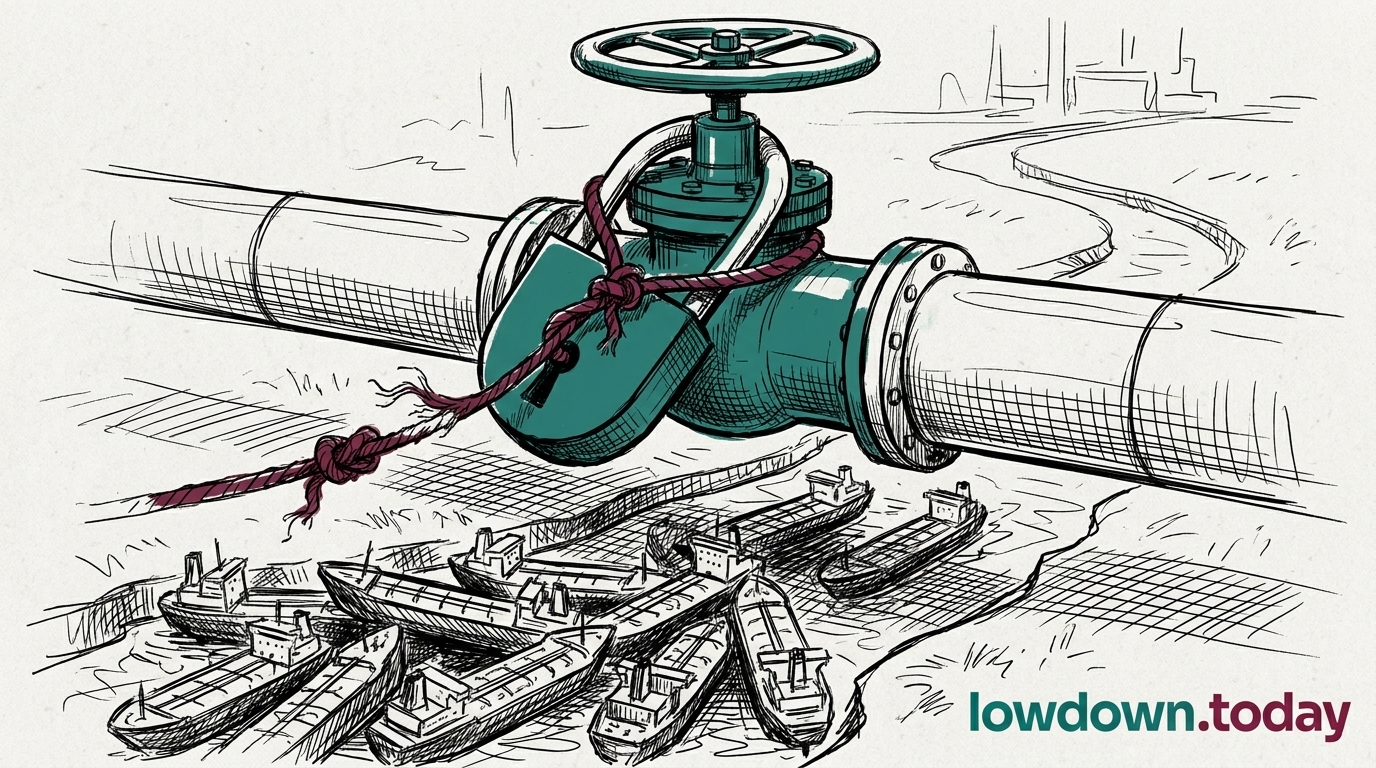
Trump supplied the week's only Iran line himself, telling reporters he would either negotiate or 'finish the job' militarily and signing no order alongside it 2. Read one way, a week of holding paper is deliberate restraint while the funeral runs and the Doha channel stays paused. Read another, it is a superpower issuing threats it does not convert into instruments while the other side converts its threats into missiles.


Deep Analysis

In plain English

The US government has a list of official actions it takes against countries, like freezing money or naming banned people and organisations. For a whole week, the Trump administration added zero new such actions against Iran, the IRGC or Hezbollah, even though it added plenty against six other countries and groups in the same period. At the same time, President Trump kept talking tough, saying he would either negotiate with Iran or 'finish the job' by force. But talking is not the same as signing something official, and this week Washington only did the talking.

What could happen next?
  • Meaning

    A documented week-long gap specifically on Iran, against a backdrop of six other active programmes, shifts the burden onto Washington to explain the omission as deliberate strategy rather than oversight.

First Reported In

Update #148 · Iran shoots the Hormuz route it rejected

US Treasury· 7 Jul 2026
Read original
Different Perspectives
Indian refiners
Indian refiners
Indian refiners kept lifting discounted Urals as the India/Baltic price split widened past $9-10 a barrel, a gap that only grows as GL X1's Iranian wind-down cuts an alternative discounted grade off the market by 17 July. Cheaper Russian feedstock is being locked in while it lasts.
Chinese refiners
Chinese refiners
Chinese refiners gain leverage as the Urals-Brent discount widens, since Beijing's state buyers already source discounted Russian barrels near the fiscal floor unaffected by Western insurance costs. A wider discount, if it holds past 23 July, lets them lock in cheaper term contracts regardless of the cap's outcome.
US money managers (CFTC-tracked)
Managed money trimmed WTI net length into the rally, positioning that reflects doubt the Hormuz premium survives without freight or war-risk confirmation. The Brent-WTI spread widening almost entirely on the Brent leg supports that scepticism about a broad-based repricing.
OPEC+ (Saudi-led subgroup)
Saudi Arabia is defending market share through a fourth straight 188kbd August hike even as OPEC's own July MOMR cut 2026 demand growth for the fourth consecutive month. At a $108-111 fiscal breakeven, every added barrel costs Riyadh revenue it cannot recoup, so the hike reads as a positioning signal, not a demand bet.
Greek shipping registries
Greece, backed by Cyprus and Malta, is pushing a three-month cap-freeze compromise against the Commission's freeze to January 2027 ahead of the 23 July vote. Athens' and Valletta's combined tanker registrations mean a shorter review gives their insurers more frequent chances to reprice risk on Russian cargoes.
Russia (Deputy PM Alexander Novak)
Novak extended the diesel export restriction to producers on 8 July, the first producer-binding curb of the war, protecting the domestic pump price ahead of any refinery repair timeline. Urals still trades below Russia's $59 budget floor even as Brent gained, so the ban trades export revenue for fiscal stability at home.