Skip to content
You can now search across every topic, entity and event.What's new
European Oil Markets
13JUL

Trump turns his threat on Netanyahu

3 min read
10:34UTC

Donald Trump told Benjamin Netanyahu in public on 9 June to 'be careful, or you will be on your own very soon', the first presidential rebuke aimed at Israel rather than Tehran since the war began.

EconomicDeveloping
Key takeaway

Trump aimed his first public threat at Israel rather than Iran, after Netanyahu defied his restraint request.

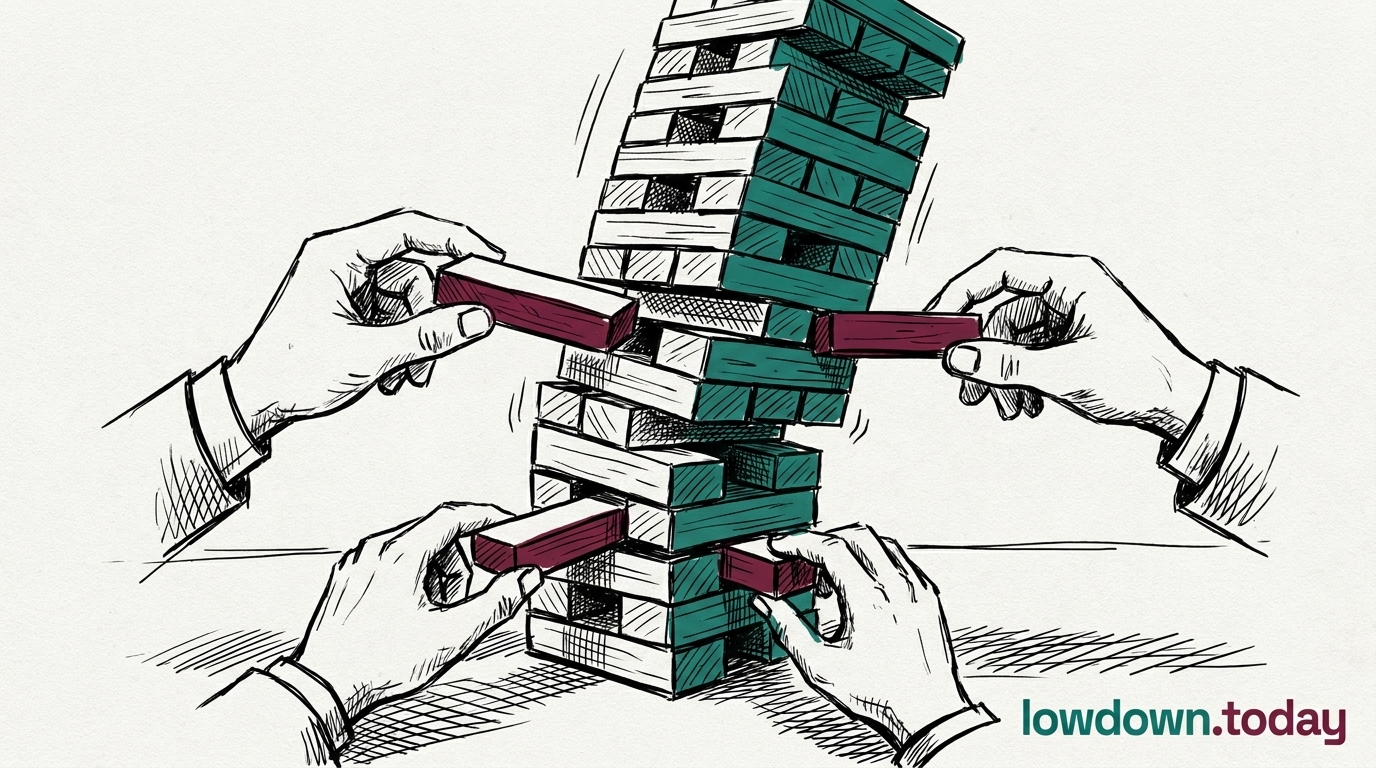
Donald Trump told Benjamin Netanyahu on Tuesday 9 June: "Bibi, you better be careful, or you will be on your own very soon" 1. The warning, given in an interview with Axios (a US digital news outlet), was the first time the US President aimed a public threat at Israel rather than at Tehran in 102 days of war.

The rebuke followed a deed Trump had asked Israel not to commit. A day earlier, on Monday 8 June, the Israel Defense Forces (IDF, Israel's military) struck inside Iran despite Trump's public request to Netanyahu not to retaliate for an IRGC missile salvo on Ramat David airbase . That strike hit the Karun Petrochemical Company at the Mahshahr Petrochemical Complex in Khuzestan, a plant that makes toluene diisocyanate and methylene diphenyl diisocyanate (TDI and MDI, polyurethane binders) and nitric acid, the chemical precursors that feed solid-fuel missile production. Iranian state media reported 14 wounded at the plant and one in Tehran, with no deaths 2.

Israel widened the war by choosing that target. The plant's parent, PGPIC (Persian Gulf Petrochemical Industries Company), has sat under US sanctions since 2019 for funding the IRGC, but it was the IDF's June targeting rationale, not the old US listing, that named the missile-precursor chemistry. By hitting the chemistry that builds missiles rather than the launchers that fire them, Israel moved from interdicting fielded weapons to degrading the industrial pipeline behind them, and it did so over an explicit American request for restraint.

Trump answered the strike with a warning rather than an order. A presidential rebuke still carries weight Tehran can read, and Israel did pause its Iran operations within hours of the exchange. The restraint argument cuts the other way too. The gap between Trump's request and the Monday strike removes Washington's claim that it can deliver Israeli restraint at the table, the one card it most needs against Tehran.


Deep Analysis

In plain English

The United States and Israel are supposed to be on the same side in this conflict, but they want different things. Trump wants a deal with Iran that reopens the Strait of Hormuz, a key shipping lane that is currently blocked, because the blockade is causing global economic damage. Netanyahu wants to keep hitting Iran until its government collapses or its nuclear programme is destroyed. On 8 June, Israeli forces bombed a chemical plant in Iran that Trump had asked them not to hit. The next day, Trump publicly warned Netanyahu on the record: back off, or Israel will be on its own. It was the first time in this conflict that a US president has publicly threatened to abandon an ally mid-war. Whether Trump means it, or whether Netanyahu believes he means it, determines what happens next.

Deep Analysis
Root Causes

The structural cause of this rupture is the collision between two incompatible war aims that Washington and Jerusalem have run in parallel since 28 February. Trump's primary goal is a signed deal that reopens Hormuz and removes the naval blockade cost.

Netanyahu's stated goal is the toppling of Iran's government and the elimination of Iran's nuclear capacity. The Karun strike , a petrochemical facility the IDF targeted on dual-use grounds despite Trump's no-retaliation request , exposed that tension publicly for the first time.

A secondary root cause is institutional: no formal US-Israel coordination mechanism constrains Israeli target selection in Iran. The pre-authorisation Netanyahu granted the IDF and Mossad for strikes without prior cabinet approval, documented in Israeli media, means Trump has no procedural lever beyond personal pressure.

The phone call on 1 June that halted the Beirut operation was the only precedent for that pressure working; the Karun strike shows Netanyahu calculated that lever would not be pulled for a petrochemical facility.

Escalation

Lateral escalation. The threat moves the escalation axis from the Iran-Israel military track to the US-Israel political track. This is a new front in the conflict, not a continuation of the existing one. Whether Netanyahu continues operating within or outside US parameters in the next 48-72 hours will determine if this becomes a structural break or an episode.

What could happen next?
  • Risk

    If Netanyahu defies the threat and conducts further Iranian strikes, Trump faces a credibility cost that may force actual policy consequences , arms restriction or blockade withdrawal , neither of which Washington has prepared for.

    Immediate · Assessed
  • Consequence

    Iran's negotiators will read the rebuke as evidence that the US and Israel are not a unified party, which may harden Tehran's demand for a separate US-Iran track before any Israel-adjacent concession.

    Short term · Assessed
  • Precedent

    A named public threat to a treaty ally delivered via media rather than diplomatic channel may become the standard US escalation-management tool for the remainder of this conflict.

    Medium term · Suggested
First Reported In

Update #122 · Trump warns Bibi as Israel strikes anyway

Al Jazeera· 9 Jun 2026
Read original
Different Perspectives
Greek shipping registries
Flag states dominating the tanker fleet await the EU's 15 July cap-freeze vote. A formula unlock toward $75 would loosen the ceiling squeezing insurance and crewing costs on their registered hulls.
US money managers
US money managers
NYMEX WTI managed-money net long fell 23% to +64,041 in the week to 7 July, trimming length into the rally on doubt the Hormuz premium survives without freight or war-risk confirmation.
European refiners (ARA)
ARA refiners are capturing an $80/bbl US diesel crack as Russian gasoil loadings collapsed to 234kbd before Novak's 31 July export ban even bites, widening the arbitrage straight into refining margins.
OPEC+
OPEC+
The seven-member group confirmed a fourth consecutive 188kbd August hike on 5 July, defending market share even though Saudi Arabia's $108-111/bbl breakeven means every added barrel costs Riyadh revenue it cannot recoup.
Indian refiners
Indian refiners
Refiners kept lifting discounted Urals as the India/Baltic split widened past $9-10 a barrel on 7 July. A wider Urals-Brent gap means cheaper feedstock locked in against Baltic buyers.
Russia
Russia
Urals traded $48.95-55.12 on 12-13 July, below Moscow's $59 budget floor even as Brent gained $6. Oil and gas fund roughly 30% of federal revenue, and Novak's diesel export ban is rationing a shrinking export base.