Skip to content
You can now search across every topic, entity and event.What's new
European Oil Markets
10JUL

Trump Replaces Own Deadline With Fourth Ultimatum

2 min read
09:40UTC

The 6 April power-grid threat has been displaced by a 48-hour Hormuz demand expiring Monday. It is the fourth reformulation in six weeks.

EconomicAssessed
Key takeaway

Four deadlines in six weeks with zero enforcement has exhausted the threat's credibility.

Donald Trump issued a new 48-hour Hormuz ultimatum via Truth Social on 4 April, superseding his own 6 April power-grid deadline : "Time is running out, 48 hours before all Hell will reign down on them." The new expiry is Monday 7 April. 1

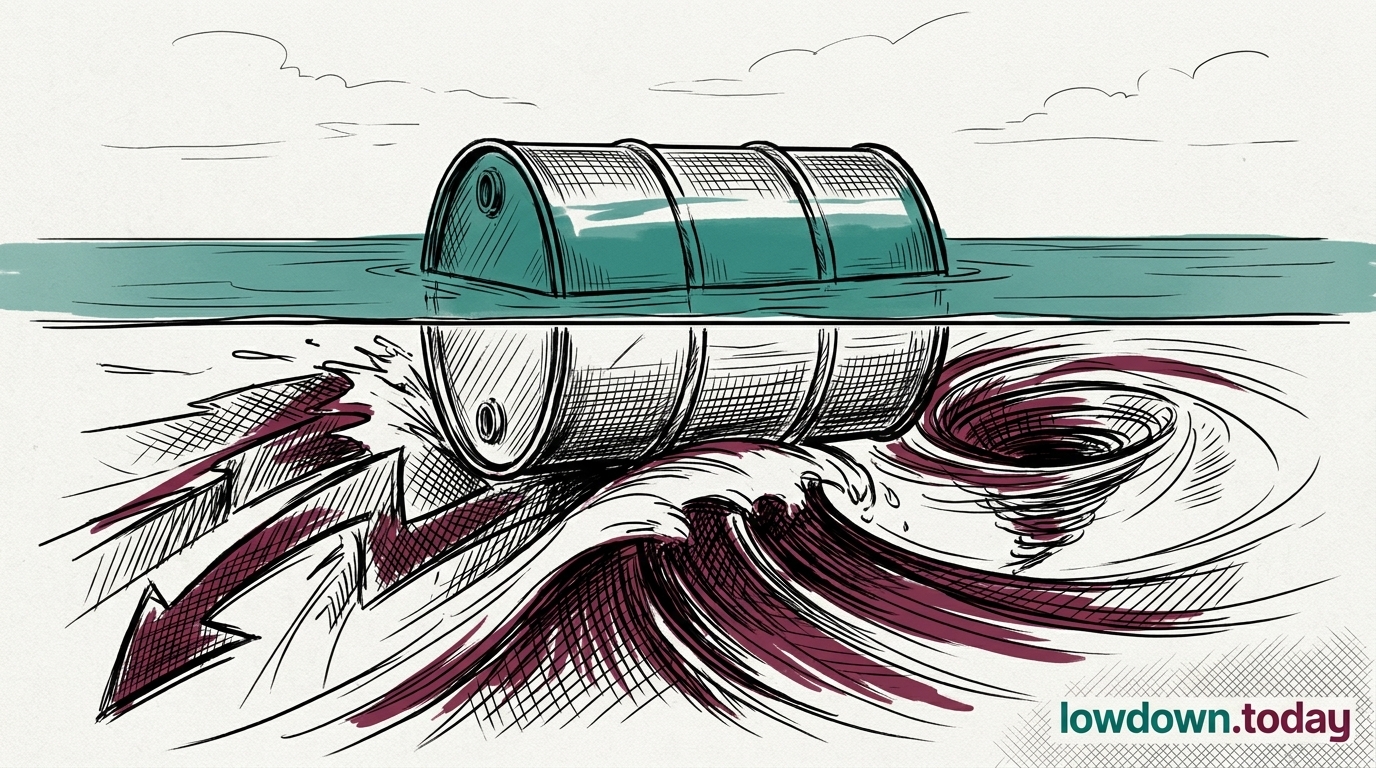
The threat changed shape again. The March deadline targeted 15 identified power grid nodes. The April formulation threatens power plants, oil facilities, and "possibly all desalination plants." The 16 March deadline was extended to 23 March. The 23 March deadline was extended to 6 April. The 6 April deadline was displaced, not extended, by an entirely new ultimatum issued 24 hours before its expiry. Four coercive ultimatums in 42 days, none acted upon.

Ceasefire talks are at a "dead end" per the Wall Street Journal on 3 April. 2 Iran refused to meet US officials in Islamabad. Iran's conditions (reparations, US base withdrawal, guarantees against future attacks) and Washington's single demand (reopen Hormuz) share no overlap. General Aliabadi dismissed Trump as "helpless, nervous, unbalanced and stupid." The deadline mechanism no longer functions as coercive leverage. It functions as domestic political communication.


Deep Analysis

In plain English

In the past six weeks, the US president has set four separate deadlines for Iran to reopen a critical shipping lane, each time threatening to attack Iranian infrastructure if the deadline was not met. None of the four deadlines has been enforced. This is a problem for whoever issues the next threat. In diplomacy, a threat only works if the other side believes you will actually do it. Four unanswered threats suggest you might not, which makes the fifth threat easier to ignore.

What could happen next?
  • Consequence

    The credibility of US coercive diplomacy toward Iran has been materially degraded by four unenforced ultimatums. Restoring it requires either enforcement or a fundamentally different coercive instrument.

First Reported In

Update #59 · Day 37: A Ground War Inside Iran That Nobody Will Name

Jerusalem Post· 5 Apr 2026
Read original
Different Perspectives
Indian refiners
Indian refiners
Indian refiners kept lifting discounted Urals as the India/Baltic price split widened past $9-10 a barrel, a gap that only grows as GL X1's Iranian wind-down cuts an alternative discounted grade off the market by 17 July. Cheaper Russian feedstock is being locked in while it lasts.
Chinese refiners
Chinese refiners
Chinese refiners gain leverage as the Urals-Brent discount widens, since Beijing's state buyers already source discounted Russian barrels near the fiscal floor unaffected by Western insurance costs. A wider discount, if it holds past 23 July, lets them lock in cheaper term contracts regardless of the cap's outcome.
US money managers (CFTC-tracked)
Managed money trimmed WTI net length into the rally, positioning that reflects doubt the Hormuz premium survives without freight or war-risk confirmation. The Brent-WTI spread widening almost entirely on the Brent leg supports that scepticism about a broad-based repricing.
OPEC+ (Saudi-led subgroup)
Saudi Arabia is defending market share through a fourth straight 188kbd August hike even as OPEC's own July MOMR cut 2026 demand growth for the fourth consecutive month. At a $108-111 fiscal breakeven, every added barrel costs Riyadh revenue it cannot recoup, so the hike reads as a positioning signal, not a demand bet.
Greek shipping registries
Greece, backed by Cyprus and Malta, is pushing a three-month cap-freeze compromise against the Commission's freeze to January 2027 ahead of the 23 July vote. Athens' and Valletta's combined tanker registrations mean a shorter review gives their insurers more frequent chances to reprice risk on Russian cargoes.
Russia (Deputy PM Alexander Novak)
Novak extended the diesel export restriction to producers on 8 July, the first producer-binding curb of the war, protecting the domestic pump price ahead of any refinery repair timeline. Urals still trades below Russia's $59 budget floor even as Brent gained, so the ban trades export revenue for fiscal stability at home.