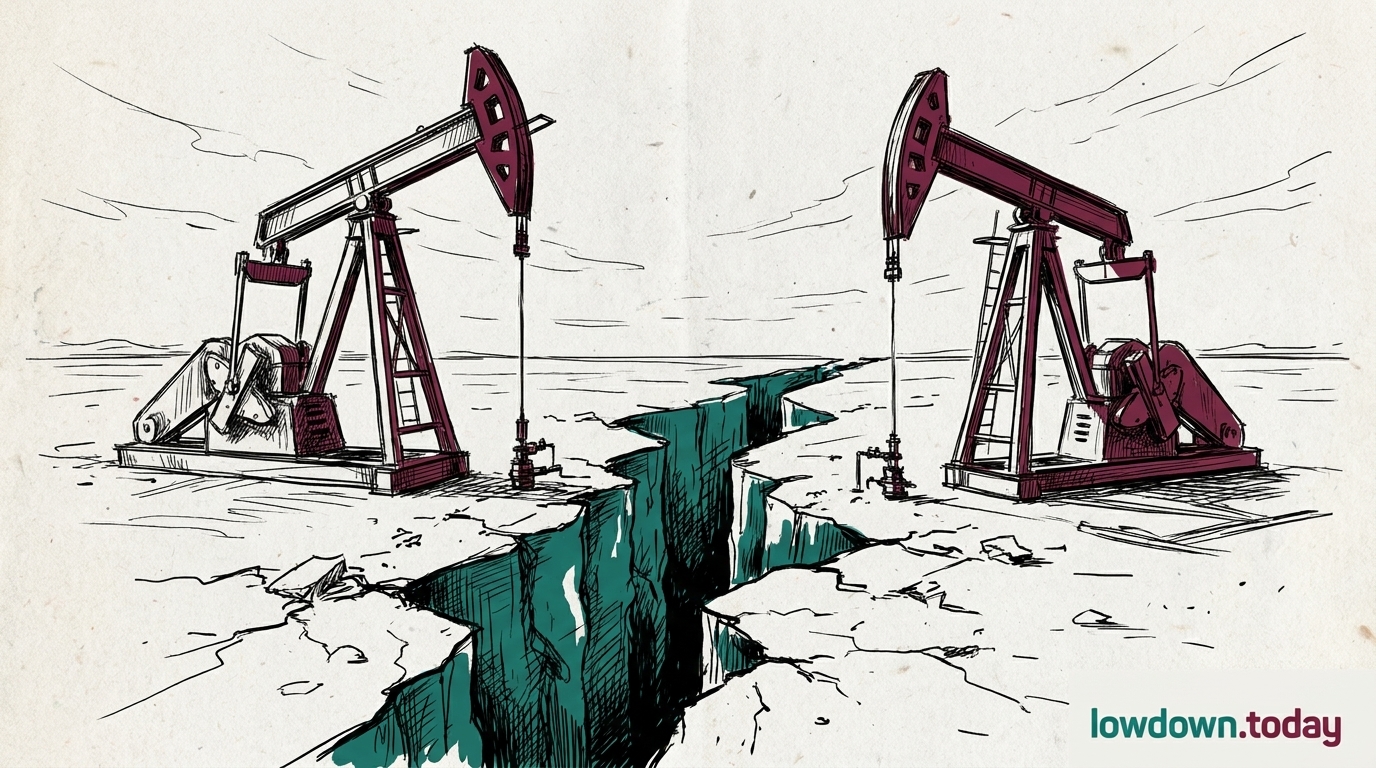
OFAC, the US Treasury's sanctions bureau, confirmed in its 18 June actions that it would issue no GL 134D successor to the vessel-services umbrella that lapsed clean on 17 June, settling a commodity-class split as deliberate policy1. The lapsed licence, General License 134C, was the legal cover letting Western insurers, crews and class societies service Russian-origin crude tankers. OFAC renewed gas and civil-nuclear cover under GL 55F on 11 June while leaving crude vessel services to die. Western P&I clubs, the insurers that underwrite tanker liability, lost their legal basis to service Russian crude when GL 134C lapsed.
The EU Council, representing member-state governments, adopted a mini-package on 15 June listing 34 individuals and 47 entities, of which 24 target Russian crude and product shipment and shadow-fleet operators2. It runs parallel to the 21st-package shadow-fleet listings flagged on 26 May. Neither blocks the shadow fleet directly. Both raise the compliance burden on the third-country operators that carry the volume, the Indian non-life insurers and Turkish intermediaries that step in where Western cover withdraws.
Urals, Russia's main export crude, printed $55.49 a barrel on 18 June and spiked 8.81% to $66.58 on 19 June3, leaving Russia earning $11 to $22 a barrel above the frozen $44.10 G7 cap on any barrel that still uses Western services. The European Commission's move to freeze that cap to January 2027, blocking a 15 July auto-lift toward roughly $75, now reinforces the lapse rather than sitting beside it. A 27 June deadline on the Lukoil-ISAB sale licence tightens the same clock. The war context behind the enforcement belongs to Russia-Ukraine-war-2026; the trade here is the gap between a $44.10 cap and a $66.58 print, and the placement cost it forces onto every compliant barrel.




