Skip to content
You can now search across every topic, entity and event.What's new
European Oil Markets
6JUL

EU moves to freeze the $44 cap

3 min read
09:52UTC

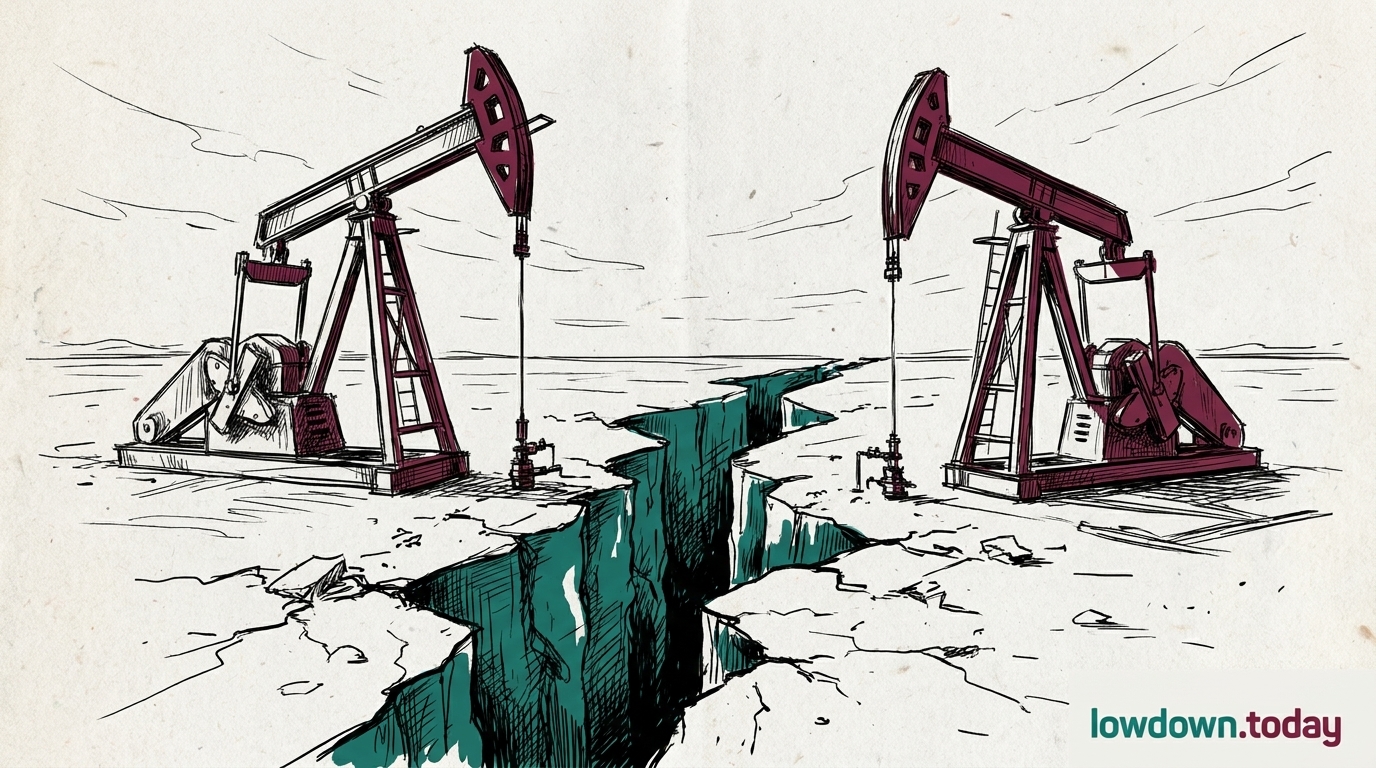
The European Commission moved to freeze the $44.10 Russia oil price cap to January 2027, killing the 15 July formula review that would have auto-lifted the ceiling toward roughly $75.

EconomicDeveloping
Key takeaway

Brussels moved to freeze the Russia oil cap before a July review would have auto-lifted it toward $75.

The European Commission, the EU's executive body, moved to freeze the $44.10 G7 price cap on Russian crude until January 2027, pausing the adjustment mechanism and killing the 15 July formula review that would have auto-lifted the ceiling toward roughly $75 1. The cap is the legal limit on what buyers can pay for Russian seaborne crude and still access Western shipping and insurance. The 15 June mini-package of 34 individuals and 47 entities is adopted; the freeze itself is sourced to Baker McKenzie synthesis, with no adopted Council legal text as of 18 June.

On a falling-Brent formula, the 15 July review would have lifted the $44.10 ceiling toward $75, restoring Russian earnings just as the GL 134C vessel-services lapse cut compliant-terms placement, so the freeze and the review were set to collide. The two clocks pulling opposite ways into Evian were flagged last week . Pausing the mechanism keeps both squeezes live at once rather than letting one undo the other.

Malta and Greece, both major shipowning states, continue to block the full maritime-services ban that would extend coverage to Western shipping services, leaving the 21st package partial. A freeze that adopts before 15 July locks the revenue constraint; a Malta-Greece stall past that date converts the cap into a decorative mechanism as the reference price collapses, with the Urals discount given more room to widen if the cap holds while Brent falls.


Deep Analysis

In plain English

The G7 countries and the EU set a maximum price at which they allow Western companies to provide shipping services to tankers carrying Russian oil: currently $44.10 per barrel. The idea is that if Russian oil can only be sold at that low price using Western services, Russia earns less money to fund the war. Every few months there was supposed to be a review: if the market price was close to the cap, the cap would be raised so it kept biting. The EU has now decided to pause that review until January 2027, keeping the $44.10 cap in place regardless of where oil prices go. This is intended to put maximum financial pressure on Russia. The catch is that Russia has found ways to sell oil at higher prices without using Western shipping services, so whether the cap actually constrains Russian earnings depends on how tightly the shipping services part is enforced, and two EU countries are blocking that.

Deep Analysis
Root Causes

The 15 July formula auto-lift would have restored Russian export revenue at precisely the moment the GL 134C lapse tightened Western vessel services on Russian crude.

The Commission's decision to freeze the cap reflects the G7 Evian alignment : Trump's 'soon we'll be able to' signal on Russia oil sanctions tightening, combined with Hormuz partial normalisation reducing the West's need for Russian crude at any price, created the political window for the Commission to abandon the formula-based adjustment in favour of a flat freeze.

Malta and Greece's blocking of the maritime-services ban reflects a structural economic constraint: Malta operates the world's largest ship registry (~17% of global merchant fleet by gross tonnage), and Greece controls roughly 20% of global merchant tonnage. Both countries' shipping sectors would face direct revenue loss from a ban on providing services to Russian-crude tankers, including vessels nominally flagged to non-EU registries but owned by Piraeus or Valletta-connected operators.

First Reported In

Update #9 · Russia cliff landed while screens sold Iran

Baker McKenzie· 18 Jun 2026
Read original
Different Perspectives
Greek shipping registries
Flag states dominating the tanker fleet await the EU's 15 July cap-freeze vote. A formula unlock toward $75 would loosen the ceiling squeezing insurance and crewing costs on their registered hulls.
US money managers
US money managers
NYMEX WTI managed-money net long fell 23% to +64,041 in the week to 7 July, trimming length into the rally on doubt the Hormuz premium survives without freight or war-risk confirmation.
European refiners (ARA)
ARA refiners are capturing an $80/bbl US diesel crack as Russian gasoil loadings collapsed to 234kbd before Novak's 31 July export ban even bites, widening the arbitrage straight into refining margins.
OPEC+
OPEC+
The seven-member group confirmed a fourth consecutive 188kbd August hike on 5 July, defending market share even though Saudi Arabia's $108-111/bbl breakeven means every added barrel costs Riyadh revenue it cannot recoup.
Indian refiners
Indian refiners
Refiners kept lifting discounted Urals as the India/Baltic split widened past $9-10 a barrel on 7 July. A wider Urals-Brent gap means cheaper feedstock locked in against Baltic buyers.
Russia
Russia
Urals traded $48.95-55.12 on 12-13 July, below Moscow's $59 budget floor even as Brent gained $6. Oil and gas fund roughly 30% of federal revenue, and Novak's diesel export ban is rationing a shrinking export base.