Skip to content
Welcome, thoughtbot's Giant Robots listeners!Start here
European Oil Markets
22JUN

Turkey sends Mecca pact to parliament

3 min read
09:55UTC

The published 16-article text of the Saudi, Turkish and Pakistani defence pact says it takes effect only on final ratification, after the three states had already invoked it.

EconomicDeveloping
Key takeaway

Turkey's parliament must ratify the Mecca pact before its collective-defence clause binds Ankara.

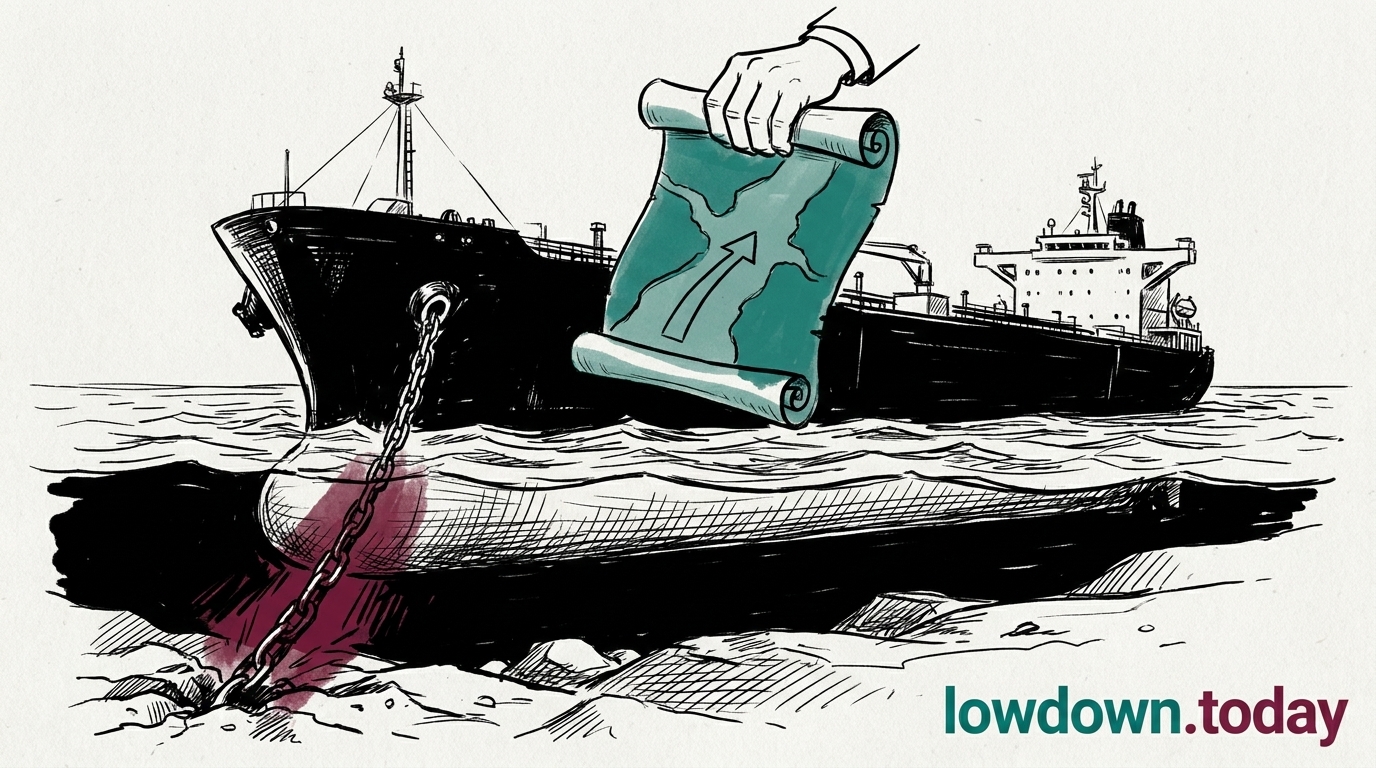
Turkey sent the ratification bill for the Mecca Joint Defence Agreement, the mutual-defence pact Saudi Arabia, Turkey and Pakistan signed on 7 August, to the Grand National Assembly of Turkey, in Turkish the Türkiye Büyük Millet Meclisi (TBMM), on or about 20 October. The daily Gazete Oksijen published its 16 articles⁠1.

Article 2 says "an external armed attack on any Party is treated as an attack on all Parties", with help "including military means and capabilities", which echoes Article 5 of the treaty of the North Atlantic Treaty Organization (NATO). Article 7 commits the parties to joint defence production and research. Turkish Radio and Television (TRT) says no party may leave for the first 10 years. No article sets up a joint military command, though Article 6 encourages deployments and Article 8 creates a committee of foreign and defence ministers and chiefs of staff to direct the joint defence. The text names no enemy.

Article 16 brings the pact into force only when the last instrument of ratification is deposited (lodged with the pact's secretariat). Saudi Arabia, Turkey and Pakistan invoked it in Riyadh on 5 October, before Turkey had ratified. Under Article 90 of Turkey's constitution a treaty binds Ankara only after parliament approves it by law, so the collective-defence clause the three ministers activated could not yet bind Turkey. Turkish officials can argue that the 5 October invocation was a political commitment that ratification makes formal.


Deep Analysis

In plain English

Saudi Arabia, Turkey and Pakistan signed a defence pact in Mecca on 7 August. Like NATO, it says that an attack on one country counts as an attack on all three. In Turkey, international treaties only become law after parliament votes for them. The Turkish government has now sent the pact to parliament, and its full text has been published for the first time.

Deep Analysis
Root Causes

Turkey's constitution splits treaty power between the executive, which signs, and parliament, which must approve by law under Article 90. A treaty that binds Turkish forces cannot take effect by ministerial invocation alone.

The pact's members also face different threats. Pakistan's main rival is India, Saudi Arabia's are the Houthis and Iran, and Turkey's are on its Syrian and Iraqi borders. A text that names no enemy lets each member read Article 2 against its own threat.

What could happen next?
  • Meaning

    The 5 October invocation {{EVREF:/t/iran-conflict-2026/181/saudis-turks-and-pakistanis-invoke-pact/}} had political weight only, because Article 16 had not yet brought the pact into force.

    Immediate · Assessed
  • Opportunity

    Article 7 gives Turkish and Pakistani defence firms a treaty basis for joint production deals with Saudi Arabia.

    Long term · Suggested
  • Risk

    Ankara could delay ratification to bargain with Riyadh, leaving the pact without legal force during active Houthi attacks.

    Short term · Suggested
First Reported In

Update #182 · Iran says it mined Hormuz and hit 7 ships

Gazete Oksijen· 22 Oct 2026
Read original →
Causes and effects
Different Perspectives
Gulf oil producer
Gulf oil producer
Secured OPEC's confirmed 188,000 b/d September increment with the next meeting set for 6 September, but the Secretariat's own 2 August release says nothing about the fourth quarter. Output guidance beyond September remains undisclosed even as delegate sourcing keeps filling that gap.
Money manager positioned in WTI
Added 28,964 lots to a 92,943 net long in NYMEX WTI in the week to 28 July, against just 1,485 added to Brent's 15,740, a roughly twenty-to-one split. Conviction sits in the American benchmark even as the European diesel story sets the record.
Indian refiner buying Urals
Bought Russian crude at a discount that narrowed to $1-2 a barrel in the week to 29 July from over $10, as Hormuz risk pushed it toward Urals. If that risk eases with the strike now called off, the discount it is currently enjoying could re-widen just as fast.
Russian diesel exporter
Novak tied any lifting of the diesel export ban, due to lapse 31 July, to an unspecified market recovery with no date, and pushed the gasoline ban to end-2026. An open-ended constraint suits an exporter benefiting from the record European crack it feeds.
War-risk underwriter
Withdrew war-risk cover for Saudi-linked hulls on 24 July and has not reinstated it, holding Bab el-Mandeb tanker transits near 7.5 a day. A cancelled strike does not by itself trigger the committee review needed to re-accept the class.
Northwest European refiner
Sources only 17% of diesel imports from Saudi Red Sea ports against the Mediterranean's 24%, so the ARA crack at $85.86 trails the Med print by $5.81. Lower Red Sea exposure is cushioning it against the rerouting cost, not eliminating it.

Written with AI from Lowdown's published reporting. Not individually reviewed by an editor. Editorial standards.
