Skip to content
You can now search across every topic, entity and event.What's new
European Oil Markets
18MAY

Islamabad talks end with no deal reached

2 min read
17:30UTC

Vance departs after two days of negotiations with no agreement, no joint text, and no next meeting.

EconomicDeveloping
Key takeaway

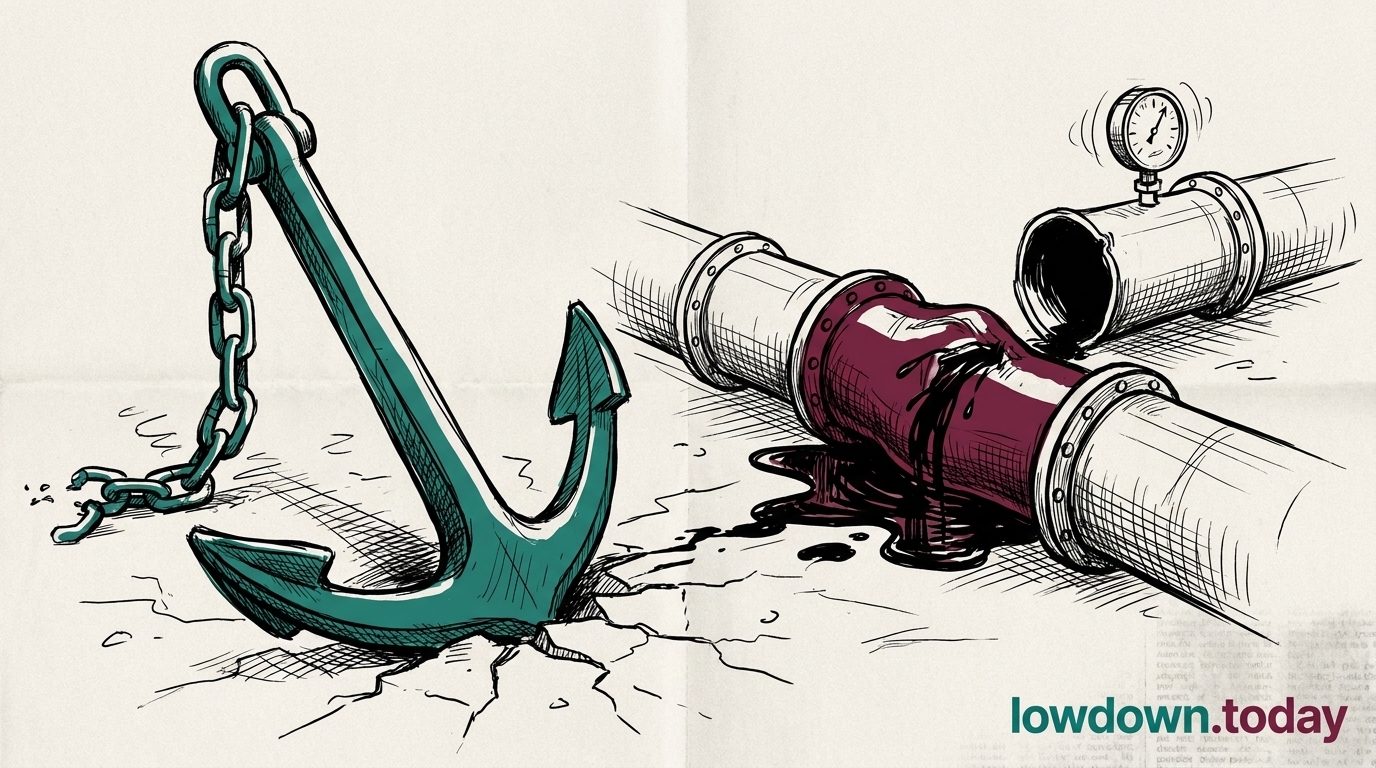
The ceasefire's negotiation window is running out with nothing behind it.

JD Vance left Islamabad on 12 April after two days of talks at the Serena Hotel, having presented what he called a "final and best offer" . Iran refused to commit to forgoing nuclear weapons. No joint statement was issued, no written agreement produced, and no date set for a next round.

The talks opened on 11 April as proximity negotiations, with Pakistani officials shuttling between the two delegations, before shifting to direct sessions. Both sides exchanged written proposals for the first time, but the paper produced no convergence. Vance told reporters the breakdown was "bad news for Iran much more than for the US."

Three structural deadlocks killed the text: Iran's refusal to forswear nuclear weapons, its refusal to hand over its enriched uranium, and its demand for Hormuz toll-collection authority. Each one alone would have blocked an agreement. Together they left no negotiating space.

The ceasefire, announced on 7 April, included a negotiation window of two weeks or slightly longer. That window now has no framework, no next venue, and no interlocutor claiming authority to extend it. OFAC's General License U, covered in detail in the sanctions event below, expires in seven days with no Treasury renewal signal issued. The ceasefire itself expires at the end of the month. Two deadlines, zero framework.


Deep Analysis

In plain English

Imagine two people trying to sell a house. One says 'I'll only buy if you accept that I own it outright, no mortgage.' The other says 'I'll only sell if you agree I can rent the downstairs flat forever.' They can't even start writing a contract. That is what happened in Islamabad. The US said Iran must give up its nuclear programme permanently. Iran said the right to nuclear enrichment is non-negotiable. Those two positions cannot be put in the same document. So after 21 hours of talking through intermediaries, the American delegation left. The ceasefire, the agreement to stop shooting, is still technically in place, but it runs out in about ten days. There is now no plan for what happens after that.

Deep Analysis
Root Causes

The proximity format itself was structurally insufficient: Pakistani officials walking paper messages between delegations cannot bridge a gap that requires both sides to move simultaneously on enrichment and Hormuz without losing domestic standing.

The US delegation's composition (Vance, Witkoff, Kushner) prioritised political loyalty over Iran nuclear expertise. The Arms Control Association assessed this explicitly in March 2026, noting negotiators arrived without the technical depth that the 2015 JCPOA team brought.

Iran's parliamentary delegation composition was itself a domestic signal: sending Ghalibaf alongside Araghchi meant the hardliner bloc had a seat at the table and a veto over any text that moved on enrichment.

What could happen next?
  • Consequence

    With no next round scheduled and Vance framing his offer as 'final', the US has publicly exhausted its concession space before the 22 April ceasefire expiry, removing the diplomatic path for the remaining ten days.

    Immediate · High
  • Risk

    Iran's state media framing ('US overreach', 'ball in America's court') gives Tehran a pre-built domestic narrative for resuming hostilities that places blame externally, reducing the domestic political cost of walking away.

    Short term · High
  • Precedent

    If the ceasefire collapses without a framework, it establishes that the first direct US-Iran talks since 1979 produced no transferable architecture, making any future negotiation start from scratch rather than building on Islamabad.

    Long term · Medium
First Reported In

Update #66 · Islamabad collapses: 10 days to expiry

Al Jazeera· 12 Apr 2026
Read original
Different Perspectives
Greek shipping registries
Flag states dominating the tanker fleet await the EU's 15 July cap-freeze vote. A formula unlock toward $75 would loosen the ceiling squeezing insurance and crewing costs on their registered hulls.
US money managers
US money managers
NYMEX WTI managed-money net long fell 23% to +64,041 in the week to 7 July, trimming length into the rally on doubt the Hormuz premium survives without freight or war-risk confirmation.
European refiners (ARA)
ARA refiners are capturing an $80/bbl US diesel crack as Russian gasoil loadings collapsed to 234kbd before Novak's 31 July export ban even bites, widening the arbitrage straight into refining margins.
OPEC+
OPEC+
The seven-member group confirmed a fourth consecutive 188kbd August hike on 5 July, defending market share even though Saudi Arabia's $108-111/bbl breakeven means every added barrel costs Riyadh revenue it cannot recoup.
Indian refiners
Indian refiners
Refiners kept lifting discounted Urals as the India/Baltic split widened past $9-10 a barrel on 7 July. A wider Urals-Brent gap means cheaper feedstock locked in against Baltic buyers.
Russia
Russia
Urals traded $48.95-55.12 on 12-13 July, below Moscow's $59 budget floor even as Brent gained $6. Oil and gas fund roughly 30% of federal revenue, and Novak's diesel export ban is rationing a shrinking export base.