Skip to content
You can now search across every topic, entity and event.What's new
European Oil Markets
18MAY

Iran zone now spans Fujairah, Khorfakkan

4 min read
17:30UTC

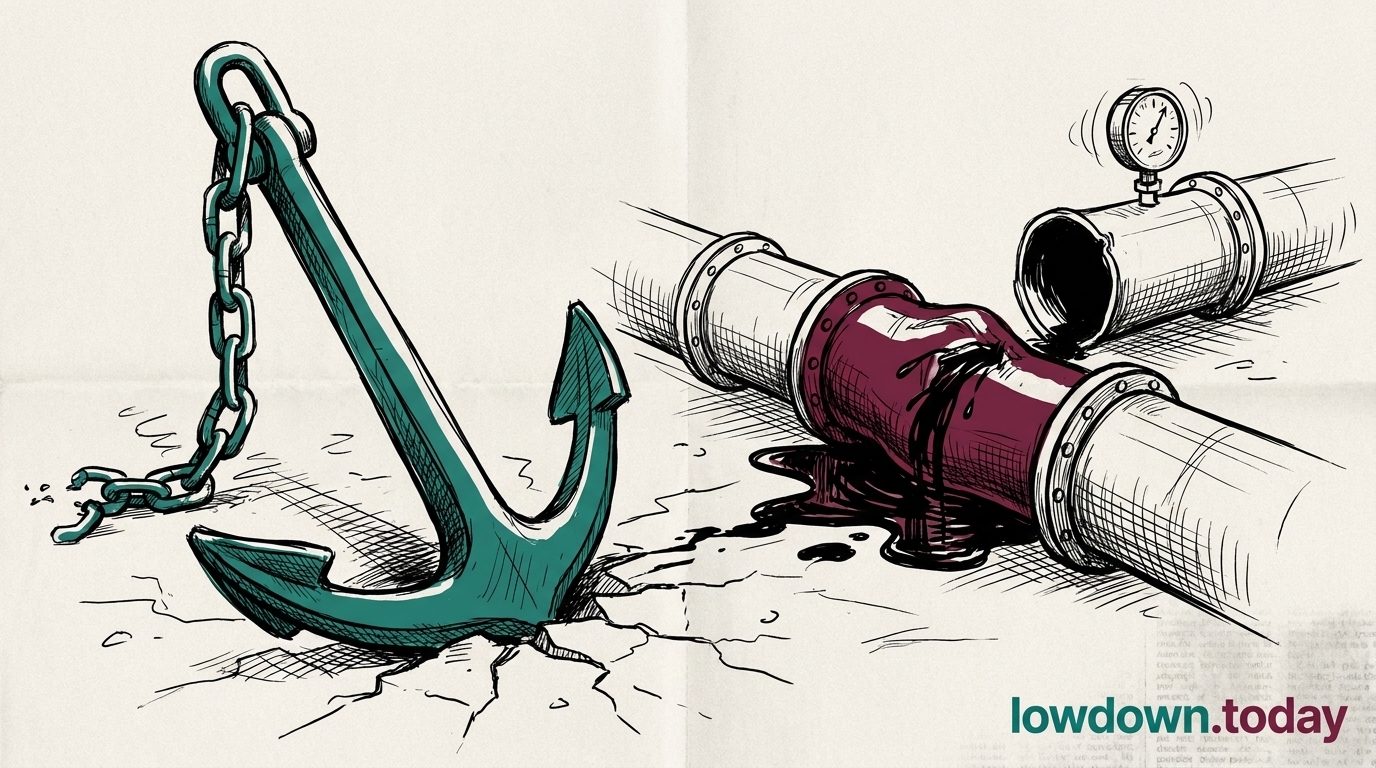
Iran extended its declared maritime control area over Fujairah and Khorfakkan on 4 May, then struck the Fujairah oil terminal with drones and missiles, the first attack on the UAE since the 16 April Trump ceasefire.

EconomicDeveloping
Key takeaway

Iran's expanded zone closes the UAE's bypass ports; the Trump ceasefire remains the named regime.

Iran extended its declared maritime control area on Monday 4 May to cover Fujairah and Khorfakkan, the two Gulf of Oman ports the UAE relied on to bypass the blocked Strait of Hormuz 1. Iranian drones and missiles struck the Fujairah oil terminal the same day, the first attack on UAE territory since the Trump ceasefire of 16 April. UAE air defences engaged 15 missiles and four drones; one drone got through and sparked a fire at the terminal, wounding three Indian nationals 2. A UAE-linked tanker was struck twice in the strait, and South Korean-operated HMM Namu (Hyundai Merchant Marine) caught fire while at anchor off the UAE the same day.

The expansion drags two Emirati ports inside the kinetic zone for the first time in the war. Fujairah and Khorfakkan sit on The Gulf of Oman side of the peninsula and were the workaround the UAE used to keep crude flowing while the strait was closed; Iran's announcement removes the workaround. Emirati shippers that diverted to Fujairah after the 28 February escalation are now back inside the same risk envelope they thought they had left behind. UAE quit OPEC (Organisation of the Petroleum Exporting Countries) on Friday 1 May and turned to Asian buyers when Brussels declined the first post-conflict tanker ; the new zone closes the maritime route for that trade until either the Iranian announcement is rolled back or Emirati air defences carry the full intercept load.

Pete Hegseth, the US Defence Secretary, told reporters the ceasefire 'remains in place' despite the kinetic exchange, the first explicit administration position that engagement and ceasefire status can coexist 3. The contradiction is now operational policy: the Trump 16 April ceasefire still names the regime even as Iranian munitions land on UAE soil and American destroyers sink Iranian small craft in the same week.


Deep Analysis

In plain English

Iran struck a major oil port in the United Arab Emirates on 4 May and simultaneously declared that the UAE's two main bypass ports are now inside its military control zone. Since Iran blocked the Strait of Hormuz in mid-April, ships had been rerouting through UAE ports to avoid the strait. Iran has now closed that workaround too. Fujairah, the port that was struck, is one of the world's biggest ship-refuelling hubs. UAE air defences shot down 15 of the 19 incoming missiles and drones, but one drone got through and started a fire; three Indian workers at the terminal were wounded in the strike. Iran had not struck the UAE since a ceasefire was announced in mid-April; 4 May broke that three-week lull.

Deep Analysis
Root Causes

The Fujairah bypass route exposed a structural gap in Iran's toll enforcement: vessels rerouting around Hormuz through Fujairah and Khorfakkan were generating zero toll revenue for the IRGC and demonstrating to global shippers that alternatives existed. The IRGC's doctrine requires there to be no viable alternative; the existence of a functioning bypass contradicted the enforcement architecture the Majlis sovereignty law created.

India's stake is the second structural driver: three of the injured workers at Fujairah were Indian nationals, and Indian shipping has been the largest non-Chinese user of the Fujairah bypass since mid-April. The strike functionally ends India's ability to claim neutral status while continuing to use Fujairah as its primary Gulf energy logistics hub.

What could happen next?
  • Consequence

    India's ability to maintain diplomatic neutrality collapses if Fujairah remains inside the Iranian enforcement zone, as Indian nationals and Indian-routed energy cargoes are now directly at risk.

  • Risk

    The elimination of the Fujairah bypass closes the last commercially viable alternative routing, concentrating all price pressure on a single Hormuz chokepoint and raising the floor for any insurance-market re-opening.

First Reported In

Update #89 · Truxtun gets through; Trump pulls back

CBS News· 6 May 2026
Read original
Different Perspectives
Indian refiners
Indian refiners
Indian refiners kept lifting discounted Urals as the India/Baltic price split widened past $9-10 a barrel, a gap that only grows as GL X1's Iranian wind-down cuts an alternative discounted grade off the market by 17 July. Cheaper Russian feedstock is being locked in while it lasts.
Chinese refiners
Chinese refiners
Chinese refiners gain leverage as the Urals-Brent discount widens, since Beijing's state buyers already source discounted Russian barrels near the fiscal floor unaffected by Western insurance costs. A wider discount, if it holds past 23 July, lets them lock in cheaper term contracts regardless of the cap's outcome.
US money managers (CFTC-tracked)
Managed money trimmed WTI net length into the rally, positioning that reflects doubt the Hormuz premium survives without freight or war-risk confirmation. The Brent-WTI spread widening almost entirely on the Brent leg supports that scepticism about a broad-based repricing.
OPEC+ (Saudi-led subgroup)
Saudi Arabia is defending market share through a fourth straight 188kbd August hike even as OPEC's own July MOMR cut 2026 demand growth for the fourth consecutive month. At a $108-111 fiscal breakeven, every added barrel costs Riyadh revenue it cannot recoup, so the hike reads as a positioning signal, not a demand bet.
Greek shipping registries
Greece, backed by Cyprus and Malta, is pushing a three-month cap-freeze compromise against the Commission's freeze to January 2027 ahead of the 23 July vote. Athens' and Valletta's combined tanker registrations mean a shorter review gives their insurers more frequent chances to reprice risk on Russian cargoes.
Russia (Deputy PM Alexander Novak)
Novak extended the diesel export restriction to producers on 8 July, the first producer-binding curb of the war, protecting the domestic pump price ahead of any refinery repair timeline. Urals still trades below Russia's $59 budget floor even as Brent gained, so the ban trades export revenue for fiscal stability at home.