Skip to content
You can now search across every topic, entity and event.What's new
European Oil Markets
18MAY

Houthis threaten to close Bab al-Mandeb

2 min read
17:30UTC

A senior Houthi official described closing the Red Sea strait as one stage in a deliberate escalation ladder.

EconomicDeveloping
Key takeaway

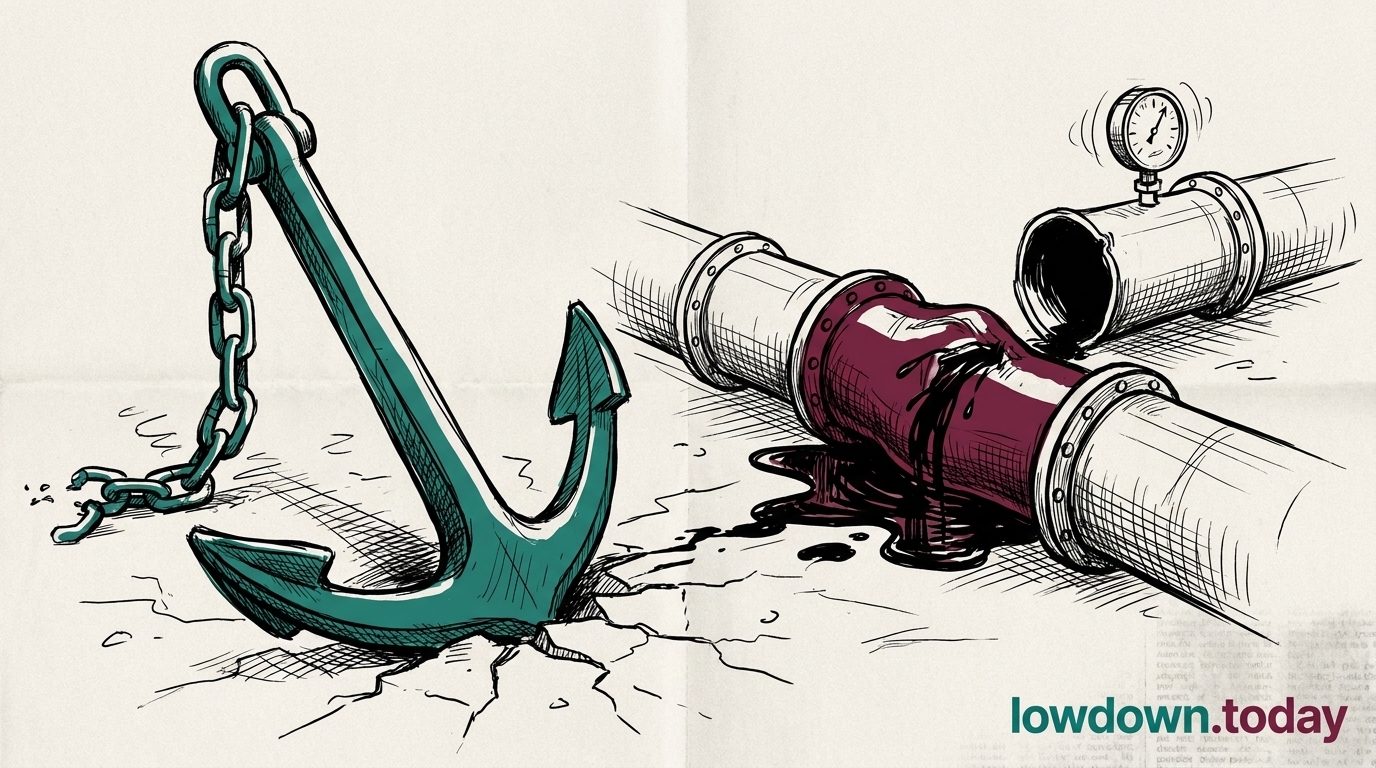
Dual-chokepoint pressure is now an active threat, not a theoretical scenario.

Mohammed Mansour, Houthi deputy information minister, told reporters: "We are conducting this battle in stages, and closing the Bab al-Mandeb strait is among our options." 1 Roughly 30% of Israeli imports and 6-7 million barrels per day of oil, approximately 7% of global supply, pass through the strait.

Mansour's language mirrors Iranian diplomatic formulations around Hormuz in the war's first week. The framing is a staged escalation ladder, not a single decision. Yahya Saree announced three formal red lines before the missile attack: US and Israeli use of the Red Sea for strikes, growing third-country participation, and escalating attacks on the "Axis of Resistance."

The IEA stated explicitly that its 400 million barrel emergency release "cannot substitute for the transit route itself" . Iran's Hormuz traffic control already routes vessels through a narrow corridor past Larak Island under IRGC escort; the Majlis toll bill would codify that system into domestic law. If both chokepoints tighten further, no reserve release addresses the shortfall.


Deep Analysis

In plain English

Bab al-Mandeb is a narrow sea passage between Yemen and East Africa. Almost all the oil and cargo that moves between Asia and Europe passes through it. Around 6-7 million barrels of oil cross every day. A senior Houthi official said on 28 March that closing this strait is one of their options as the war continues. They already have missiles and drones on Yemen's coastline. Iran already controls the other major oil route, the Strait of Hormuz. If the Houthis block Bab al-Mandeb as well, there would be no alternative route for most of the world's oil. Emergency reserves would run out in weeks; there is no spare capacity to replace both routes at once.

Deep Analysis
Root Causes

The structural driver is the Houthis' geographic positioning. Yemen's Tihama coast overlooks Bab al-Mandeb's 29-kilometre narrows. Anti-ship missiles already deployed there can reach any vessel in the strait. Unlike Hormuz, there is no second passage: cargo cannot route around Bab al-Mandeb without circumnavigating Africa, adding 6,000 nautical miles and roughly 20 days per voyage.

The Houthis' leverage exists regardless of Iranian direction because the geography is permanent. Tehran did not create this chokepoint; it merely held the group back from using it.

What could happen next?
  • Risk

    Dual chokepoint closure would exceed IEA emergency reserve capacity; no government has a contingency plan for simultaneous Hormuz restriction and Bab al-Mandeb closure.

  • Consequence

    Any ceasefire negotiation must now include Houthi participation or Bab al-Mandeb remains at risk regardless of what Iran agrees.

First Reported In

Update #50 · Houthis join; Iran holds two chokepoints

Axios· 28 Mar 2026
Read original
Different Perspectives
Indian refiners
Indian refiners
Indian refiners kept lifting discounted Urals as the India/Baltic price split widened past $9-10 a barrel, a gap that only grows as GL X1's Iranian wind-down cuts an alternative discounted grade off the market by 17 July. Cheaper Russian feedstock is being locked in while it lasts.
Chinese refiners
Chinese refiners
Chinese refiners gain leverage as the Urals-Brent discount widens, since Beijing's state buyers already source discounted Russian barrels near the fiscal floor unaffected by Western insurance costs. A wider discount, if it holds past 23 July, lets them lock in cheaper term contracts regardless of the cap's outcome.
US money managers (CFTC-tracked)
Managed money trimmed WTI net length into the rally, positioning that reflects doubt the Hormuz premium survives without freight or war-risk confirmation. The Brent-WTI spread widening almost entirely on the Brent leg supports that scepticism about a broad-based repricing.
OPEC+ (Saudi-led subgroup)
Saudi Arabia is defending market share through a fourth straight 188kbd August hike even as OPEC's own July MOMR cut 2026 demand growth for the fourth consecutive month. At a $108-111 fiscal breakeven, every added barrel costs Riyadh revenue it cannot recoup, so the hike reads as a positioning signal, not a demand bet.
Greek shipping registries
Greece, backed by Cyprus and Malta, is pushing a three-month cap-freeze compromise against the Commission's freeze to January 2027 ahead of the 23 July vote. Athens' and Valletta's combined tanker registrations mean a shorter review gives their insurers more frequent chances to reprice risk on Russian cargoes.
Russia (Deputy PM Alexander Novak)
Novak extended the diesel export restriction to producers on 8 July, the first producer-binding curb of the war, protecting the domestic pump price ahead of any refinery repair timeline. Urals still trades below Russia's $59 budget floor even as Brent gained, so the ban trades export revenue for fiscal stability at home.