Skip to content
You can now search across every topic, entity and event.What's new
European Oil Markets
18MAY

Brent settles $105.33, war's biggest week

3 min read
17:30UTC

Brent crude closed Saturday 25 April at $105.33 per barrel, up roughly 16% on the week despite an indefinite ceasefire announced five days earlier.

EconomicDeveloping
Key takeaway

Brent's biggest week of the war registers a market that has stopped pricing the ceasefire and begun pricing the carriers.

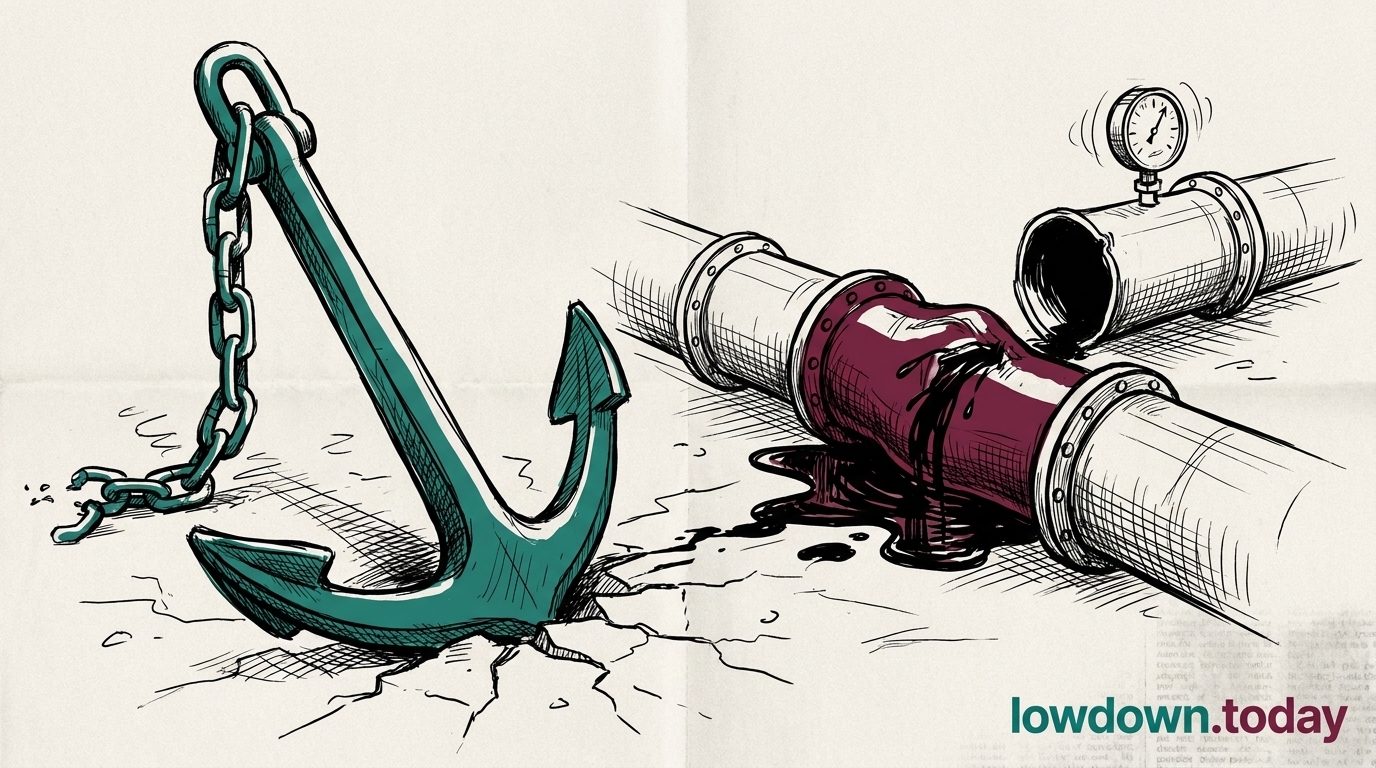
Brent Crude settled at $105.33 per barrel on Saturday 25 April, the largest weekly gain (roughly 16%) since the war began and approximately 57% above the pre-war baseline of about $67 1. The settlement came five days after the indefinite ceasefire announcement that briefly knocked the contract back. Brent is the global crude benchmark used to price two-thirds of the world's traded oil; a move of this scale on a ceasefire week is a market correction against the underlying assumption.

Brent has now ignored two pieces of de-escalation paper inside a fortnight: the indefinite-ceasefire announcement and the Lebanon ceasefire extension on 23 April . Traders are pricing the inverse of the diplomatic track; the carrier concentration in CENTCOM AOR, the IRGC's verbal escalation and the AIS-blank Hormuz transits are now the dominant inputs.

Insurance, not navies, sets the structural floor under the price. With the major Protection and Indemnity clubs out of Iranian waters and war-risk premiums into double-digit millions per trip, the cost of moving a barrel through the strait has stepped up regardless of whether kinetic events occur on a given day. For European and UK forecourt prices, $105 Brent through the bank-holiday window keeps pump prices elevated; for Indian, Korean and Japanese refiners pricing forward cargoes, the unpriceable insurance leg is now the binding cost driver.


Deep Analysis

In plain English

Oil prices track closely with what is happening in the Strait of Hormuz because roughly one-fifth of all the oil the world uses each day normally passes through that narrow waterway. When it is effectively closed, oil companies have to find other routes or buy from different suppliers, which costs more. On top of that, the shipping companies that carry oil have to pay enormous insurance premiums just to attempt a transit, adding further costs. The price at the petrol station reflects these extra costs within a few weeks. At $105 a barrel, you are paying roughly 20-25% more to fill your car than before the conflict started in late February.

What could happen next?
  • Meaning

    At $105/bbl sustained for three months, **UK** and **EU** inflation forecasts for mid-2026 will need upward revision of roughly 0.4-0.7 percentage points, complicating central bank rate-setting ahead of summer monetary policy meetings.

    Short term · Assessed
  • Meaning

    The 16% weekly gain sets a new psychological floor for oil-market participants: each subsequent failed diplomatic round is now priced as a new price plateau rather than a temporary spike.

    Short term · Assessed
  • Meaning

    Sovereign wealth funds in Gulf states whose budget breakeven sits at $87-95/bbl (Saudi Arabia and UAE) are now running significant surpluses that give them more patience than Western consumers to wait for a negotiated resolution.

    Short term · Assessed
First Reported In

Update #80 · Three carriers, zero instruments

Angle360· 26 Apr 2026
Read original
Different Perspectives
Indian refiners
Indian refiners
Indian refiners kept lifting discounted Urals as the India/Baltic price split widened past $9-10 a barrel, a gap that only grows as GL X1's Iranian wind-down cuts an alternative discounted grade off the market by 17 July. Cheaper Russian feedstock is being locked in while it lasts.
Chinese refiners
Chinese refiners
Chinese refiners gain leverage as the Urals-Brent discount widens, since Beijing's state buyers already source discounted Russian barrels near the fiscal floor unaffected by Western insurance costs. A wider discount, if it holds past 23 July, lets them lock in cheaper term contracts regardless of the cap's outcome.
US money managers (CFTC-tracked)
Managed money trimmed WTI net length into the rally, positioning that reflects doubt the Hormuz premium survives without freight or war-risk confirmation. The Brent-WTI spread widening almost entirely on the Brent leg supports that scepticism about a broad-based repricing.
OPEC+ (Saudi-led subgroup)
Saudi Arabia is defending market share through a fourth straight 188kbd August hike even as OPEC's own July MOMR cut 2026 demand growth for the fourth consecutive month. At a $108-111 fiscal breakeven, every added barrel costs Riyadh revenue it cannot recoup, so the hike reads as a positioning signal, not a demand bet.
Greek shipping registries
Greece, backed by Cyprus and Malta, is pushing a three-month cap-freeze compromise against the Commission's freeze to January 2027 ahead of the 23 July vote. Athens' and Valletta's combined tanker registrations mean a shorter review gives their insurers more frequent chances to reprice risk on Russian cargoes.
Russia (Deputy PM Alexander Novak)
Novak extended the diesel export restriction to producers on 8 July, the first producer-binding curb of the war, protecting the domestic pump price ahead of any refinery repair timeline. Urals still trades below Russia's $59 budget floor even as Brent gained, so the ban trades export revenue for fiscal stability at home.