Skip to content
You can now search across every topic, entity and event.What's new
European Energy Markets
31JUL

Araghchi meets Wang Yi in Beijing

3 min read
09:44UTC

Iranian Foreign Minister Abbas Araghchi met Chinese counterpart Wang Yi in Beijing on 6 May, the first such visit since the war began on 28 February, eight days before the scheduled Trump-Xi summit on 14-15 May.

EconomicDeveloping
Key takeaway

Beijing now hosts the only Iran channel running in parallel to Washington's, eight days before Trump-Xi.

Iran's Foreign Minister Abbas Araghchi met Chinese counterpart Wang Yi in Beijing on Wednesday 6 May, the first such visit since the war began on 28 February 1. Wang Yi told Araghchi that China is 'deeply distressed' by the conflict and offered Beijing 'a greater role in restoring peace and tranquility'. Araghchi replied that China is 'a close friend' and that bilateral cooperation 'will become stronger under current circumstances'. The Trump-Xi summit is scheduled for Thursday 14 and Friday 15 May, also in Beijing.

The pause sits inside that schedule. Trump paused Project Freedom on Tuesday 5 May; Araghchi met Wang Yi on Wednesday 6 May; Trump-Xi convenes eight days later. Two days before Araghchi's visit, MOFCOM (China's Ministry of Commerce) activated China's 2021 Blocking Rules and named five refineries protected from OFAC Iran compliance, including Hengli Petrochemical and four Shandong and Hebei independents . The same week the United States was deploying destroyers to enforce its blockade against Iranian oil flows, China was writing the legal counter-instrument that protects roughly 400,000 barrels per day of refining capacity from compliance.

Wang Yi's call for a 'comprehensive ceasefire' goes further than the US framing of a 'pause'. Trump's stated reason for pausing was Pakistan; the schedule said Beijing. A US-China confrontation over Iran-sanctions enforcement on the eve of a 14-15 May summit was the overhang the pause removed. Beijing's diplomatic position now combines a public ceasefire call, a domestic legal shield for its refiners and a face-to-face meeting with Tehran's chief diplomat, all sequenced into the eight-day window before Trump arrives.


Deep Analysis

In plain English

Iran's top diplomat flew to Beijing on 6 May and met China's foreign minister Wang Yi, who offered China a 'greater role in restoring peace'. This was the first such visit since the war started in late February. China matters here because it buys most of Iran's oil. Despite US sanctions, China has kept buying Iranian crude through workarounds. If the Strait of Hormuz stays blocked, even those workarounds get harder. China also has a summit with Trump scheduled for 14-15 May, so it wants to show it can help end the conflict, which gives it more leverage with the US. The meeting happened the day after Trump paused the US naval operation, suggesting both sides are testing whether diplomacy can produce a deal before the pause ends.

Deep Analysis
Root Causes

China's stake in a Hormuz resolution runs through its MOFCOM-shielded crude flows: of the 153.7 million barrels of Iranian crude on water in mid-April (per Windward data cited in prior updates), 84.9% was China-bound. China cannot sustain that flow if P&I war-risk exclusions prevent Iranian tankers from obtaining any insurance, even Chinese state reinsurance, for transits through waters now explicitly designated as combat zones by UKMTO.

The timing of the meeting, eight days before the Trump-Xi summit, is the second structural driver. China needs to demonstrate to the US that it can deliver Iranian de-escalation as a tradeable diplomatic asset. If Araghchi leaves Beijing and Iran resumes attacks, Wang Yi loses face before the summit opens.

What could happen next?
  • Consequence

    China's public ceasefire call eight days before the Trump-Xi summit creates a diplomatic timeline: if no progress is made by 14 May, Wang Yi's offer of mediation becomes a personal credibility liability.

  • Opportunity

    Beijing's interest in a Hormuz resolution aligns with Washington's pause, creating a narrow window in which Chinese diplomatic pressure on Tehran could unlock IRGC concessions the Pakistan channel alone cannot achieve.

First Reported In

Update #89 · Truxtun gets through; Trump pulls back

Al Jazeera· 6 May 2026
Read original
Different Perspectives
Spain's LNG terminal operators
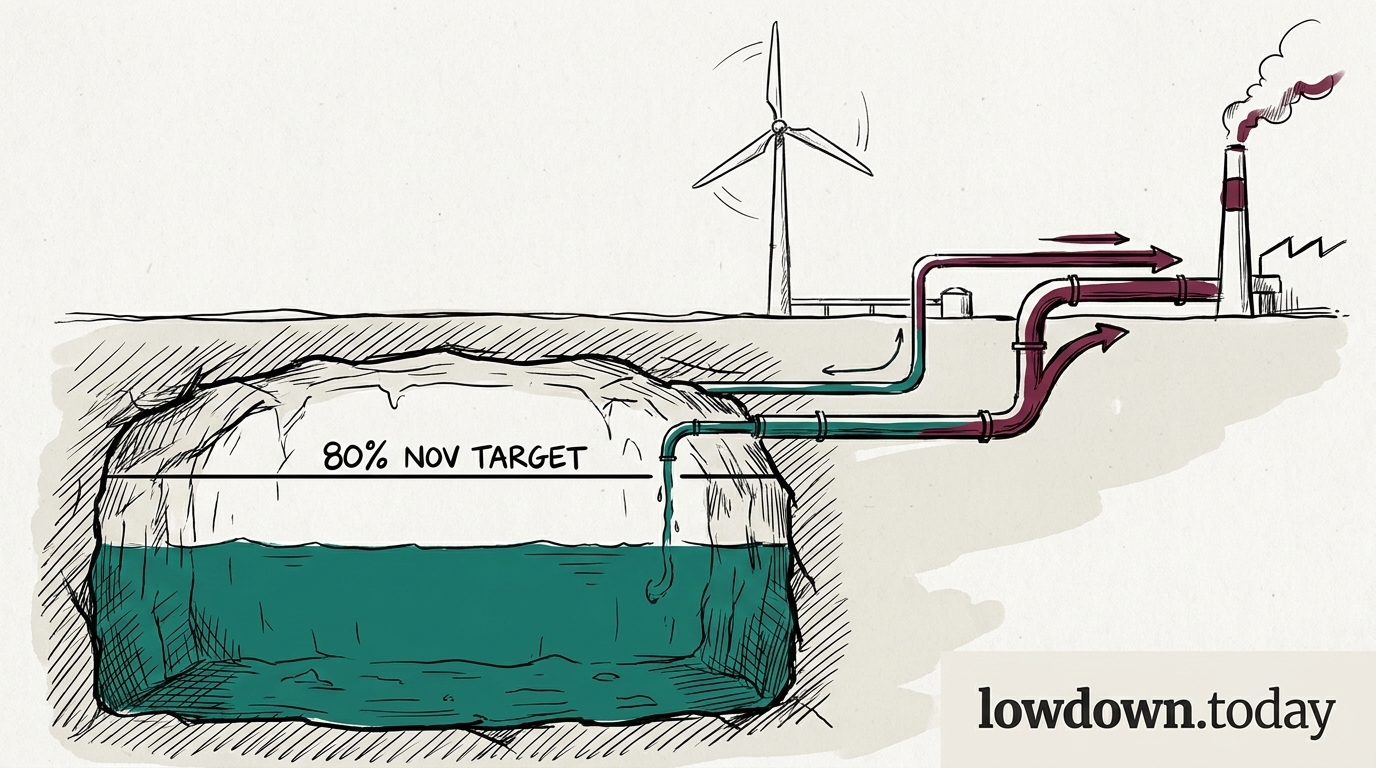
Spain's 9,145 GWh terminal inventory is the largest single stock in the EU LNG network, an option value that can reroute cargoes wherever the winter strip pays best rather than a cavern gas obligation tied to a fixed date. That flexibility matters more as Germany's cavern shortfall pushes more of the winter security question onto import infrastructure.
European Commission
European Commission
Brussels holds the bloc to 90% on a flexible window while Germany, holding roughly a quarter of EU storage capacity, tracks toward missing its own lower 80% figure by 21 points. A national shortfall this size in the anchor market matters more to bloc security than the flexible timetable alone can absorb.
French power exporters and CRE
French day-ahead rose in step with Germany but by less, reopening a EUR 7-17 premium that makes northward export flows commercially attractive again after the EUR 43.09 discount evaporated in days. CRE separately authorised RTE and Enedis to buy flexibility locally, betting the coming winter's binding constraint is grid congestion rather than a shortage of firm capacity.
TTF trading desk
TTF trading desk
A visible national shortfall like Germany's 21-point gap is a directional signal, not noise, for a desk holding the summer-winter spread. TTF's flat EUR 58-60 range through this week's German price swings says the market has not yet chosen to reprice refill risk into the front of the curve.
German cavern and CCGT operators
German caverns kept buying prompt gas at TTF near EUR 58-60 through the inversion; the wind collapse to 2.4 GW then flipped the spark spread to plus EUR 29 and put turbines back in the same queue. Every day turbines win that bid, injection at a third of the 877 GWh/day pace needed falls further behind.
Slovakia
Slovakia
Slovakia says it dropped its hold-out on the 21st sanctions package only after Ursula von der Leyen personally signed written gas-price and supply guarantees. The Council of the European Union's own 17,238-character release on the package names neither Slovakia nor any guarantee, leaving Bratislava's account unconfirmed by the institutional record.



