Skip to content
Welcome, thoughtbot's Giant Robots listeners!Start here
European Energy Markets
13JUL

Ukraine strikes Yandex AI data centres

3 min read
10:12UTC

Drones disabled Yandex data centres at Sasovo and Kaluga as Kyiv claimed it had knocked out more than half of Russia's oil refining capacity.

EconomicDeveloping
Key takeaway

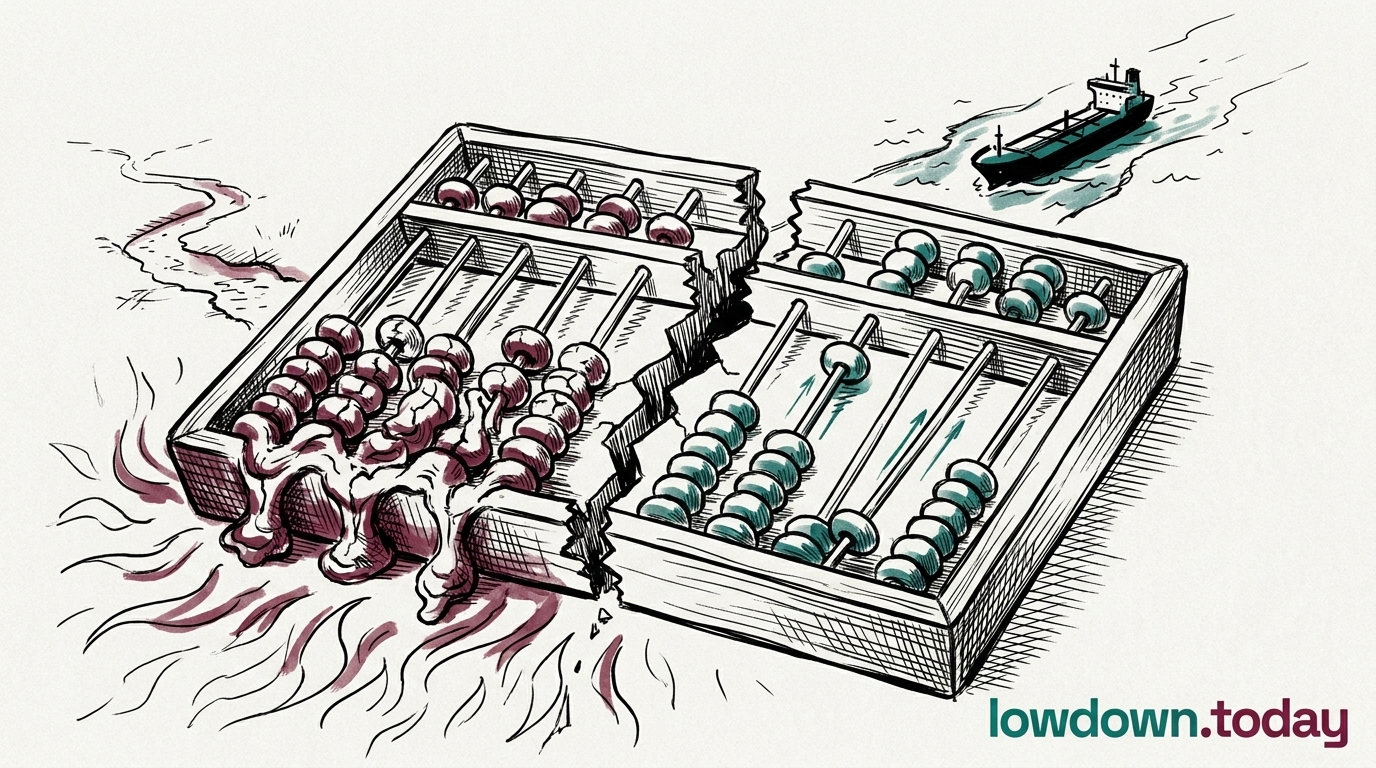
Ukraine's drones now hit Russian AI computing as well as oil refineries.

Drones knocked out a data centre belonging to Yandex, the Russian internet company, at Sasovo in Ryazan region on 8 October. The site houses two of the three supercomputers Yandex uses to train its artificial intelligence (AI) models⁠1. A day later Yandex said several modules at its largest data centre, in Kaluga, were completely disabled; it reported no injuries. Zelenskyy called the strikes "our symmetrical response", and Al Jazeera reported Russian strikes on Ukrainian data centres over the past month, one of which caused temporary internet outages for about 100,000 households.

Yandex also runs Russia's main search engine, maps and taxi services, so Kyiv's reciprocity lands on sites that millions of Russian civilians use every day. Ukraine had already widened its list beyond oil in July, when drones hit two logistics hubs of the online retailer Wildberries.

The oil campaign kept running alongside. Ukraine's Defence Ministry said late on 4 October that its strikes had disabled 51% of Russian oil refining capacity, which Defence Minister Yevhen Khmara called "a significant blow"⁠2. The Associated Press could not verify the figure. The Ukrainian General Staff said drones hit the Lukoil refinery in Volgograd and an oil-pumping complex in Samara region overnight on 1-2 October⁠3. On 9 October Zelenskyy confirmed hits on the Omsk refinery the previous day and on the Ukhta refinery, 1,900 km from the border⁠4; Ukraine had claimed a 2,500 km strike on Omsk in July.

Vladimir Putin was asked on 1 October at the Valdai Discussion Club, the Kremlin-backed annual foreign-policy forum, whether Ukraine had achieved its aim of damaging Russia's economy. He answered: "Partially."


Deep Analysis

In plain English

Ukraine has spent months using long-range drones to attack Russian oil refineries, the plants that turn crude oil into petrol and diesel. Russia sells fuel abroad to pay for the war, so less refining means less money. On 4 October Ukraine's Defence Ministry said about half of Russia's refining capacity was out of action. Independent reporters could not check this. Ukraine also hit two data centres run by Yandex, Russia's biggest internet company. These buildings hold the powerful computers used to build artificial intelligence programs. President Zelenskyy said this answered Russian attacks on Ukrainian data centres.

Deep Analysis
Root Causes

Russian refining sits in a few dozen large plants spread across a country too large to cover with air defences. Long-range one-way drones built in Ukraine, such as the FP-6 and AN-196 that Zelenskyy named, can now reach plants 1,900 km away, so geography no longer protects the plants east of the Volga.

Ukraine has struck refineries for most of 2026: Syzran in May and Omsk in July . Each campaign aims to damage plants faster than Russia can source Western-made spare parts under sanctions.

The Yandex strikes follow a different logic. Al Jazeera reported Russian strikes on Ukrainian data centres over the past month, and Zelenskyy called his strikes symmetrical. The target set has widened from fuel to computing power.

What could happen next?
  • Precedent

    Ukraine has publicly owned strikes on a civilian technology company's data centres, extending the target list from energy to computing.

    Short term · Assessed
  • Risk

    Strikes on dual-use civilian sites invite Russian retaliation against Ukrainian telecoms and data centres that serve millions of households.

    Short term · Reported
  • Consequence

    Continued refinery strikes put Kyiv in open conflict with the US demand for an energy truce.

    Immediate · Assessed
First Reported In

Update #28 · US licenses Russian diesel and turns on Kyiv

AP· 12 Oct 2026
Read original →
Different Perspectives
Cross-border power traders
The France-Germany day-ahead spread flipped from a EUR 17.20 German premium on 1 August to a EUR 4.15 French premium on 3 August, the same day French curtailment peaked. They cannot yet attribute the flip to curtailment alone, since a like-for-like overnight comparison shows French nuclear output rising while wind fell and demand returned on the weekday step.
EDF
EDF
River-cooling limits took 7.6 GW, 12 per cent of its fleet, offline on 3 August, the highest curtailment since the heatwave began, with an easing forecast to 4.3 GW on 4 August and 3 GW after. It manages the cut as a recurring seasonal constraint, expecting it to lift with river temperature, not repair.
Gasunie
Gasunie
TTF, the Dutch hub it operates, drifted to roughly EUR 55 to 58 per MWh across the window, staying inside its recent range through both the German spark reversal and the French curtailment. It reads a flat hub price as evidence that neither event this window carried enough weight to move the fuel leg on its own.
German gas-fired generators
Record German solar of 18,761 MW on 2 August pushed the clean spark spread to minus 18.48 EUR/MWh, a loss-making day, before it returned to plus 16.20 on 3 August. They now price dispatch against post-solar residual load rather than wind alone, since the sign flipped inside 48 hours on unchanged fuel and carbon costs.
European Commission (DG Energy)
Its implementing-measures register logged transposition notices from only Portugal and Slovakia against Wednesday's Article 94 deadline for Directive (EU) 2024/1788, with 25 states silent. It expects the register to fill only gradually, since filing routinely lags legislating and any infringement track against non-notifying states runs on a slower clock than the deadline itself.
Spain's LNG terminal operators
Spain's 9,145 GWh terminal inventory is the largest single stock in the EU LNG network, an option value that can reroute cargoes wherever the winter strip pays best rather than a cavern gas obligation tied to a fixed date. That flexibility matters more as Germany's cavern shortfall pushes more of the winter security question onto import infrastructure.

Written with AI from Lowdown's published reporting. Not individually reviewed by an editor. Editorial standards.
