Skip to content
Welcome, thoughtbot's Giant Robots listeners!Start here
European Energy Markets
13JUL

Russia plans record 17.1tn for defence

3 min read
10:12UTC

Russia's Finance Ministry cut its oil and gas revenue forecast by 1,335bn roubles, yet its draft still gives defence a record 17.1tn roubles next year.

EconomicAssessed
Key takeaway

Russia will spend a record 17.1tn roubles on defence while oil revenue falls short.

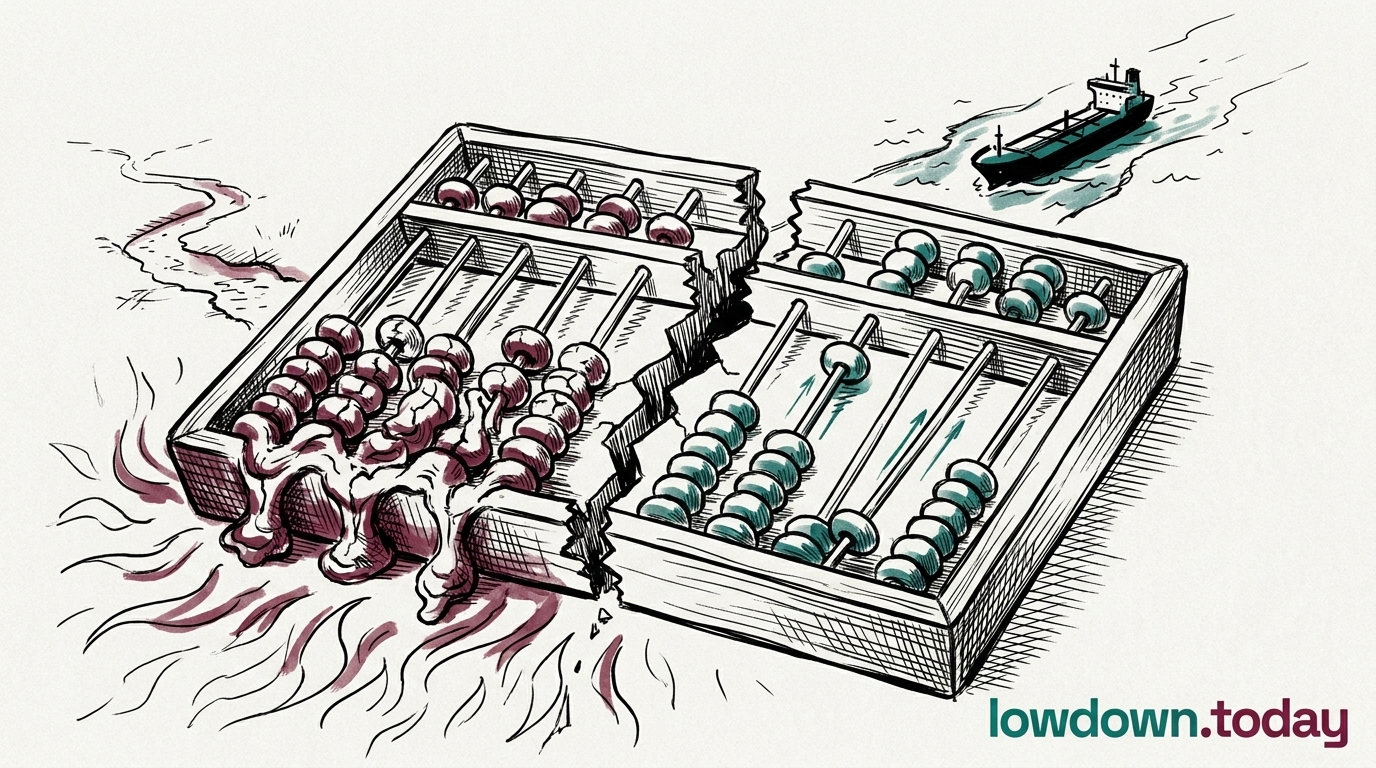
Russia's Finance Ministry now expects 7,584bn roubles of oil and gas revenue for 2026, 1,335bn short of the 8,919bn in its own budget law⁠1. Its draft for next year still gives defence a record 17.1tn roubles, more than a third of federal spending, according to Reuters, which reviewed the draft⁠2. That is about 27% above the roughly 13.5tn roubles the previous plan set for 2027.

The 2027-29 draft, sent to the State Duma, Russia's lower house of parliament, by 30 September, plans deficits of 5.5tn, 5.1tn and 5.3tn roubles, about 2% of gross domestic product (GDP) each year. The ministry expects a deficit of up to 3.2% of GDP for 2026.

The Russian Finance Ministry's preliminary January to September figures show the strain. The deficit stood at 5.19tn roubles, down from 6.46tn after July, against 3.47tn a year earlier. Oil and gas revenue fell 17.2% to 5,471bn roubles. Non-oil-and-gas revenue, up 18.8% to 24,168bn roubles, carries the rest, as it did in August.

The ministry says it finances the deficit "mainly without additional borrowing" in government bonds. That fits Sberbank's July warning that Russian banks can no longer buy them, so revenue outside oil and gas has to carry the war budget.


Deep Analysis

In plain English

Russia's government pays for the war mainly from taxes on oil and gas and from other taxes. This year it is earning much less from oil and gas than it planned. The Finance Ministry now expects to collect about 1.3 trillion roubles less from oil and gas than its budget law assumed. It spent more than it earned in the first nine months of 2026. Even so, its plan for 2027 gives the army more money than ever, 17.1 trillion roubles. To pay for it, Russia is raising other taxes and using its savings.

Deep Analysis
Root Causes

Oil and gas revenue has fallen through 2026. The ministry recorded a 38.3% year-on-year drop in January to April , and the January-September fall was 17.2%. Lower Urals prices, sanctions discounts and refinery damage all cut receipts.

Non-oil revenue grew because Moscow raised taxes, not because the civilian economy boomed. The 2027 draft extends 22% VAT (value added tax, Russia's main sales tax) to purchases from foreign online stores and raises tax on passive income.

Domestic borrowing has hit a ceiling. With banks unable to buy more government bonds, the state draws on reserves and special financing powers, which run down faster the longer the war lasts.

What could happen next?
  • Consequence

    Russia will keep spending reserves in 2027, shrinking the cushion it would need for a shock such as a new oil price fall.

  • Meaning

    A record defence line for 2027 shows Moscow's budget planners assume the war continues through next year.

First Reported In

Update #28 · US licenses Russian diesel and turns on Kyiv

Meduza· 12 Oct 2026
Read original →
Different Perspectives
Cross-border power traders
The France-Germany day-ahead spread flipped from a EUR 17.20 German premium on 1 August to a EUR 4.15 French premium on 3 August, the same day French curtailment peaked. They cannot yet attribute the flip to curtailment alone, since a like-for-like overnight comparison shows French nuclear output rising while wind fell and demand returned on the weekday step.
EDF
EDF
River-cooling limits took 7.6 GW, 12 per cent of its fleet, offline on 3 August, the highest curtailment since the heatwave began, with an easing forecast to 4.3 GW on 4 August and 3 GW after. It manages the cut as a recurring seasonal constraint, expecting it to lift with river temperature, not repair.
Gasunie
Gasunie
TTF, the Dutch hub it operates, drifted to roughly EUR 55 to 58 per MWh across the window, staying inside its recent range through both the German spark reversal and the French curtailment. It reads a flat hub price as evidence that neither event this window carried enough weight to move the fuel leg on its own.
German gas-fired generators
Record German solar of 18,761 MW on 2 August pushed the clean spark spread to minus 18.48 EUR/MWh, a loss-making day, before it returned to plus 16.20 on 3 August. They now price dispatch against post-solar residual load rather than wind alone, since the sign flipped inside 48 hours on unchanged fuel and carbon costs.
European Commission (DG Energy)
Its implementing-measures register logged transposition notices from only Portugal and Slovakia against Wednesday's Article 94 deadline for Directive (EU) 2024/1788, with 25 states silent. It expects the register to fill only gradually, since filing routinely lags legislating and any infringement track against non-notifying states runs on a slower clock than the deadline itself.
Spain's LNG terminal operators
Spain's 9,145 GWh terminal inventory is the largest single stock in the EU LNG network, an option value that can reroute cargoes wherever the winter strip pays best rather than a cavern gas obligation tied to a fixed date. That flexibility matters more as Germany's cavern shortfall pushes more of the winter security question onto import infrastructure.

Written with AI from Lowdown's published reporting. Not individually reviewed by an editor. Editorial standards.
