Skip to content
You can now search across every topic, entity and event.What's new
European Energy Markets
18JUN

Iran defers nuclear talks to phase two

3 min read
09:57UTC

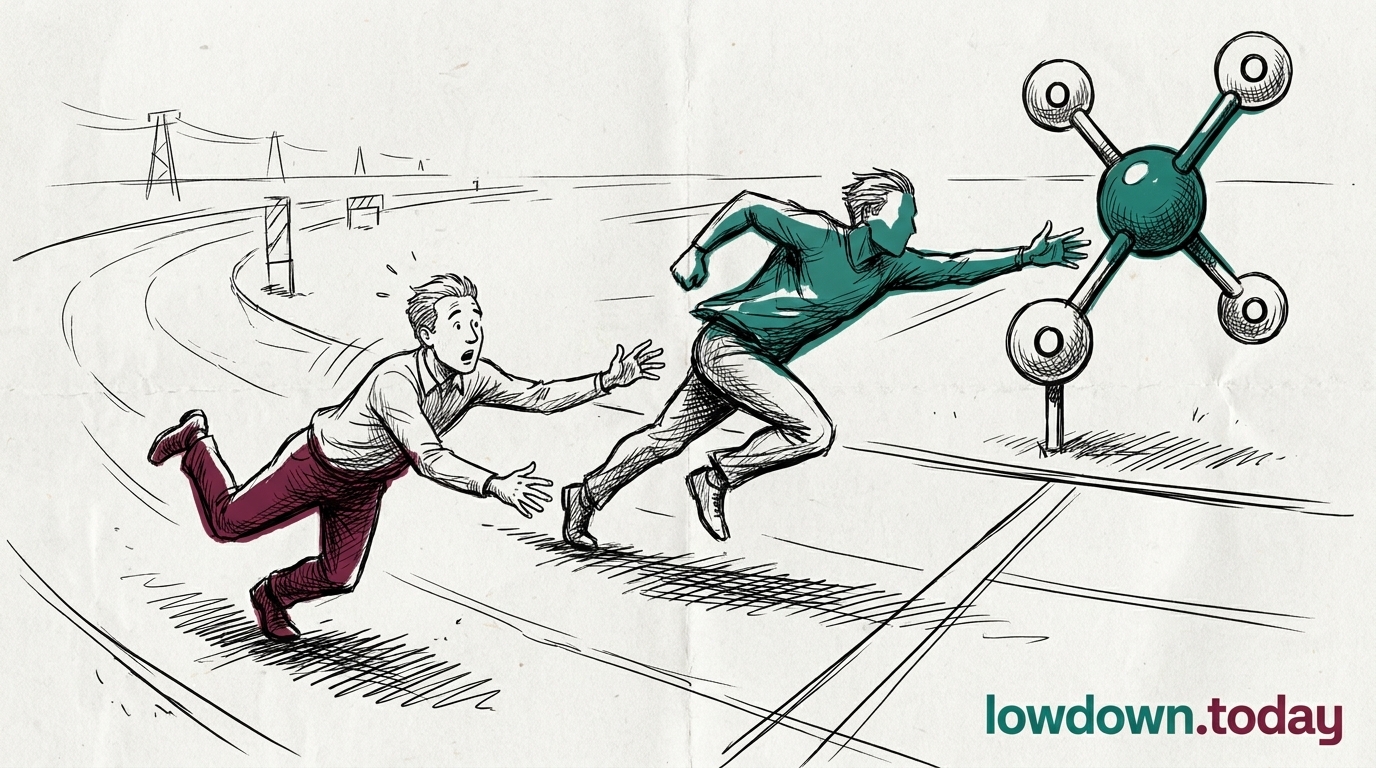
Baghaei confirmed the nuclear file has been split off into a separate 60-day second phase that starts only once a war-ending memorandum is signed. The hardest question is being deferred, not solved.

EconomicDeveloping
Key takeaway

Iran has deferred the nuclear file to a 60-day second phase that starts only after a signed ceasefire.

Iran's Foreign Ministry spokesman Esmaeil Baghaei confirmed on 24-25 May that nuclear questions have been moved into a separate 60-day second phase, one that begins only after any war-ending memorandum is signed 1. Tehran insists the nuclear track cannot open until the first phase, covering the Strait of Hormuz and frozen assets, is resolved.

This is a development in a known dispute, not a fresh one. Accounts of the deal's nuclear terms had been contradictory across the parties , and Baghaei's confirmation resolves part of that confusion by naming the structure: the nuclear file is sequenced behind the ceasefire, not bundled into it. What is newly on the record is the architecture, a time-boxed second stage, rather than the existence of a nuclear disagreement.

The phasing makes diplomatic sense and reflects a constraint inside Tehran. Supreme Leader Mojtaba Khamenei has directed that Iran's enriched uranium stay in the country , which is incompatible with the verification regime Washington would seek. Deferring that fight to a separate 60-day window lets a war-ending agreement close without first cracking the question that has defied negotiators for a decade.

Deferral shrinks the negotiation, not the problem. US positions on enrichment caps and verification have not been made public, and the 60-day clock would start only after the harder sequencing fight over the strait and the frozen assets is already settled. A second phase that opens with no agreed verifier, no IAEA re-access date, and no destination for Iran's enriched stock could stall exactly where the 2015 deal's successors did.


Deep Analysis

In plain English

Iran confirmed on 24-25 May that discussions about its nuclear programme have been pushed into a separate, later stage of any peace agreement. The plan has two parts. Part one is ending the war: reopening the Strait of Hormuz, lifting the US naval blockade, and releasing frozen Iranian money. Part two, starting only after part one is signed, would be 60 days of nuclear talks. But Iran's supreme leader has already said Iran's stockpile of enriched uranium must stay in the country, which is the main thing the US wants removed. The nuclear inspection agency, the International Atomic Energy Agency (IAEA), was expelled from Iran in April, so there is no one in place to verify whether Iran makes any nuclear changes. The 60-day window exists on paper, but the tools needed to make it work are not yet in place.

Deep Analysis
Root Causes

The 60-day nuclear deferral is structurally forced by the IAEA access gap created by the Majlis vote of 11 April 2026. Iran cannot credibly offer nuclear concessions for Phase 1 because there is no inspection regime through which any concession could be verified. The deferral to Phase 2 is not primarily a diplomatic choice; it is a verification impossibility that both sides are papering over by agreeing to solve it later.

Khamenei's 21 May uranium-stay directive compounds the problem: even if Phase 2 begins, the Supreme Leader has publicly instructed that the enriched uranium stockpile must remain in Iran, removing the one confidence-building measure the Axios MOU draft described as a Phase 2 deliverable.

What could happen next?
  • Risk

    If Phase 1 is signed and the blockade lifts, Iran retains full enrichment capacity for at least 60 days with no IAEA inspection access, creating a window during which any covert enrichment acceleration would be undetectable.

    Short term · Assessed
  • Consequence

    Khamenei's 21 May uranium-stay directive, combined with the 60-day deferral, means the IAEA will need to be restored to full access before Phase 2 can begin, a political precondition neither the Axios MOU draft nor Baghaei's statement has addressed.

    Short term · Assessed
  • Precedent

    A signed war-ending MOU that explicitly defers nuclear questions would mark the first time the US has agreed in writing that a non-nuclear war with Iran can be terminated without simultaneous nuclear concessions, a structural precedent for any future Iranian nuclear negotiation.

    Long term · Assessed
First Reported In

Update #107 · Two markets, two prices on one Iran deal

Al Jazeera· 25 May 2026
Read original
Different Perspectives
Cross-border power traders
The France-Germany day-ahead spread flipped from a EUR 17.20 German premium on 1 August to a EUR 4.15 French premium on 3 August, the same day French curtailment peaked. They cannot yet attribute the flip to curtailment alone, since a like-for-like overnight comparison shows French nuclear output rising while wind fell and demand returned on the weekday step.
EDF
EDF
River-cooling limits took 7.6 GW, 12 per cent of its fleet, offline on 3 August, the highest curtailment since the heatwave began, with an easing forecast to 4.3 GW on 4 August and 3 GW after. It manages the cut as a recurring seasonal constraint, expecting it to lift with river temperature, not repair.
Gasunie
Gasunie
TTF, the Dutch hub it operates, drifted to roughly EUR 55 to 58 per MWh across the window, staying inside its recent range through both the German spark reversal and the French curtailment. It reads a flat hub price as evidence that neither event this window carried enough weight to move the fuel leg on its own.
German gas-fired generators
Record German solar of 18,761 MW on 2 August pushed the clean spark spread to minus 18.48 EUR/MWh, a loss-making day, before it returned to plus 16.20 on 3 August. They now price dispatch against post-solar residual load rather than wind alone, since the sign flipped inside 48 hours on unchanged fuel and carbon costs.
European Commission (DG Energy)
Its implementing-measures register logged transposition notices from only Portugal and Slovakia against Wednesday's Article 94 deadline for Directive (EU) 2024/1788, with 25 states silent. It expects the register to fill only gradually, since filing routinely lags legislating and any infringement track against non-notifying states runs on a slower clock than the deadline itself.
Spain's LNG terminal operators
Spain's 9,145 GWh terminal inventory is the largest single stock in the EU LNG network, an option value that can reroute cargoes wherever the winter strip pays best rather than a cavern gas obligation tied to a fixed date. That flexibility matters more as Germany's cavern shortfall pushes more of the winter security question onto import infrastructure.



