Skip to content
You can now search across every topic, entity and event.What's new
European Energy Markets
15JUN

US Strikes Civilian Bridge; Eight Commuters Killed

2 min read
12:23UTC

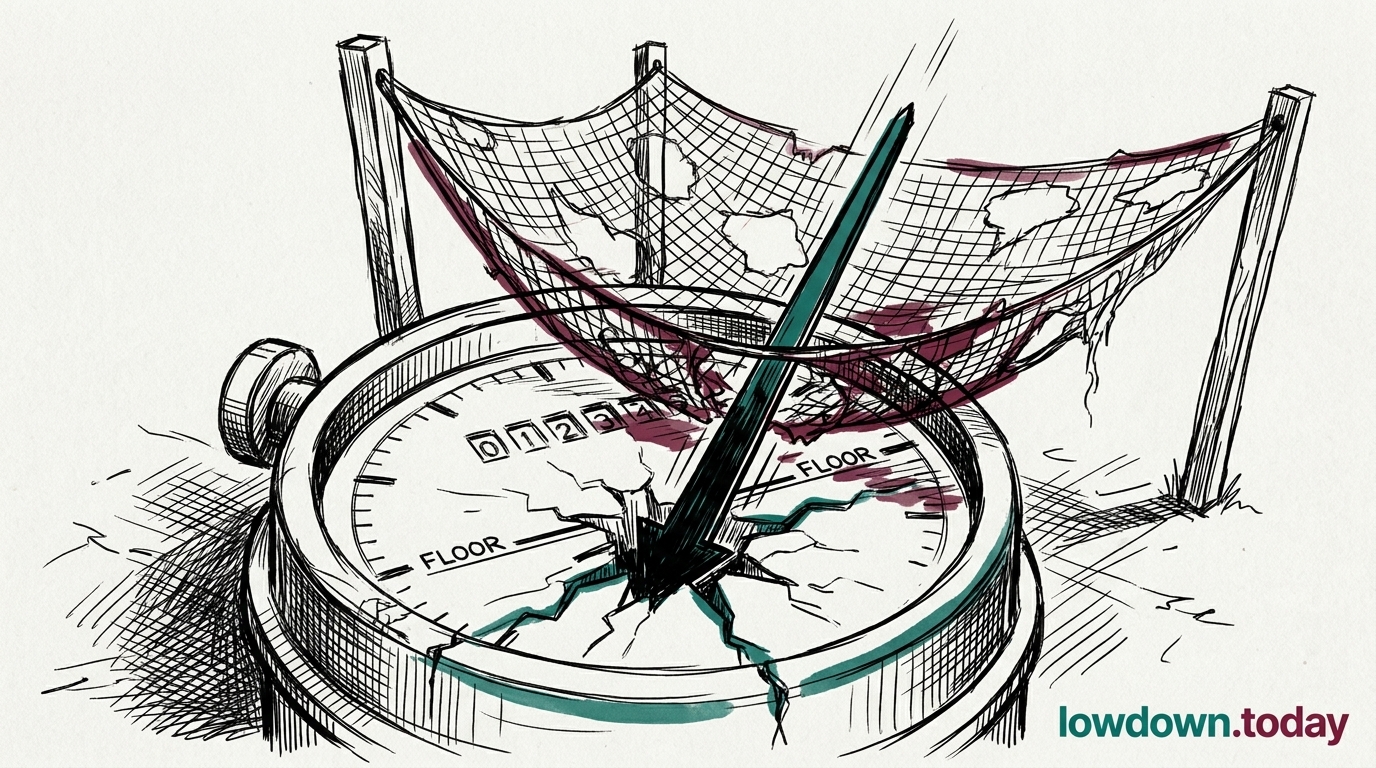
US forces struck the B1 highway bridge between Karaj and Tehran on 3 April, killing eight people and injuring 95. CENTCOM called it a supply route; Iran called it a commuter road.

EconomicDeveloping
Key takeaway

The B1 strike marks the first US attack on civilian commuter transport infrastructure in this campaign.

Eight people were killed and 95 injured when US forces struck the B1 highway bridge between Karaj and Tehran on 3 April, according to Iranian state television. The bridge , the Middle East's tallest at 136 metres, inaugurated earlier in 2026 , carried civilian commuter traffic between Iran's fifth-largest city and the capital.

CENTCOM described the target as a supply line to drone and missile units. That framing sits uneasily alongside the casualty profile: eight dead on a road built for cars, not convoys. Every prior bridge strike in this campaign had targeted military or industrial supply corridors . The B1 carried commuters. The shift is substantive, not semantic.

The strike also lands against a specific backdrop. CENTCOM has reported 12,300+ targets struck since the campaign began , and the classification of each as military infrastructure has progressively widened. A 136-metre commuter bridge between two major cities is a categorically different kind of target from an ammunition depot or missile storage site.

Whether the supply-line designation is operationally accurate or legally sufficient will be contested. What is not contested is the casualty count, reported by Iranian state television and not yet disputed by CENTCOM.


Deep Analysis

In plain English

US forces bombed a major motorway bridge between two Iranian cities. Eight commuters died. The US says the bridge was being used to move military equipment; Iran says it was a civilian road. This is the first time the US has hit a road that ordinary people use to get to work rather than a military facility or industrial site.

Deep Analysis
Root Causes

The B1 bridge sits on a route that also serves Iranian military logistics between Karaj (a major IRGC garrison city) and Tehran. Dual-use infrastructure has always been the hardest IHL category: civilian use does not immunise a target if military use is substantial and the military advantage is proportionate.

The deeper structural cause is the failure of the first 34 days of airstrikes to sever drone and missile resupply to western Iran. Each time CENTCOM claims Iranian strike capability has been "dramatically curtailed", the UAE intercept numbers contradict it. The bridge strike is evidence of target escalation driven by frustrated campaign objectives.

Escalation

Escalatory. The shift from military and industrial targets to civilian commuter infrastructure is a threshold crossing. Iran's response options now include strikes on US-allied civilian infrastructure in the Gulf, which it has previously avoided targeting explicitly. The Kuwaiti desalination plant strike on the same day may already be the reciprocal move.

What could happen next?
  • Consequence

    The IHL proportionality case for the strike is contestable; ICC jurisdiction over non-party nationals remains limited, but UN Special Rapporteur documentation is now likely.

    Short term · High
  • Risk

    Iran may cite the B1 strike to justify reciprocal strikes on Gulf civilian transport infrastructure, widening the target set.

    Immediate · Medium
  • Precedent

    The first US strike on civilian commuter infrastructure in this campaign sets a targeting escalation precedent that is difficult to reverse without formal acknowledgement.

    Long term · High
  • Consequence

    European governments face renewed domestic pressure over their posture of tacit support, particularly from parties with strong IHL compliance positions.

    Short term · Medium
First Reported In

Update #57 · Bridge strike kills eight; Army chief fired

Iranian State Television / IRIB· 3 Apr 2026
Read original
Causes and effects
Different Perspectives
Spain's LNG terminal operators
Spain's 9,145 GWh terminal inventory is the largest single stock in the EU LNG network, an option value that can reroute cargoes wherever the winter strip pays best rather than a cavern gas obligation tied to a fixed date. That flexibility matters more as Germany's cavern shortfall pushes more of the winter security question onto import infrastructure.
European Commission
European Commission
Brussels holds the bloc to 90% on a flexible window while Germany, holding roughly a quarter of EU storage capacity, tracks toward missing its own lower 80% figure by 21 points. A national shortfall this size in the anchor market matters more to bloc security than the flexible timetable alone can absorb.
French power exporters and CRE
French day-ahead rose in step with Germany but by less, reopening a EUR 7-17 premium that makes northward export flows commercially attractive again after the EUR 43.09 discount evaporated in days. CRE separately authorised RTE and Enedis to buy flexibility locally, betting the coming winter's binding constraint is grid congestion rather than a shortage of firm capacity.
TTF trading desk
TTF trading desk
A visible national shortfall like Germany's 21-point gap is a directional signal, not noise, for a desk holding the summer-winter spread. TTF's flat EUR 58-60 range through this week's German price swings says the market has not yet chosen to reprice refill risk into the front of the curve.
German cavern and CCGT operators
German caverns kept buying prompt gas at TTF near EUR 58-60 through the inversion; the wind collapse to 2.4 GW then flipped the spark spread to plus EUR 29 and put turbines back in the same queue. Every day turbines win that bid, injection at a third of the 877 GWh/day pace needed falls further behind.
Slovakia
Slovakia
Slovakia says it dropped its hold-out on the 21st sanctions package only after Ursula von der Leyen personally signed written gas-price and supply guarantees. The Council of the European Union's own 17,238-character release on the package names neither Slovakia nor any guarantee, leaving Bratislava's account unconfirmed by the institutional record.



