Skip to content
You can now search across every topic, entity and event.What's new
European Energy Markets
15JUN

Qatar reopens its waters on Monday

1 min read
12:23UTC

Doha will admit all maritime traffic from Monday 27 July, the first Gulf state to formally reverse a wartime shipping restriction.

EconomicDeveloping
Key takeaway

Qatar lifts its wartime shipping restriction on Monday, the first Gulf state to do so.

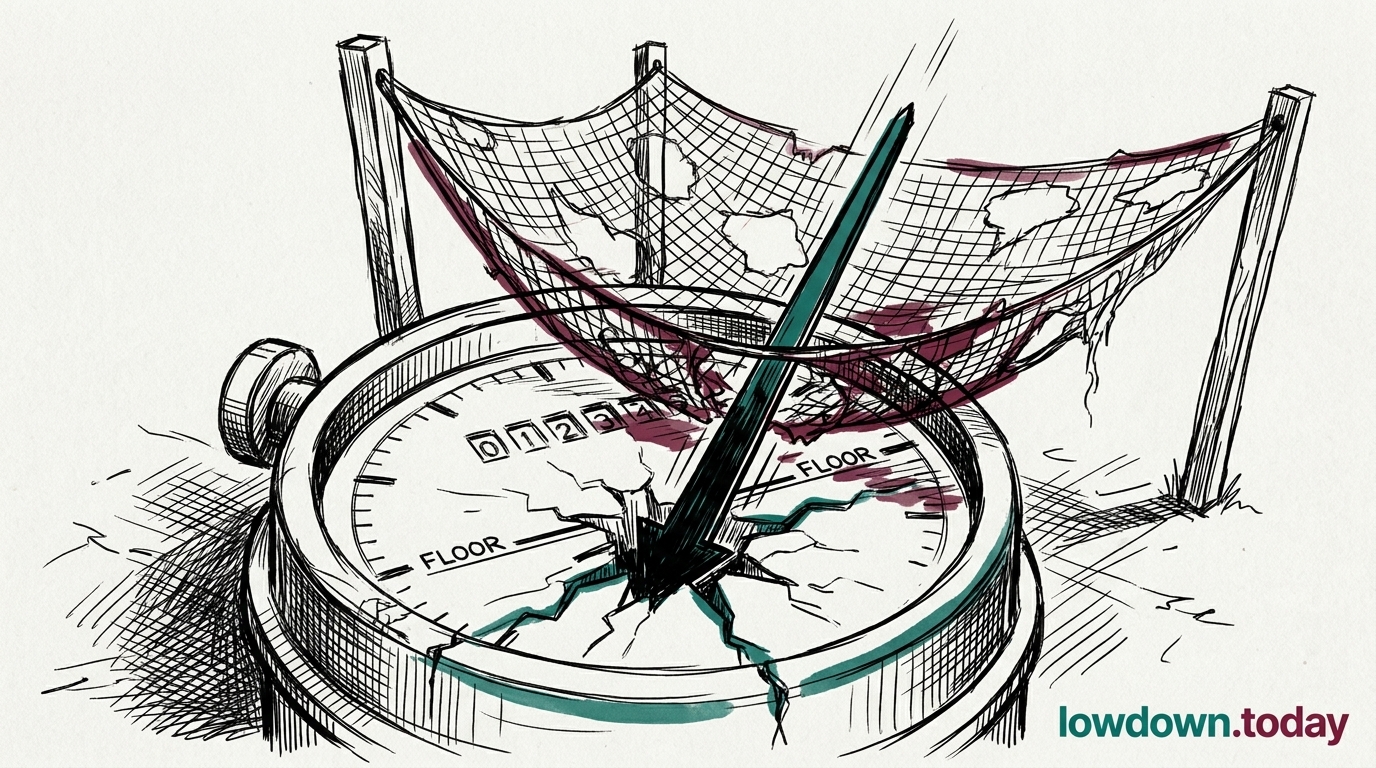
Qatar will reopen its waters to all maritime traffic from Monday 27 July, CNN reported, reversing the wartime restriction Doha imposed as strikes and interdictions spread through the Gulf 1. No other Gulf state has yet lifted one.

Qatar has more reason than most to try. It exports liquefied natural gas through the strait of Hormuz and nothing else, with no pipeline alternative to the sea, so every week of suppressed traffic bills directly to the Qatari state. It also hosts CENTCOM's forward headquarters at Al Udeid and has mediated between Washington and Tehran throughout, which makes a reopening an assertion of confidence as much as a commercial decision.

Whether traffic follows the permission is a separate question, and the answer will arrive within days. Volker Turk, the UN High Commissioner for Human Rights, was urging action on 6,000 seafarers stranded in the strait as recently as 24 July , which is what happens when charterers and underwriters, rather than governments, are setting the sailing schedule. Doha can open its own waters; it cannot open the corridor beyond them.


Deep Analysis

In plain English

Qatar will reopen its coastal waters to all ships from Monday 27 July, becoming the first Gulf country to formally cancel a wartime shipping restriction. This might sound like a sign the war is calming down, but the timing is odd: it comes just as the nearby Strait of Hormuz, the main channel connecting the Gulf to the open ocean, is recording some of its lowest ship-traffic numbers of the entire war. Qatar appears to be judging that its own waters are safe enough to reopen even though the wider region is not.

Deep Analysis
Root Causes

Qatar's incentive to reopen is structural: it is the world's second-largest exporter of liquefied natural gas, shipped almost entirely through Ras Laffan, and a prolonged shipping freeze costs it export revenue that oil-exporting neighbours can partially offset through pipeline routes Qatar does not have.

Reopening now, even as the wider strait records some of its lowest transit counts of the war, signals Doha judging the risk to its own waters as separable from the risk in the strait itself, a distinction other Gulf states with less LNG-specific exposure have not yet been willing to make.

What could happen next?
  • Opportunity

    If Qatar's reopening holds without incident, it could pressure other Gulf states to reconsider their own restrictions.

  • Meaning

    The mismatch between Qatar's reopening and the strait's near-record-low transit counts shows individual Gulf states are now making separate risk calculations rather than acting as a bloc.

First Reported In

Update #162 · Munitions, not Iran, halted US bombing

CNN· 26 Jul 2026
Read original
Causes and effects
This Event
Qatar reopens its waters on Monday
A declared reopening tests whether official permission can pull commercial traffic back while the shooting continues.
Different Perspectives
Spain's LNG terminal operators
Spain's 9,145 GWh terminal inventory is the largest single stock in the EU LNG network, an option value that can reroute cargoes wherever the winter strip pays best rather than a cavern gas obligation tied to a fixed date. That flexibility matters more as Germany's cavern shortfall pushes more of the winter security question onto import infrastructure.
European Commission
European Commission
Brussels holds the bloc to 90% on a flexible window while Germany, holding roughly a quarter of EU storage capacity, tracks toward missing its own lower 80% figure by 21 points. A national shortfall this size in the anchor market matters more to bloc security than the flexible timetable alone can absorb.
French power exporters and CRE
French day-ahead rose in step with Germany but by less, reopening a EUR 7-17 premium that makes northward export flows commercially attractive again after the EUR 43.09 discount evaporated in days. CRE separately authorised RTE and Enedis to buy flexibility locally, betting the coming winter's binding constraint is grid congestion rather than a shortage of firm capacity.
TTF trading desk
TTF trading desk
A visible national shortfall like Germany's 21-point gap is a directional signal, not noise, for a desk holding the summer-winter spread. TTF's flat EUR 58-60 range through this week's German price swings says the market has not yet chosen to reprice refill risk into the front of the curve.
German cavern and CCGT operators
German caverns kept buying prompt gas at TTF near EUR 58-60 through the inversion; the wind collapse to 2.4 GW then flipped the spark spread to plus EUR 29 and put turbines back in the same queue. Every day turbines win that bid, injection at a third of the 877 GWh/day pace needed falls further behind.
Slovakia
Slovakia
Slovakia says it dropped its hold-out on the 21st sanctions package only after Ursula von der Leyen personally signed written gas-price and supply guarantees. The Council of the European Union's own 17,238-character release on the package names neither Slovakia nor any guarantee, leaving Bratislava's account unconfirmed by the institutional record.



