Skip to content
You can now search across every topic, entity and event.What's new
European Energy Markets
15JUN

Israel evacuates seven southern Lebanon towns

3 min read
12:23UTC

Israel issued forced evacuation orders for seven southern Lebanon towns beyond the 10-kilometre buffer on 26 April; a Hezbollah explosive drone killed Sgt Idan Fooks, 19. Trump's Lebanon ceasefire extension remained notionally in force.

EconomicDeveloping
Key takeaway

Trump's only signed de-escalation paper is being dissolved by ground action, not by either party's notice.

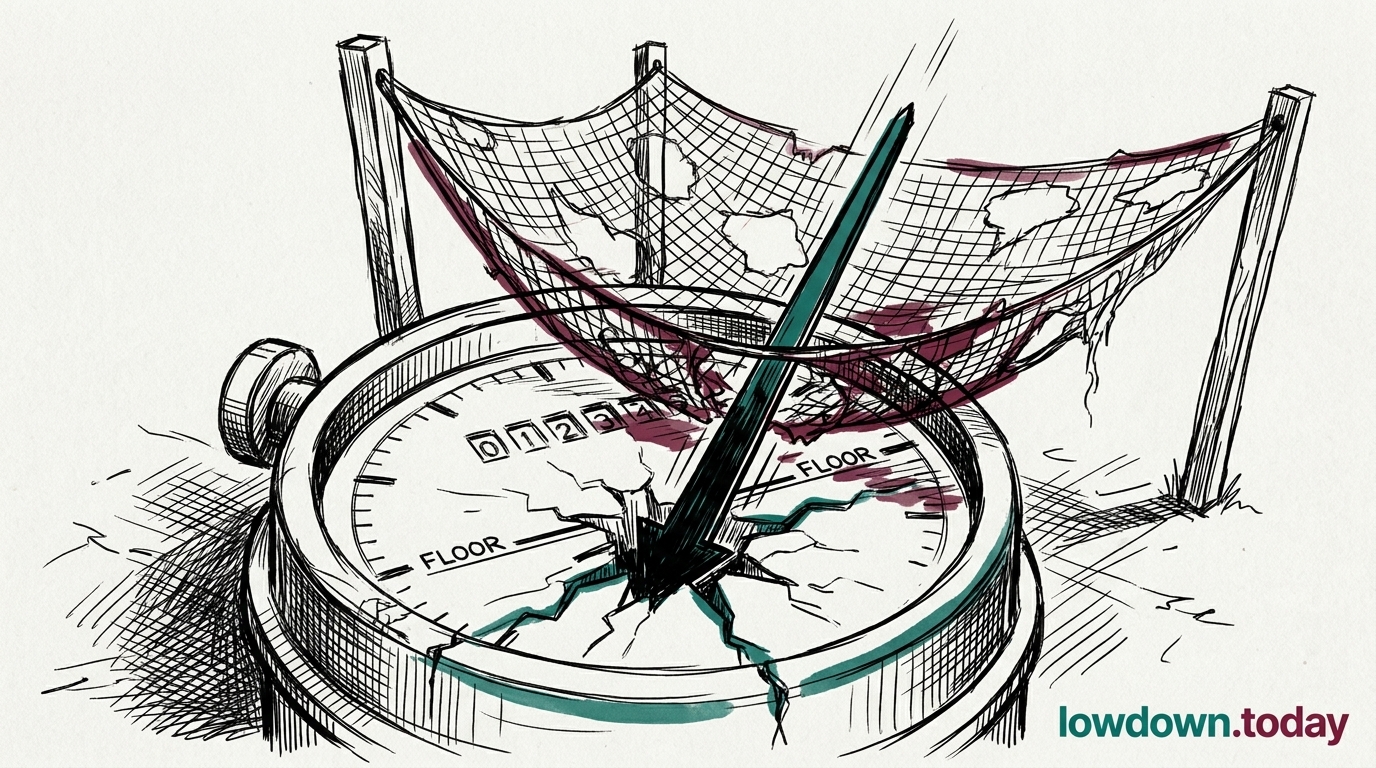
Israel issued forced-evacuation orders for seven southern Lebanon towns on Sunday 26 April, expanding operations beyond the 10-kilometre buffer zone agreed under the ceasefire 1. Israeli strikes the same day killed 14 people, including two women and two children, and wounded 37. A Hezbollah explosive drone killed Israeli soldier Sgt Idan Fooks, 19, and wounded six others. Benjamin Netanyahu told ministers that "Hezbollah's violations are, in practice, dismantling the ceasefire" 2.

Trump's extension of the Lebanon truce by three weeks to 15-16 May, signed on Thursday 23 April , is the only signed de-escalation paper of the entire 59-day Iran war. Despite the textual extension, it is being eroded territorially rather than diplomatically: by ground operations in towns the buffer was supposed to protect, not by a notice from any party that the agreement is voided.

Hezbollah says Israel has committed more than 500 ceasefire violations across sea, land and air. Netanyahu's "dismantling" line and Hezbollah's count both put the ceasefire's authority in dispute; still, neither party has formally voided the text. The textual extension expires 15-16 May; the operational version of it has already partly collapsed. Both Hezbollah and the IDF are treating the ceasefire as a forecast rather than a contract, and the seven-town evacuation order is the marker of that drift in real time.


Deep Analysis

In plain English

A ceasefire between Israel and Hezbollah (the Lebanese armed group) was extended until 15-16 May by the US. On 26 April, Israel issued evacuation orders for seven southern Lebanon towns and struck them, killing 14. Hezbollah fired a drone that killed an Israeli soldier on the same day. Israel ordered civilians to evacuate seven towns in southern Lebanon, then struck the area. A Hezbollah drone killed an Israeli soldier. Israel says Hezbollah is breaking the ceasefire with 500 violations. Hezbollah says Israel is doing the same. Neither side has formally declared the ceasefire void. On 26 April, Israel struck seven towns while the text remained unsigned by any party as cancelled. For the families evacuated from those towns that day, the distinction between a live ceasefire and a collapsed one carried no practical difference.

Deep Analysis
Root Causes

The forced evacuations beyond the 10-kilometre buffer have a specific domestic driver: Netanyahu's coalition is under pressure from ministers who opposed the ceasefire text and who measure military success by territorial control rather than cessation of hostilities. The seven-town evacuation order provides a security-framework justification (Hezbollah violations) for maintaining an IDF operational footprint that the coalition's right flank demands.

Hezbollah's structural position also contributes: with Iran's direct patronage severed since the February strikes and Iran's own military capacity degraded, Hezbollah is operating with reduced resupply and strategic direction.

The drone strike that killed Sgt Fooks demonstrates maintained Hezbollah capacity, but the 500-violation count Hezbollah cites tallies Israeli actions against Hezbollah, not Hezbollah strikes against Israel. Netanyahu's counter-metric is Hezbollah fire incidents, not IDF sorties. Each side is counting the other's actions, not its own.

What could happen next?
  • Risk

    If Israel extends forced evacuations to towns with active UNIFIL positions, it risks a direct confrontation with European peacekeepers that would immediately internationalise the Lebanon dimension of the conflict.

  • Consequence

    Iran's Phase 1 ceasefire proposal to Washington includes Lebanese guarantees. Israeli operations that formally end the Lebanon ceasefire before Phase 1 can be negotiated would remove that component of Iran's text, complicating the Pakistani channel.

First Reported In

Update #81 · Iran writes Phase 3; Trump posts Phase 1

Al Jazeera· 27 Apr 2026
Read original
Causes and effects
This Event
Israel evacuates seven southern Lebanon towns
Trump's Lebanon ceasefire extension is the only signed de-escalation paper of the 59-day Iran war; it is being eroded territorially, not diplomatically, with the IDF and Hezbollah treating the agreement as a forecast rather than a contract.
Different Perspectives
Spain's LNG terminal operators
Spain's 9,145 GWh terminal inventory is the largest single stock in the EU LNG network, an option value that can reroute cargoes wherever the winter strip pays best rather than a cavern gas obligation tied to a fixed date. That flexibility matters more as Germany's cavern shortfall pushes more of the winter security question onto import infrastructure.
European Commission
European Commission
Brussels holds the bloc to 90% on a flexible window while Germany, holding roughly a quarter of EU storage capacity, tracks toward missing its own lower 80% figure by 21 points. A national shortfall this size in the anchor market matters more to bloc security than the flexible timetable alone can absorb.
French power exporters and CRE
French day-ahead rose in step with Germany but by less, reopening a EUR 7-17 premium that makes northward export flows commercially attractive again after the EUR 43.09 discount evaporated in days. CRE separately authorised RTE and Enedis to buy flexibility locally, betting the coming winter's binding constraint is grid congestion rather than a shortage of firm capacity.
TTF trading desk
TTF trading desk
A visible national shortfall like Germany's 21-point gap is a directional signal, not noise, for a desk holding the summer-winter spread. TTF's flat EUR 58-60 range through this week's German price swings says the market has not yet chosen to reprice refill risk into the front of the curve.
German cavern and CCGT operators
German caverns kept buying prompt gas at TTF near EUR 58-60 through the inversion; the wind collapse to 2.4 GW then flipped the spark spread to plus EUR 29 and put turbines back in the same queue. Every day turbines win that bid, injection at a third of the 877 GWh/day pace needed falls further behind.
Slovakia
Slovakia
Slovakia says it dropped its hold-out on the 21st sanctions package only after Ursula von der Leyen personally signed written gas-price and supply guarantees. The Council of the European Union's own 17,238-character release on the package names neither Slovakia nor any guarantee, leaving Bratislava's account unconfirmed by the institutional record.



