Skip to content
You can now search across every topic, entity and event.What's new
European Energy Markets
15JUN

787 dead across Iran in four days

3 min read
12:23UTC

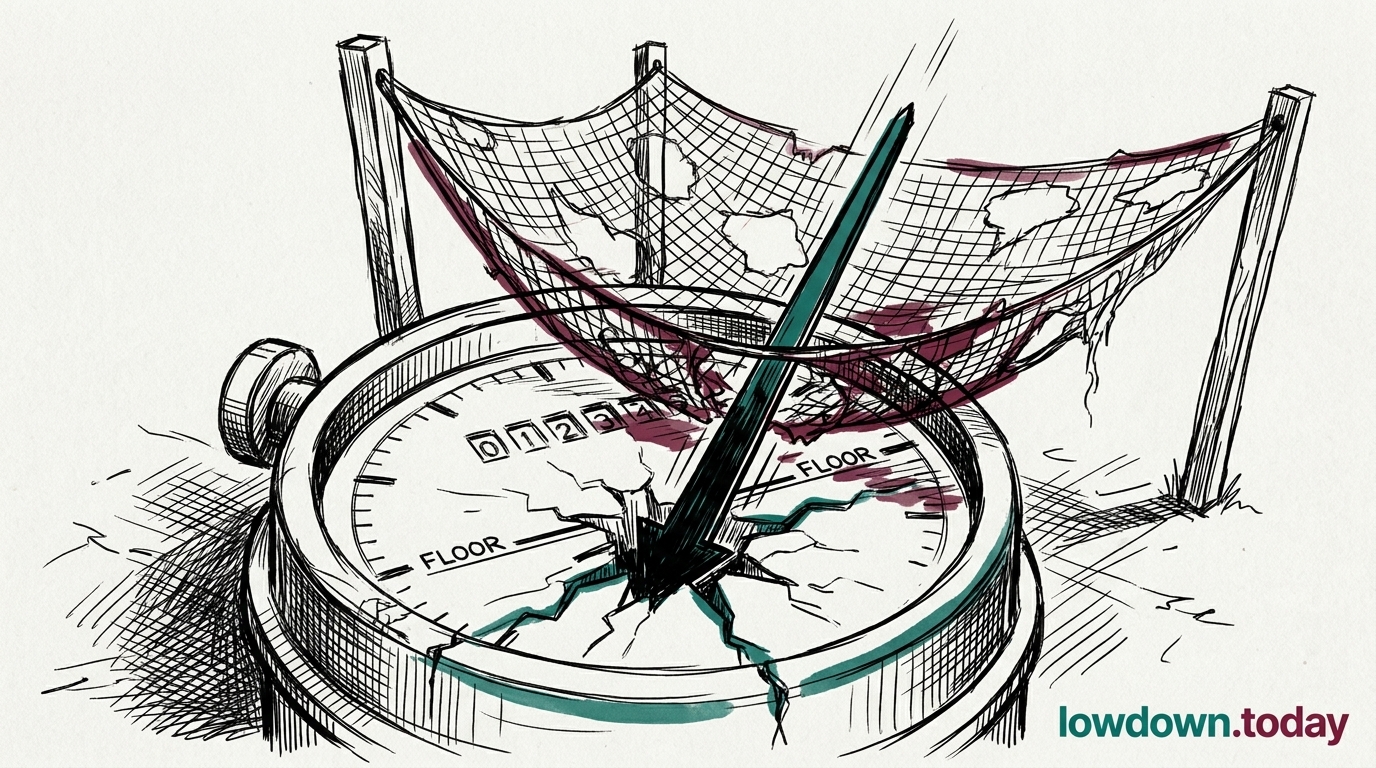
Iran's Red Crescent counted 232 additional deaths in one day as strikes reached 131 cities across 24 provinces — but five days of near-total internet blackout mean no independent observer can verify the toll.

EconomicDeveloping
Key takeaway

Day 4's toll of 232 deaths exceeds the daily average of approximately 185 deaths across days 1–3, indicating campaign intensification rather than plateau — and the 131-city, 24-province footprint is structurally inconsistent with a campaign targeting only nuclear infrastructure.

The Iranian Red Crescent confirmed 787 people killed across Iran since strikes began on 28 February — up from 555 twenty-four hours earlier. 232 additional deaths in a single day.

These are not battlefield casualties. No ground forces have entered Iran. No front line exists within its borders. The dead are spread across 131 cities in 24 of Iran's 31 provinces. Among the confirmed dead: 165 girls aged 7 to 12 at Shajareh Tayyebeh school in Minab, where investigations by The New York Times, CNN, and Time pointed to a US Tomahawk missile using outdated targeting data . No official attribution has been made. No independent forensic investigation has been conducted or permitted.

The geographic pattern cannot be reconciled with Defence Secretary Pete Hegseth's stated core objective of preventing Iran from obtaining a nuclear weapon . Iran's enrichment programme is concentrated at four facilities — Natanz, Fordow, Isfahan, and Arak. US forces have struck more than 1,000 targets including naval vessels, communications infrastructure, IRGC command centres, the state broadcaster IRIB's Tehran headquarters, and the Assembly of Experts in Tehran . Strikes across 24 provinces and 131 cities describe a campaign whose actual scope encompasses systematic degradation of Iran's military, institutional, and communications capacity — well beyond counter-proliferation.

Red Crescent figures are the sole available source. Iran's internet has operated at 1% of normal capacity for five consecutive days, preventing any independent verification. The actual death toll may be higher than 787; it cannot currently be lower than what the Red Crescent has physically counted. The 2003 Iraq invasion — the last air campaign of comparable scale — offers a precedent: early wartime casualty counts proved to be substantial undercounts once the Iraq Body Count project undertook systematic retrospective documentation, a process that took years. Iran's information environment on Day 4 is more restrictive than Iraq's was in 2003.


Deep Analysis

In plain English

Since strikes began four days ago, 787 people have been confirmed killed across Iran — and the pace is accelerating. To put the geographic scale in context: strikes have hit 131 different cities across nearly every corner of a country the size of Western Europe with a population of 88 million. These are not battlefield casualties from a front line — Iran has no front line. The Red Crescent, Iran's equivalent of the Red Cross, is the primary source; figures cannot be independently verified because Iran's internet is almost entirely shut down, making the 787 figure a floor, not a complete count.

Deep Analysis
Synthesis

The blackout (Event 7) is directly degrading the Red Crescent's own casualty aggregation capacity: national data consolidation depends on internet connectivity between provincial offices and headquarters. At 1% internet capacity, data flows that normally aggregate in real time are reduced to sporadic satellite or radio relay. The 787 figure is therefore not merely unverifiable from outside Iran — it is likely incomplete within Iran's own reporting chain. The blackout simultaneously suppresses international accountability and degrades the internal data systems on which any eventual accountability will depend.

Root Causes

The 131-city, 24-province distribution is structurally inconsistent with a campaign targeting only nuclear infrastructure (four major sites) or military command nodes (concentrated in Tehran and IRGC installations). This footprint implies either: (a) a deliberately broad counter-infrastructure or societal-pressure campaign, or (b) significant collateral damage from strikes on dual-use infrastructure — power grids, communications hubs, transport nodes — which are inherently distributed across cities and provinces. The targeting doctrine implied by the geographic footprint has not been publicly articulated by the attacking parties.

Escalation

Day 4's toll (232) exceeds the days 1–3 daily average (approximately 185), indicating either deliberate target set expansion or a shift toward more populated areas. The directional trend points toward a rising daily toll absent a change in campaign intensity or targeting doctrine.

What could happen next?
  • Meaning

    The 131-city strike pattern is inconsistent with a counter-nuclear campaign, implying a broader targeting doctrine that faces distinct legal scrutiny under IHL's proportionality and distinction principles independently of the nuclear facilities question.

    Immediate · Assessed
  • Risk

    The verified death toll will rise materially once communications are restored, as current counts reflect only casualties reported by facilities with functioning power and connectivity.

    Short term · Assessed
  • Consequence

    The internet blackout prevents diaspora communities globally from conducting welfare checks, creating a secondary humanitarian dimension affecting populations outside Iran that no aid organisation can currently address.

    Immediate · Assessed
  • Precedent

    If the toll rate continues at or above the day-4 pace, Iran will surpass total confirmed civilian casualties from the 78-day Yugoslavia NATO campaign within days, materially accelerating international legal pressure and ICJ referral risk.

    Short term · Suggested
First Reported In

Update #14 · Natanz unverified; Hormuz sealed

Daily Star· 3 Mar 2026
Read original
Causes and effects
This Event
787 dead across Iran in four days
The cumulative death toll and geographic breadth — 131 cities across 24 of 31 provinces — describe a campaign extending well beyond declared nuclear and military objectives. The communications blackout prevents independent verification, creating conditions where the true civilian cost may not be established for years.
Different Perspectives
Spain's LNG terminal operators
Spain's 9,145 GWh terminal inventory is the largest single stock in the EU LNG network, an option value that can reroute cargoes wherever the winter strip pays best rather than a cavern gas obligation tied to a fixed date. That flexibility matters more as Germany's cavern shortfall pushes more of the winter security question onto import infrastructure.
European Commission
European Commission
Brussels holds the bloc to 90% on a flexible window while Germany, holding roughly a quarter of EU storage capacity, tracks toward missing its own lower 80% figure by 21 points. A national shortfall this size in the anchor market matters more to bloc security than the flexible timetable alone can absorb.
French power exporters and CRE
French day-ahead rose in step with Germany but by less, reopening a EUR 7-17 premium that makes northward export flows commercially attractive again after the EUR 43.09 discount evaporated in days. CRE separately authorised RTE and Enedis to buy flexibility locally, betting the coming winter's binding constraint is grid congestion rather than a shortage of firm capacity.
TTF trading desk
TTF trading desk
A visible national shortfall like Germany's 21-point gap is a directional signal, not noise, for a desk holding the summer-winter spread. TTF's flat EUR 58-60 range through this week's German price swings says the market has not yet chosen to reprice refill risk into the front of the curve.
German cavern and CCGT operators
German caverns kept buying prompt gas at TTF near EUR 58-60 through the inversion; the wind collapse to 2.4 GW then flipped the spark spread to plus EUR 29 and put turbines back in the same queue. Every day turbines win that bid, injection at a third of the 877 GWh/day pace needed falls further behind.
Slovakia
Slovakia
Slovakia says it dropped its hold-out on the 21st sanctions package only after Ursula von der Leyen personally signed written gas-price and supply guarantees. The Council of the European Union's own 17,238-character release on the package names neither Slovakia nor any guarantee, leaving Bratislava's account unconfirmed by the institutional record.



