Skip to content
You can now search across every topic, entity and event.What's new
European Energy Markets
15JUN

Iran oil exports fall below 300,000 bpd

3 min read
12:23UTC

Kpler and Lloyd's List data put Iran's oil exports below 300,000 barrels a day in May, down from 1.84m before the war. Some 67m barrels sit stranded in the Gulf.

EconomicAssessed
Key takeaway

Iran's oil exports have collapsed to one-sixth of pre-war volume, with 67m barrels stranded in the Gulf.

Kpler trade intelligence and Lloyd's List maritime data found Iran's oil exports fell below 300,000 barrels per day in May 2026, down from 1.84m bpd before the war began, roughly one-sixth of the pre-blockade flow 1. The lost revenue since April runs to about $5.8bn, and some 67m barrels sit stranded inside the Gulf, unable to clear the blockade.

The collapse is the revenue consequence of CENTCOM's 121-vessel naval blockade . Ship-tracking measures cargoes that move, so the figure is anchored outside Tehran's control: hard for Iran to inflate, hard for outsiders to dispute.

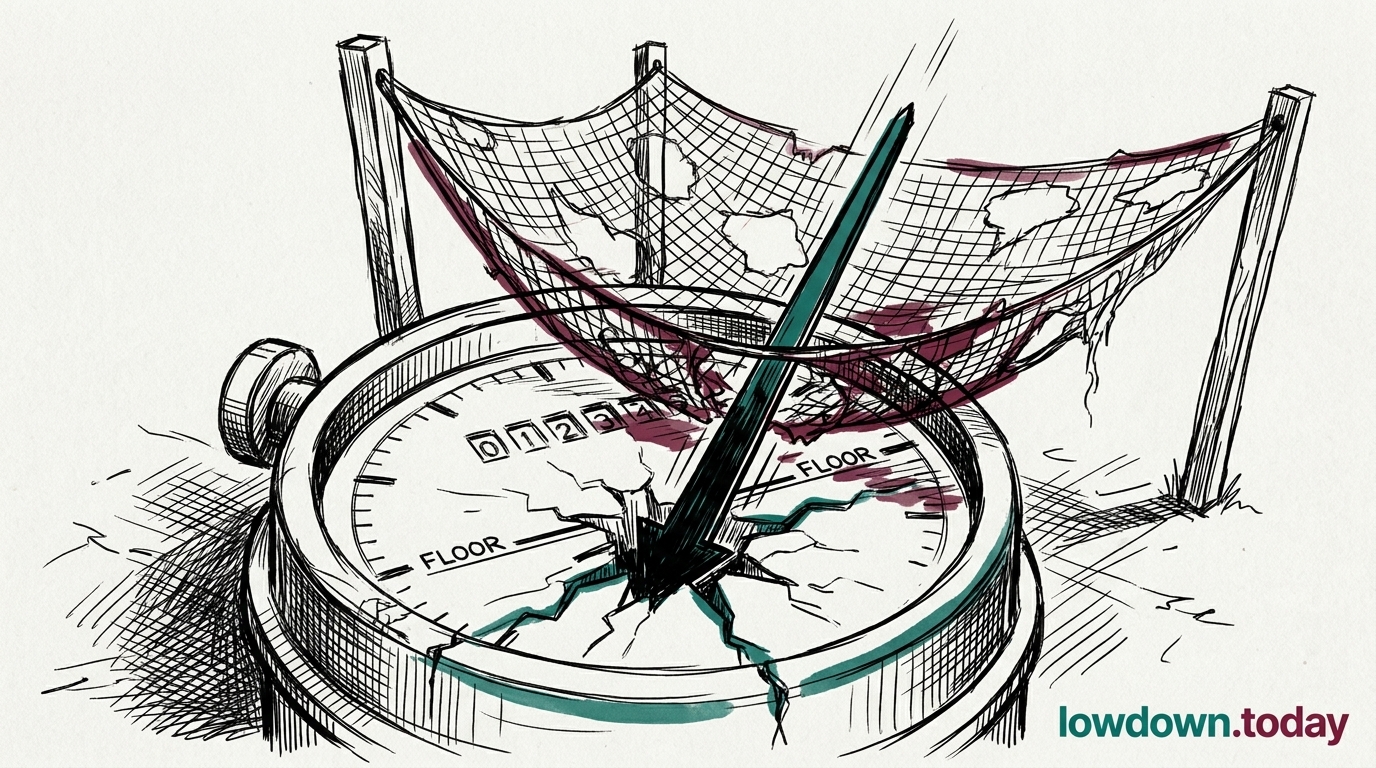
At a conservative $90 a barrel, Iran's monthly oil income has now fallen below what Saudi Arabia spends in a single day. Read alongside the 77.2 per cent inflation print, the two numbers approach the squeeze from opposite ends, Tehran's own statistics and independent vessel data, and meet on the same floor under the war's economic cost.


Deep Analysis

In plain English

Before the war, Iran sold roughly 1.84 million barrels of oil per day on the international market. That oil was a major source of government revenue. By May 2026, exports had fallen below 300,000 barrels per day, less than one sixth of the pre-war level, because CENTCOM is blocking most tankers from carrying Iranian oil and buyers are too nervous to participate. As a result, 67 million barrels are sitting in ships and storage inside the Gulf, unable to move. Iran has lost approximately $5.8bn in revenue since April. This does not directly affect most Western consumers because global supply has been partly replaced by Saudi and other OPEC production, but it does keep Brent crude elevated above the pre-war price and contributes to higher fuel bills across the importing world.

What could happen next?
  • Consequence

    Iran's daily government revenue from oil has fallen from roughly $145m to roughly $25m, a structural deficit that makes negotiated settlement economically urgent for Tehran.

    Immediate · Assessed
  • Risk

    The 67 million stranded barrels will create a price-suppression spike when any deal permits their release, potentially dropping Brent by $8-15 per barrel in a single trading session.

    Medium term · Reported
  • Opportunity

    China's pre-war Iranian crude contracts give Beijing leverage in any post-deal commodity arbitrage; Chinese absorption of stranded barrels may accelerate Iran's economic recovery faster than sanctions relief alone.

    Medium term · Reported
First Reported In

Update #119 · Trump's Iran deal: 95% done, 0% signed

Al Jazeera· 6 Jun 2026
Read original
Different Perspectives
Spain's LNG terminal operators
Spain's 9,145 GWh terminal inventory is the largest single stock in the EU LNG network, an option value that can reroute cargoes wherever the winter strip pays best rather than a cavern gas obligation tied to a fixed date. That flexibility matters more as Germany's cavern shortfall pushes more of the winter security question onto import infrastructure.
European Commission
European Commission
Brussels holds the bloc to 90% on a flexible window while Germany, holding roughly a quarter of EU storage capacity, tracks toward missing its own lower 80% figure by 21 points. A national shortfall this size in the anchor market matters more to bloc security than the flexible timetable alone can absorb.
French power exporters and CRE
French day-ahead rose in step with Germany but by less, reopening a EUR 7-17 premium that makes northward export flows commercially attractive again after the EUR 43.09 discount evaporated in days. CRE separately authorised RTE and Enedis to buy flexibility locally, betting the coming winter's binding constraint is grid congestion rather than a shortage of firm capacity.
TTF trading desk
TTF trading desk
A visible national shortfall like Germany's 21-point gap is a directional signal, not noise, for a desk holding the summer-winter spread. TTF's flat EUR 58-60 range through this week's German price swings says the market has not yet chosen to reprice refill risk into the front of the curve.
German cavern and CCGT operators
German caverns kept buying prompt gas at TTF near EUR 58-60 through the inversion; the wind collapse to 2.4 GW then flipped the spark spread to plus EUR 29 and put turbines back in the same queue. Every day turbines win that bid, injection at a third of the 877 GWh/day pace needed falls further behind.
Slovakia
Slovakia
Slovakia says it dropped its hold-out on the 21st sanctions package only after Ursula von der Leyen personally signed written gas-price and supply guarantees. The Council of the European Union's own 17,238-character release on the package names neither Slovakia nor any guarantee, leaving Bratislava's account unconfirmed by the institutional record.



