Skip to content
You can now search across every topic, entity and event.What's new
European Energy Markets
15JUN

Houthis threaten to close Bab al-Mandeb

2 min read
12:23UTC

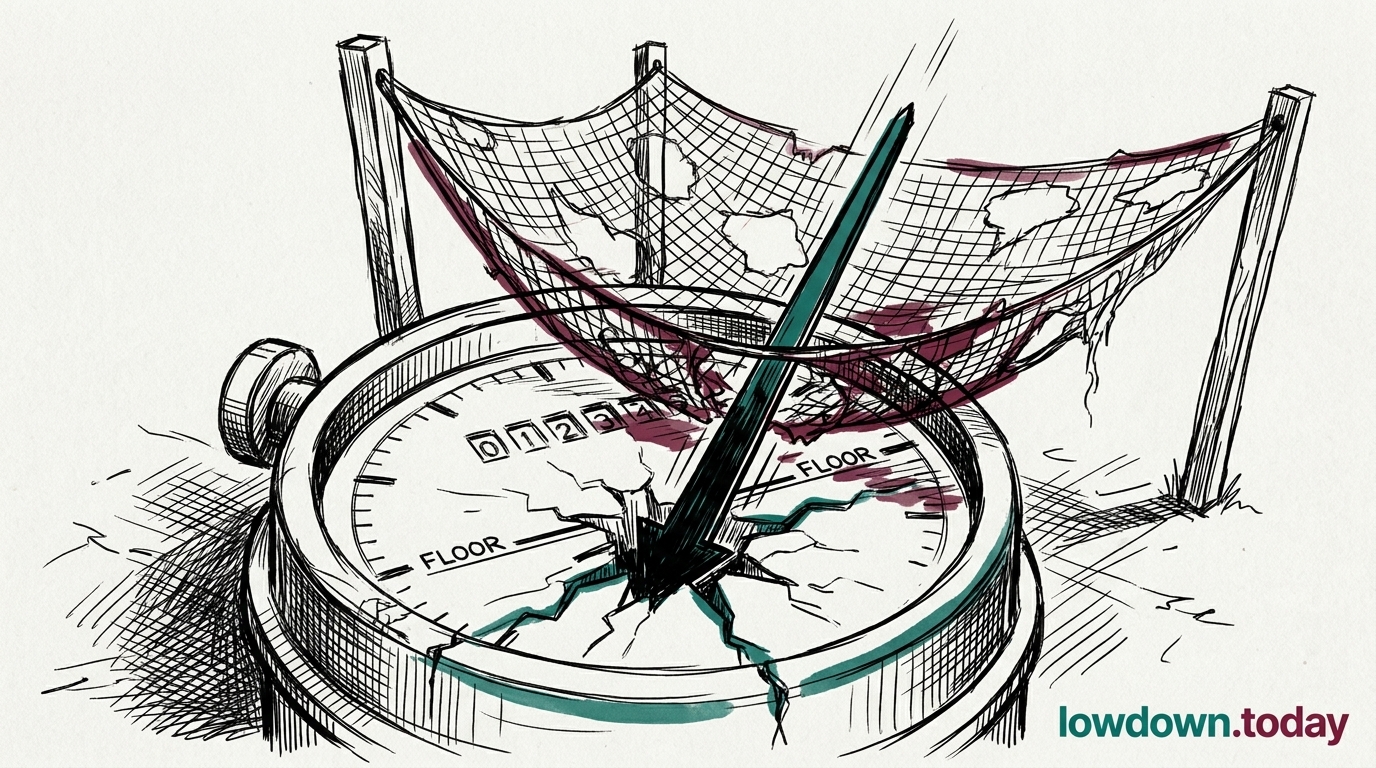
A senior Houthi official described closing the Red Sea strait as one stage in a deliberate escalation ladder.

EconomicDeveloping
Key takeaway

Dual-chokepoint pressure is now an active threat, not a theoretical scenario.

Mohammed Mansour, Houthi deputy information minister, told reporters: "We are conducting this battle in stages, and closing the Bab al-Mandeb strait is among our options." 1 Roughly 30% of Israeli imports and 6-7 million barrels per day of oil, approximately 7% of global supply, pass through the strait.

Mansour's language mirrors Iranian diplomatic formulations around Hormuz in the war's first week. The framing is a staged escalation ladder, not a single decision. Yahya Saree announced three formal red lines before the missile attack: US and Israeli use of the Red Sea for strikes, growing third-country participation, and escalating attacks on the "Axis of Resistance."

The IEA stated explicitly that its 400 million barrel emergency release "cannot substitute for the transit route itself" . Iran's Hormuz traffic control already routes vessels through a narrow corridor past Larak Island under IRGC escort; the Majlis toll bill would codify that system into domestic law. If both chokepoints tighten further, no reserve release addresses the shortfall.


Deep Analysis

In plain English

Bab al-Mandeb is a narrow sea passage between Yemen and East Africa. Almost all the oil and cargo that moves between Asia and Europe passes through it. Around 6-7 million barrels of oil cross every day. A senior Houthi official said on 28 March that closing this strait is one of their options as the war continues. They already have missiles and drones on Yemen's coastline. Iran already controls the other major oil route, the Strait of Hormuz. If the Houthis block Bab al-Mandeb as well, there would be no alternative route for most of the world's oil. Emergency reserves would run out in weeks; there is no spare capacity to replace both routes at once.

Deep Analysis
Root Causes

The structural driver is the Houthis' geographic positioning. Yemen's Tihama coast overlooks Bab al-Mandeb's 29-kilometre narrows. Anti-ship missiles already deployed there can reach any vessel in the strait. Unlike Hormuz, there is no second passage: cargo cannot route around Bab al-Mandeb without circumnavigating Africa, adding 6,000 nautical miles and roughly 20 days per voyage.

The Houthis' leverage exists regardless of Iranian direction because the geography is permanent. Tehran did not create this chokepoint; it merely held the group back from using it.

What could happen next?
  • Risk

    Dual chokepoint closure would exceed IEA emergency reserve capacity; no government has a contingency plan for simultaneous Hormuz restriction and Bab al-Mandeb closure.

  • Consequence

    Any ceasefire negotiation must now include Houthi participation or Bab al-Mandeb remains at risk regardless of what Iran agrees.

First Reported In

Update #50 · Houthis join; Iran holds two chokepoints

Axios· 28 Mar 2026
Read original
Different Perspectives
Spain's LNG terminal operators
Spain's 9,145 GWh terminal inventory is the largest single stock in the EU LNG network, an option value that can reroute cargoes wherever the winter strip pays best rather than a cavern gas obligation tied to a fixed date. That flexibility matters more as Germany's cavern shortfall pushes more of the winter security question onto import infrastructure.
European Commission
European Commission
Brussels holds the bloc to 90% on a flexible window while Germany, holding roughly a quarter of EU storage capacity, tracks toward missing its own lower 80% figure by 21 points. A national shortfall this size in the anchor market matters more to bloc security than the flexible timetable alone can absorb.
French power exporters and CRE
French day-ahead rose in step with Germany but by less, reopening a EUR 7-17 premium that makes northward export flows commercially attractive again after the EUR 43.09 discount evaporated in days. CRE separately authorised RTE and Enedis to buy flexibility locally, betting the coming winter's binding constraint is grid congestion rather than a shortage of firm capacity.
TTF trading desk
TTF trading desk
A visible national shortfall like Germany's 21-point gap is a directional signal, not noise, for a desk holding the summer-winter spread. TTF's flat EUR 58-60 range through this week's German price swings says the market has not yet chosen to reprice refill risk into the front of the curve.
German cavern and CCGT operators
German caverns kept buying prompt gas at TTF near EUR 58-60 through the inversion; the wind collapse to 2.4 GW then flipped the spark spread to plus EUR 29 and put turbines back in the same queue. Every day turbines win that bid, injection at a third of the 877 GWh/day pace needed falls further behind.
Slovakia
Slovakia
Slovakia says it dropped its hold-out on the 21st sanctions package only after Ursula von der Leyen personally signed written gas-price and supply guarantees. The Council of the European Union's own 17,238-character release on the package names neither Slovakia nor any guarantee, leaving Bratislava's account unconfirmed by the institutional record.



