Skip to content
You can now search across every topic, entity and event.What's new
European Energy Markets
15JUN

Escort capacity caps Hormuz LNG throughput

2 min read
12:23UTC

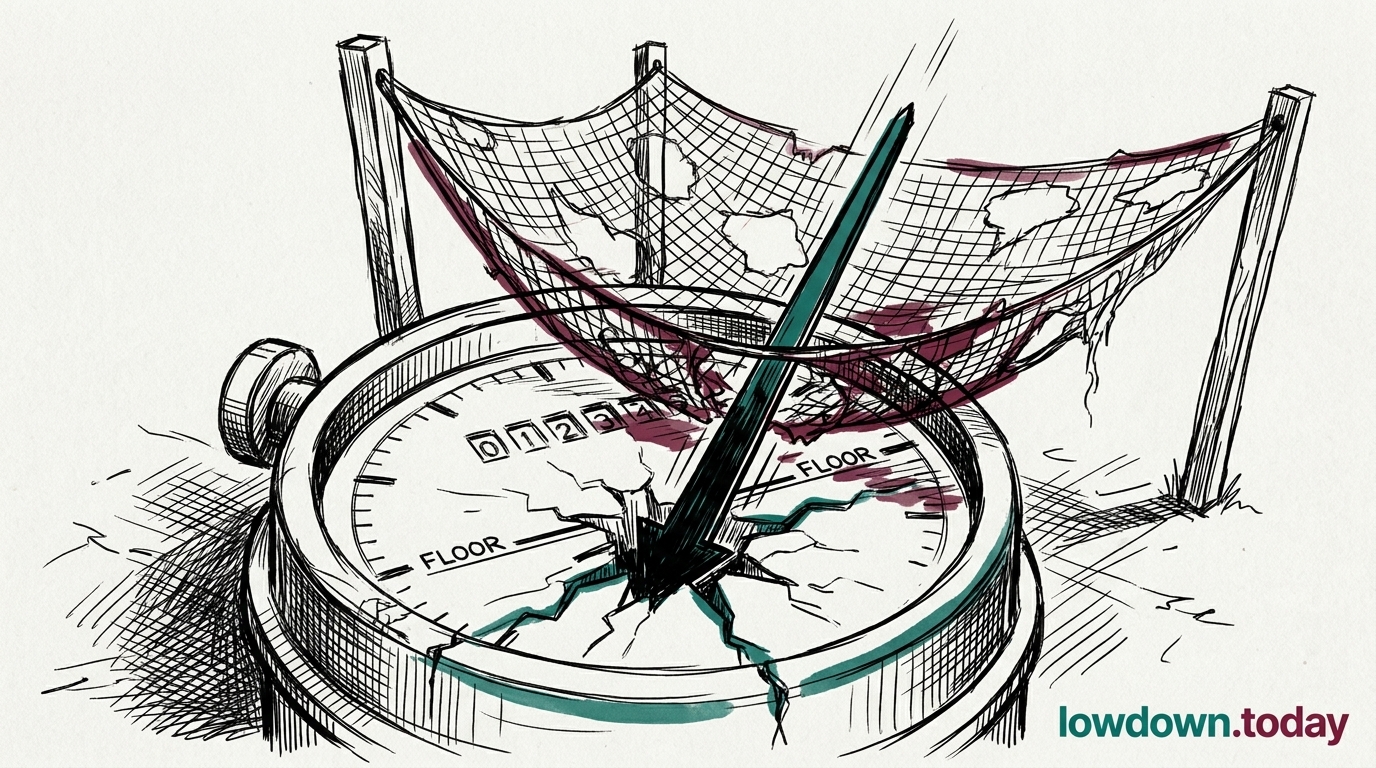
Lloyd's List reports naval escorts can clear only three to four tankers a day through Hormuz on seven to eight warships, a ceiling that caps the restart regardless of diplomacy.

EconomicDeveloping
Key takeaway

Escorts clear only three to four ships a day, so throughput scales with warships, not diplomacy.

Naval escorts can currently move only three to four commercial ships a day through the Strait of Hormuz, using seven to eight escort warships for air cover against the residual mine and midget-submarine threat, Lloyd's List reports. The maritime publication frames the ratio as a fixed logistics ceiling, not a temporary bottleneck.

The corridor reopened for commercial traffic only when the first Hormuz carrier cleared to India in mid-June , and it has stayed thin since. TTF swung on each Hormuz headline over the following fortnight without settling , because the escort ratio cannot scale to normal volumes without a step-change in warships committed to the corridor. This extends the same capacity story, rather than opening a new one.

For QatarEnergy the implication is that its restart curve tracks the convoy schedule, not the communiques. Cargoes clear at the speed escorts allow, so a de-escalation headline shifts sentiment faster than it shifts throughput. A spreads desk watches the escort count as the real throttle on Qatari send-out, and treats any TTF relief on talk of normalisation as a fade candidate until the warship commitment actually rises.


Deep Analysis

In plain English

Even though Iran backed off its threats, only a handful of gas tankers can get through the Strait of Hormuz each day. That's not because of politics, it's because only seven or eight warships are escorting them, and each convoy trip takes time. Think of it like a single-lane bridge with a police escort: however many cars want to cross, only as many as the escort can handle get through. Until more warships join, three or four tankers a day is the limit, no matter how calm the diplomatic picture looks.

Deep Analysis
Root Causes

Sustaining a single escorted convoy on station requires roughly three committed warships for every one actually escorting at any given moment, the rest cycling through transit, refuelling and maintenance. Seven to eight warships is therefore close to the maximum convoy cadence a single coalition can sustain without redeploying vessels from other commitments.

Raising the ceiling means adding hulls, not paperwork, which is why Lloyd's List frames the bottleneck as logistical rather than diplomatic.

What could happen next?
  • Meaning

    QatarEnergy's restart pace is bound by convoy escort capacity rather than by diplomacy or terminal readiness, and will not lift until more warships join the corridor.

First Reported In

Update #23 · The EU's own regulator says the ban isn't biting

Lloyd's List· 3 Jul 2026
Read original
Different Perspectives
Spain's LNG terminal operators
Spain's 9,145 GWh terminal inventory is the largest single stock in the EU LNG network, an option value that can reroute cargoes wherever the winter strip pays best rather than a cavern gas obligation tied to a fixed date. That flexibility matters more as Germany's cavern shortfall pushes more of the winter security question onto import infrastructure.
European Commission
European Commission
Brussels holds the bloc to 90% on a flexible window while Germany, holding roughly a quarter of EU storage capacity, tracks toward missing its own lower 80% figure by 21 points. A national shortfall this size in the anchor market matters more to bloc security than the flexible timetable alone can absorb.
French power exporters and CRE
French day-ahead rose in step with Germany but by less, reopening a EUR 7-17 premium that makes northward export flows commercially attractive again after the EUR 43.09 discount evaporated in days. CRE separately authorised RTE and Enedis to buy flexibility locally, betting the coming winter's binding constraint is grid congestion rather than a shortage of firm capacity.
TTF trading desk
TTF trading desk
A visible national shortfall like Germany's 21-point gap is a directional signal, not noise, for a desk holding the summer-winter spread. TTF's flat EUR 58-60 range through this week's German price swings says the market has not yet chosen to reprice refill risk into the front of the curve.
German cavern and CCGT operators
German caverns kept buying prompt gas at TTF near EUR 58-60 through the inversion; the wind collapse to 2.4 GW then flipped the spark spread to plus EUR 29 and put turbines back in the same queue. Every day turbines win that bid, injection at a third of the 877 GWh/day pace needed falls further behind.
Slovakia
Slovakia
Slovakia says it dropped its hold-out on the 21st sanctions package only after Ursula von der Leyen personally signed written gas-price and supply guarantees. The Council of the European Union's own 17,238-character release on the package names neither Slovakia nor any guarantee, leaving Bratislava's account unconfirmed by the institutional record.



