Skip to content
You can now search across every topic, entity and event.What's new
European Energy Markets
15JUN

Brent settles at $123, new wartime high

4 min read
12:23UTC

Brent crude settled near $123 on Thursday 30 April, a new wartime settle high; the benchmark jumped $14.84 in two trading days as the UAE's announced exit from OPEC closes in on its formal 1 May effective date.

EconomicDeveloping
Key takeaway

Brent settles at $123, the war's new settle high, as the UAE's OPEC exit goes operative tomorrow.

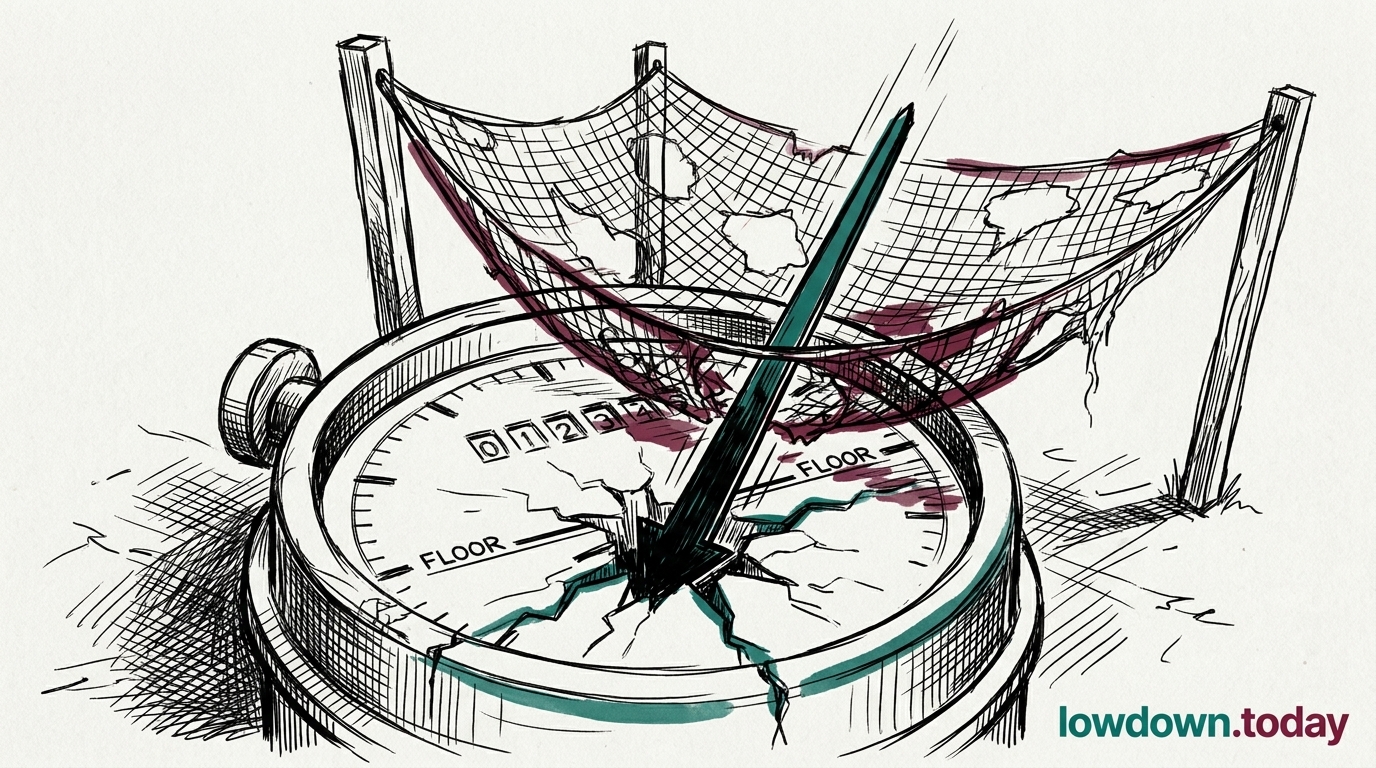
Brent Crude settled near $123 on Thursday 30 April, the new wartime settle high 1. The benchmark jumped $14.84 in two trading days from $111.16 on Day 60 , touching $126 intraday and matching the 22 March wartime peak . The driver was the UAE's withdrawal from OPEC and OPEC+, announced on 28 April , taking formal effect Friday 1 May.

The UAE's 5 million barrels per day of capacity moves outside OPEC+ quota discipline tomorrow morning. That is roughly 5% of global oil supply leaving the coordinated production framework that has anchored crude since the cartel's 1960 founding 2. The bloc has historically held by inertia rather than enforcement; its only material disciplinary instrument is bilateral pressure between Riyadh and Abu Dhabi. After the 29 December 2025 Saudi airstrike on an Emirati weapons convoy at Mukalla port in Yemen, the first kinetic exchange between nominal GCC (Gulf Cooperation Council) allies in the bloc's history, that channel is dead. The OPEC exit is not the rupture; it is the institutional formalisation of one that began with an airstrike four months ago. Markets are pricing the consequence ahead of the calendar.

The structural question for Friday's session is whether Saudi Arabia competes on volume or holds. A unilateral production lift would tank prices below the $87/bbl Saudi budget breakeven, which Riyadh has avoided since 2024. Holding lets the UAE eat its market share without the risk premium being priced out. Brent at $123 sits 87% above the $67.41 pre-war baseline; a UAE volume surge against a Saudi hold would price out the war premium fast, while a Saudi response would price out OPEC+ entirely. Either path produces a violent move; the first session on Friday is the price discovery.

For UK drivers the translation is roughly 35-40 pence above pre-war pump prices once refinery margins clear, with haulage, food and electricity bills following inside a fortnight. Xinhua and People's Daily running the UAE announcement above the fold reads as Beijing broadcasting a narrative in which Gulf cohesion has collapsed and Riyadh is exposed; Saudi state outlets burying the same story closed the loop from the other side. Aramco's cohesion thesis since the 2024 production-cut renegotiation has rested on the assumption that intra-Gulf disputes stay diplomatic. Mukalla broke that assumption in December; the OPEC exit prices it.


Deep Analysis

In plain English

OPEC is the cartel of oil-producing countries that agrees on how much oil each member is allowed to produce. When members follow the agreed limits, the supply of oil is controlled and prices tend to stay higher. The United Arab Emirates has just left OPEC, which means it can now produce as much oil as it wants without asking permission. The UAE produces about 5 million barrels of oil per day. By leaving the cartel, it can potentially increase that. But there is a problem: the Strait of Hormuz, through which UAE oil must flow to reach export markets, is currently under blockade. So even if the UAE produces more, it may struggle to export it. Markets reacted immediately: the price of a barrel of oil jumped by nearly $15 in two days.

Deep Analysis
Root Causes

The 29 December 2025 Saudi strike on an Emirati weapons convoy at Mukalla port in Yemen was the kinetic trigger for a rupture that had been building since 2019, when the UAE informally suspended its active participation in the Saudi-led Yemen campaign. Abu Dhabi's investment in post-war energy positioning, including ADNOC's 2025 capacity expansion to 4.9 million barrels per day, made OPEC quota constraints increasingly costly.

The UAE's strategic calculus inverts Saudi Arabia's: Riyadh needs high oil prices to fund Vision 2030 and a budget breakeven estimated at $87-90 per barrel; Abu Dhabi's sovereign wealth base (ADIA and Mubadala assets estimated at $2.7 trillion) gives it fiscal resilience at lower price levels, making volume over price a rational alternative.

China's enthusiastic coverage of the UAE exit, via Xinhua and People's Daily, reflects Beijing's interest in a Gulf split that reduces Saudi Arabia's ability to coordinate production cuts that harm Chinese import costs. China is the UAE's largest trading partner and has been building the diplomatic relationship since the 2022 comprehensive strategic partnership.

What could happen next?
  • Consequence

    UAE production ramp-up outside OPEC discipline could add 1.6 million barrels per day to global supply once Hormuz reopens, driving a price correction.

    Medium term · Medium
  • Risk

    Saudi Arabia may retaliate against the UAE exit by opening its own production taps, fracturing OPEC+ cohesion among remaining members.

    Short term · Medium
  • Consequence

    Beijing's prominent coverage of the exit signals China is positioning as the primary patron of a post-OPEC UAE energy relationship.

    Medium term · Medium
  • Precedent

    The first kinetic exchange between nominal GCC allies at Mukalla establishes that Gulf security architecture cannot be assumed stable under wartime stress.

    Long term · High
First Reported In

Update #84 · Department named, war unsigned

Al Jazeera· 30 Apr 2026
Read original
Different Perspectives
Spain's LNG terminal operators
Spain's 9,145 GWh terminal inventory is the largest single stock in the EU LNG network, an option value that can reroute cargoes wherever the winter strip pays best rather than a cavern gas obligation tied to a fixed date. That flexibility matters more as Germany's cavern shortfall pushes more of the winter security question onto import infrastructure.
European Commission
European Commission
Brussels holds the bloc to 90% on a flexible window while Germany, holding roughly a quarter of EU storage capacity, tracks toward missing its own lower 80% figure by 21 points. A national shortfall this size in the anchor market matters more to bloc security than the flexible timetable alone can absorb.
French power exporters and CRE
French day-ahead rose in step with Germany but by less, reopening a EUR 7-17 premium that makes northward export flows commercially attractive again after the EUR 43.09 discount evaporated in days. CRE separately authorised RTE and Enedis to buy flexibility locally, betting the coming winter's binding constraint is grid congestion rather than a shortage of firm capacity.
TTF trading desk
TTF trading desk
A visible national shortfall like Germany's 21-point gap is a directional signal, not noise, for a desk holding the summer-winter spread. TTF's flat EUR 58-60 range through this week's German price swings says the market has not yet chosen to reprice refill risk into the front of the curve.
German cavern and CCGT operators
German caverns kept buying prompt gas at TTF near EUR 58-60 through the inversion; the wind collapse to 2.4 GW then flipped the spark spread to plus EUR 29 and put turbines back in the same queue. Every day turbines win that bid, injection at a third of the 877 GWh/day pace needed falls further behind.
Slovakia
Slovakia
Slovakia says it dropped its hold-out on the 21st sanctions package only after Ursula von der Leyen personally signed written gas-price and supply guarantees. The Council of the European Union's own 17,238-character release on the package names neither Slovakia nor any guarantee, leaving Bratislava's account unconfirmed by the institutional record.



