Skip to content
Foundations rebuilt, and the first new thing is here: search across every topic, entity, and event.Try search
European Energy Markets
11JUN

Serbia intercepted 4kg TurkStream bomb plot

3 min read
09:04UTC

Serbian authorities found plastic explosives metres from the Balkan Stream pipeline on 5 April; Hungary has since deployed the army.

EconomicDeveloping
Key takeaway

The last Russian pipeline leg survived a bomb attempt ten days before the LNG leg ends.

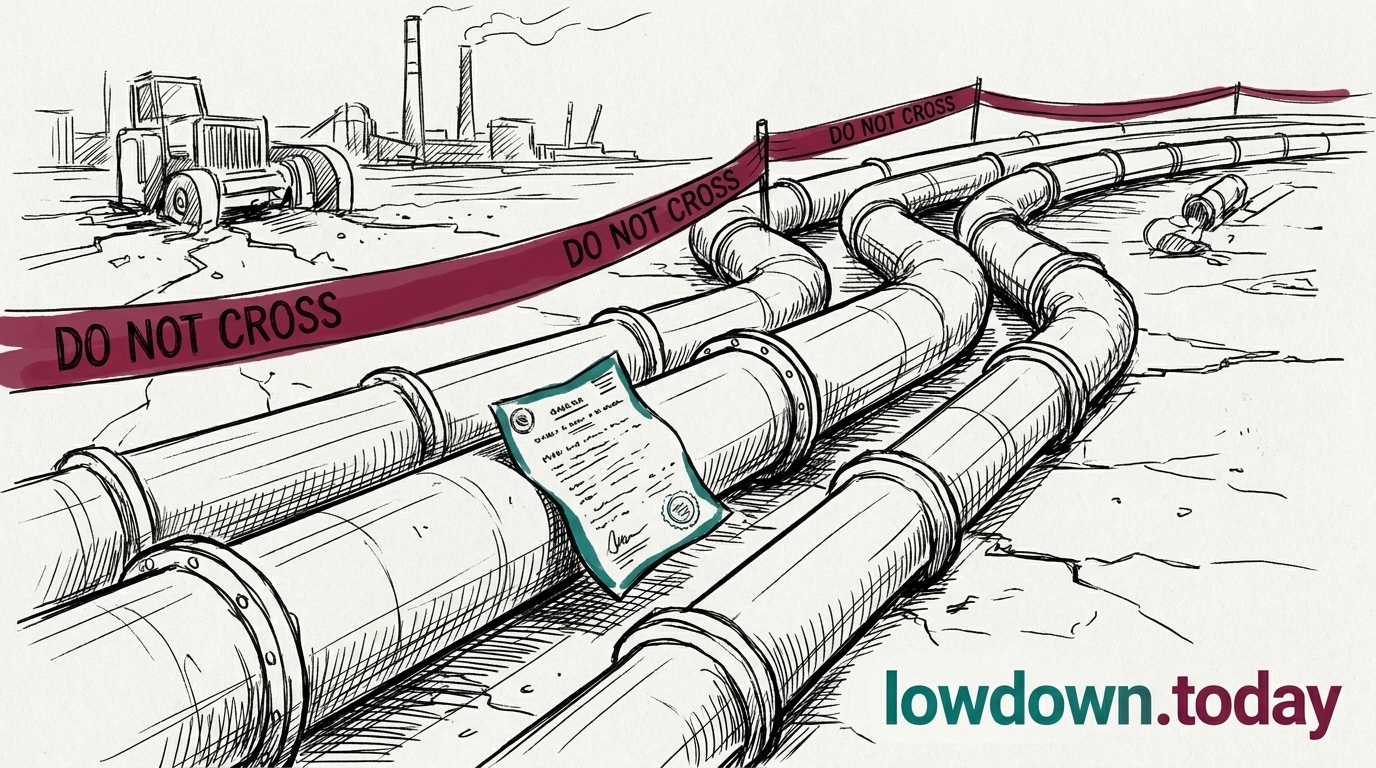
On 5 April 2026, Serbian authorities found two backpacks containing roughly 4 kg of plastic explosives, detonator caps and cord metres from the Balkan Stream pipeline near the village of Velebit in northern Serbia, a TurkStream offshoot carrying Russian gas through the Western Balkans 1. Hungary has since deployed its army to protect the Serbia-to-Slovakia segment, and Russia, Turkey, Serbia and Hungary have agreed a joint protection framework. Ukraine denied involvement; Serbian intelligence briefed that US-made explosives were recovered and pointed to a migrant with military training.

TurkStream carries roughly 15 bcm per year to Hungary, Slovakia, Czech Republic and Austria and is the sole remaining Russian pipeline route to central Europe since Ukraine transit ended. Against a shallow aggregate storage fill and the 25 April LNG ban closing the other Russian leg, a successful attack on the 5th would have removed both Russian supply routes in the same week. The intercept is the reason the system did not run that test.

The analytical read is not that Balkan Stream is safer today than it was on 4 April. Pipeline protection on a line that runs through four jurisdictions with varied standards cannot be hardened uniformly by one national deployment. The intercepted plot shows capability and intent against one segment; the route length means the vector count is larger than the vector just addressed.

TTF pricing is not carrying that tail. Implied vol on late-April TTF options is cheap relative to the physical state of the system: a Hormuz ceasefire expiry, a Russian LNG cutoff and an intercepted pipeline sabotage plot sitting inside the same ten-day window. The counter-view is that the plot was caught and protection has been hardened; that is correct for the specific vector, not for the category.


Deep Analysis

In plain English

TurkStream is a gas pipeline that runs from Russia through Turkey and then north through Serbia and Hungary, carrying gas to central European countries that no longer receive it through Ukraine. It is the last active Russian gas pipeline into Europe after the Ukraine transit route shut down in early 2025. On 5 April, Serbian police found 4 kilograms of plastic explosives hidden near the pipeline close to a village called Velebit. That is enough to damage the pipeline significantly. Nobody has admitted placing them. In response, Hungary sent its army to protect its section of the pipeline, and Russia, Turkey, Serbia, and Hungary agreed a joint protection arrangement. The four countries involved in protecting the pipeline are a mix of NATO members and non-NATO states, which makes the arrangement politically unusual.

Deep Analysis
Root Causes

TurkStream's vulnerability is structural. The pipeline was designed and built after 2017 as a specifically NATO-circumventing route: it enters European territory through Turkey (a NATO member but one with independent energy policy) and transits Serbia, which has EU candidate status but is not a member. The Serbian and Hungarian segments have no EU-level protection framework, relying entirely on bilateral host-country arrangements.

The absence of attribution for the explosives is itself a structural indicator. Ukraine denied involvement; no other actor claimed responsibility. The 4 kg of plastic explosive is below the threshold that would guarantee pipeline destruction but above what would be needed to trigger a protection-framework demand. The incident has the operational signature of a pressure tactic rather than a genuine interdiction attempt.

What could happen next?
  • Precedent

    Hungary's army deployment to protect Russian pipeline infrastructure creates the first instance of a NATO member providing ground-force security for Russian-origin energy assets in Europe since 2022.

  • Risk

    If the explosives originated from a state actor seeking to force Hungary and Slovakia into dependency on LNG alternatives (thus removing their political leverage within the EU), further interception attempts may follow to test the protection framework's deterrence.

First Reported In

Update #2 · TTF EUR 42 as Russian LNG ban enters range

Euronews· 15 Apr 2026
Read original
Different Perspectives
Amsterdam-Rotterdam-Antwerp gas trading desks
TTF failing to fall with three bearish physical signals on 11 June confirms EUR 50 as a diplomatic ceiling rather than a physical floor; the Iran escalation premium of roughly EUR 2-3/MWh is the sole bid not corroborated by a molecule. Winter Cal-26 long against summer TTF short is the structural position FNB Gas's broken-mechanism verdict supports.
German capacity planners and industrial buyers
The cabinet-approved StromVKG entering Bundestag is a direct acknowledgement that EUR 124/MWh day-ahead power and a EUR -8 spark spread make Germany's grid unfinanceable on market terms; the 2031 first-capacity date is five years of exposure before any relief arrives from the 9 GW programme.
ACER and the European Commission
ACER's 11 June REMIT workshop and the 12 June guidance lock signal the surveillance regime entering its first full enforcement cycle under expanded cross-border powers, with 204 STORs in 2025 already doubling the prior year before the new powers activated. The Article 207 TFEU pipeline ban framing has produced no CJEU stay, validating the trade-measure classification strategy.
LNG spot traders and cargo routers
The JKM-TTF arb at USD 2.368/MMBtu sits above the USD 1.80-2.00 round-trip threshold, routing Atlantic spot cargoes east with positive carry and compressing European import volumes through the injection season. At USD 2.368 the arb still points Asia comfortably; the next weekly laycan window is the operative data point.
Hungary and Slovakia
Neither Budapest's February 2026 CJEU annulment challenge nor Slovakia's signalled application has produced a stay; with six days remaining the legal route has not bought the supply-protection time it was intended to. After 17 June, Hungary's long-term Gazprom-TurkStream contract to at least September 2027 becomes the sole remaining Russian pipeline import line for both states.
Hungary and Slovakia (Central European supply-security bloc)
Nine days from the 17 June short-term pipeline ban, neither Hungary's February CJEU challenge nor Slovakia's signalled application has produced a stay; the legal route has not bought the supply-protection time it was intended to. After 17 June, Hungary's long-term Gazprom-TurkStream contract to 2036 becomes the sole remaining Russian pipeline import route for both states.



