Skip to content
Briefings are running a touch slower this week while we rebuild the foundations.See roadmap
European Energy Markets
13APR

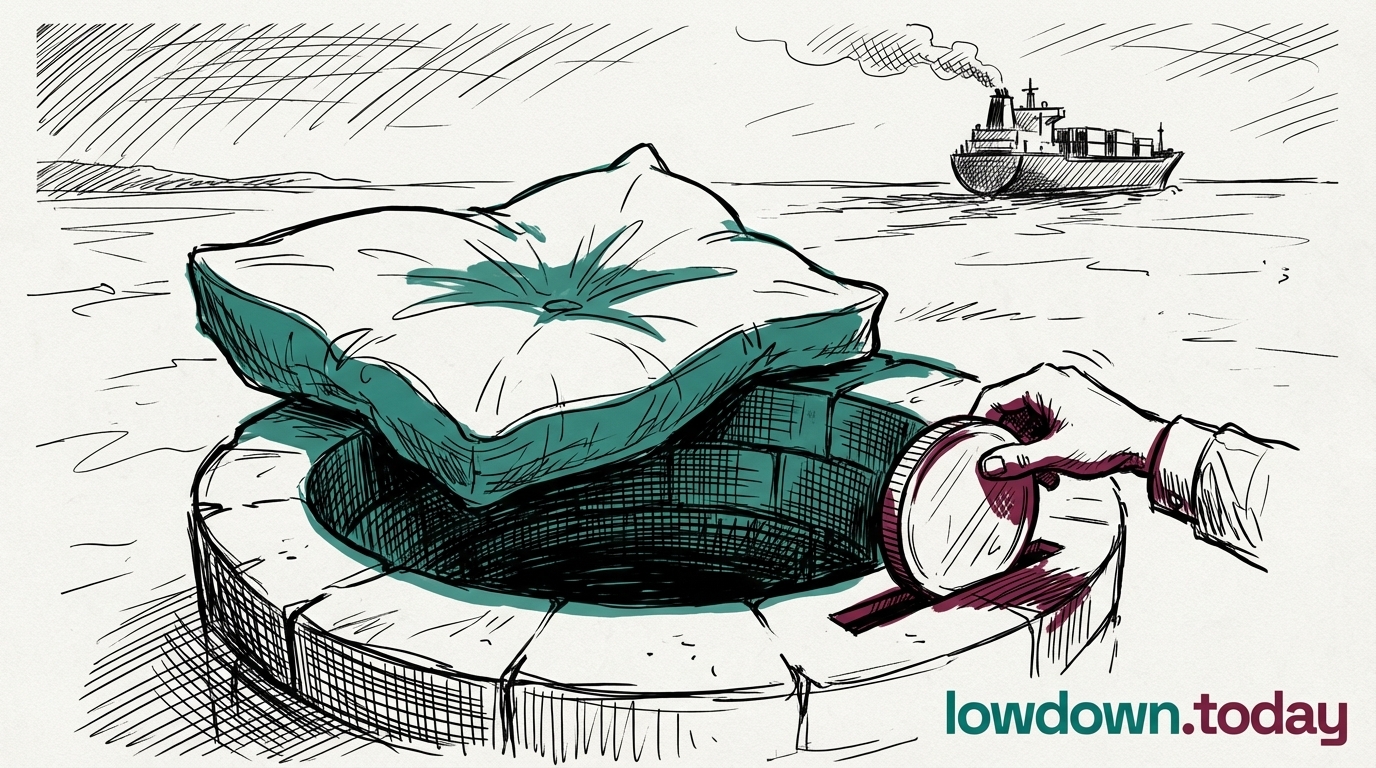
IEA pivots: Hormuz delay now multi-year, not mid-year

4 min read
22:33UTC

The IEA's Q2-2026 Gas Market Report states the Middle East conflict is "expected to delay a significant amount of new LNG capacity" by at least two years, abandoning the mid-year resumption that anchored its April Oil Market Report.

EconomicDeveloping
Key takeaway

IEA shifted LNG baseline from mid-year resumption to multi-year delay between two consecutive reports.

The IEA (International Energy Agency)'s Q2-2026 Gas Market Report, published in Paris this week, states that the Middle East conflict is "expected to delay a significant amount of new LNG capacity that had been on track to come online in the second half of this decade" by at least two years 1. Two weeks earlier, the same agency's April OMR (Oil Market Report) had run a mid-year resumption of Middle East deliveries as the base case . The Q2 report names demand-side balancing, particularly Asian fuel switching, as the primary market mechanism rather than supply restoration.

The IEA is the OECD's energy intelligence arm; its base case anchors most utility-side and trading-floor supply models in Europe. Reframing Hormuz damage from a maintenance window into a medium-term structural change is a material revision between consecutive publications, and it has not yet propagated. ENTSOG (European Network of Transmission System Operators for Gas)'s Summer Supply Outlook 2026 and ACER's 23 April monitoring report were both built on the OMR mid-year assumption and have not recalibrated.

The transmission channel for European hedge programmes runs through Cal 27 and Cal 28: a multi-year capacity delay at the Qatari liquefaction layer means the Atlantic basin absorbs the gap for longer than 2026 alone. That puts the forward TTF curve through next winter and the one after at risk of being under-priced if the Q2 framing holds. The IEA's two consecutive publications running different base cases inside two weeks suggests the agency's supply-side modelling team has moved faster than its market-balance team, and Asian buyer behaviour now becomes the swing variable on European pricing rather than the reopening date for the strait. Iranian tanker seizures and the absence of LNG transits through Hormuz this week sit behind the agency's revision.


Deep Analysis

In plain English

The IEA (International Energy Agency) is the world's leading energy data and forecasting body, based in Paris. Every few months it publishes reports that governments and energy companies rely on to make supply and investment decisions. In April 2026 the IEA updated its gas forecast and concluded that the disruption around the Strait of Hormuz, a key shipping route between the Persian Gulf and the Indian Ocean, would delay new LNG supply projects by at least two years. This was a significant change from its previous forecast, which had assumed the disruption would resolve by mid-2026. Other EU bodies, including ENTSOG (the EU gas network operator group) and ACER (the EU energy regulator), had based their own forecasts on the older, more optimistic assumption and have not yet updated.

Deep Analysis
Root Causes

The IEA's Q2 base-case shift reflects a structural lag in its modelling framework: the Oil Market Report is a 12-month horizon tool calibrated to geopolitical base cases, while the Gas Market Report operates on a 2-5 year capacity horizon. When a Hormuz closure reshapes the LNG capacity installation calendar (delays to Qatari North Field expansion, rescheduling of liquefaction projects dependent on Gulf feedstock), the two reports diverge until the OMR explicitly updates its horizon.

The ENTSOG and ACER models that used the OMR mid-year resumption frame inherited this lag. Those organisations cite IEA OMR as an external baseline rather than running independent long-run capacity models, which is why their public documents have not yet recalibrated.

What could happen next?
  • Risk

    ENTSOG's Summer Supply Outlook 2026 and ACER's April monitoring report both embed the now-superseded OMR mid-year resumption base case; procurement teams relying on those models are underestimating 2027-28 refill costs by EUR 9-18bn.

  • Consequence

    LNG project financing banks will reassess discount rates on post-2028 capacity agreements, raising the cost of capital for Atlantic LNG expansions that underpin Europe's long-term supply diversification.

First Reported In

Update #5 · Ban day muted; Germany doubles injection rate

International Energy Agency· 26 Apr 2026
Read original
Causes and effects
Different Perspectives
Amsterdam-Rotterdam gas trading desks
TTF failing to sustain EUR 47+ with 51 mcm/day of Norwegian capacity offline confirms EUR 50 as a diplomatic ceiling; the curve is a Troll-restart long, and EBN's EUR 233 million mandate budget cap is a known limit on price-insensitive prompt buying.
ARERA
ARERA
Italy's energy regulator is running mandatory storage injection that carries the EU aggregate trajectory alongside CRE and EBN, while Italian industrial consumers at Panigaglia face a simultaneously low-utilisation terminal and a EUR 2/MWh delivered-cost basis above TTF. The mandate funds security of supply at the expense of Italian competitiveness.
Shell
Shell
As a long-term Russian LNG contract holder, Shell faces a replacement procurement problem concentrated in Q3-Q4 2026 ahead of the 1 January 2027 double cliff; with terminal booking lead times running weeks, the real deadline is late November 2026 and no replacement supply has been publicly named.
CRE
CRE
France's 100% mandatory booking order funds injection regardless of the inverted strip, providing the EU aggregate cover that Germany's abolished levy cannot; the CRE order is renewed annually, making it a political risk rather than a structural guarantee. That dependency exposes the EU injection trajectory to French electoral cycles.
Bundesnetzagentur
Bundesnetzagentur
Germany's regulator holds the early-warning gas stage active with no statutory instrument to compel commercial injection, and Berlin confirmed on 20 May it will introduce no summer incentive scheme; Germany is the EU's only major unincentivised storage market after the levy lapsed on 1 January 2026. The mandate gap is carried by three other member states.
European Commission
European Commission
The Commission relaxed the mandatory fill target from 90% to 80% and published an ETS benchmark revision saving industry EUR 4 billion, choosing industrial competitiveness over both climate and storage ambition at the moment physical margins are tightest. Both decisions reduce policy pressure at the exact week the trajectory margin narrowed to 45 GWh/day.
