Skip to content
Briefings are running a touch slower this week while we rebuild the foundations.See roadmap
Drones: Industry & Defence
21MAY

Pentagon files secret brief against DJI

3 min read
11:11UTC

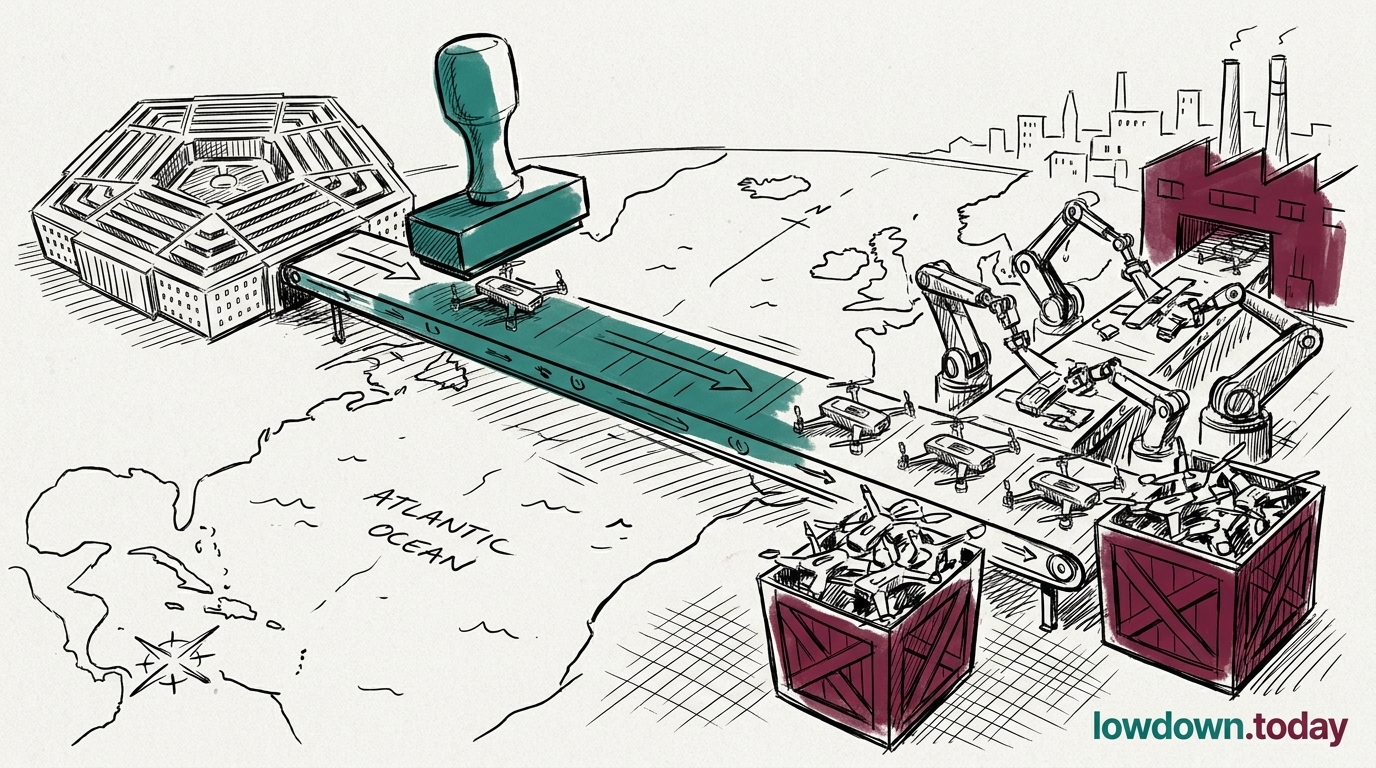
The Department of Defense submitted classified evidence to Congress opposing DJI's petition to be removed from the FCC Covered List, creating a legal barrier DJI cannot see or challenge.

TechnologyDeveloping
Key takeaway

Three independent regulatory layers now foreclose DJI from the US drone market.

The Department of Defense filed a memo on 3 April opposing DJI's petition to the Ninth Circuit (Case 26-1029) for removal from the FCC Covered List . The filing includes a classified intelligence annex submitted to Congress the same day. DJI's reply is due 11 May.

Classified annexes create an asymmetric legal environment where the plaintiff cannot examine the evidence against it. US courts have historically deferred to executive branch national security claims under these conditions. DJI retained a former Solicitor General, but the procedural disadvantage is structural: no amount of legal talent compensates for the inability to see or contest the opposing brief.

This classified opposition completes a three-layer regulatory lock. FAR clause 52.240-1 bars Chinese drones from all federal contracts. The FCC Covered List blocks new product certifications. The DoD annex now effectively neutralises the one judicial mechanism DJI had to contest both. Each layer requires a separate legal or political victory to overturn; together, they foreclose DJI's path to the US market regardless of the Section 232 tariff outcome , which itself remains unresolved 16 days past its statutory deadline.

For the broader US drone market, DJI's exclusion is now functionally permanent. Hundreds of thousands of existing DJI aircraft continue to fly under prior authorisations, but no new models can enter. Domestic manufacturers like Skydio inherit a protected market, though the capability gap with DJI hardware remains real and will take years to close.

Deep Analysis

In plain English

DJI is the world's most popular drone brand, but it has been banned from the US market because the government considers it a Chinese security risk. DJI went to court to try to get that ban overturned. The US military then filed secret evidence with Congress saying DJI is a threat. Because the evidence is secret, DJI's lawyers cannot read it, let alone challenge it. It is like being told you failed a test but not being allowed to see the test paper. US courts have almost always sided with the government when national security secrecy is involved. DJI is likely to lose, which means no new DJI drones in the US market, probably permanently.

Deep Analysis
Root Causes

DJI's three-layer exclusion is the product of three separate institutional actors acting independently: the FCC (administrative), the DoD (legislative via classified annex), and the FAR rulemakers (procurement). No single political decision created the lock; removing it would require simultaneously reversing three independent institutional determinations, each with its own legal standard and political constituency.

The classified annex is structurally different from the other two layers. The FCC Covered List and FAR clause 52.240-1 can in principle be reversed by the administrations that created them. A classified intelligence annex, once submitted to Congress, creates a permanent record that future administrations inherit. DJI's challenge is not merely legal; it is permanent in a way the other restrictions are not.

What could happen next?
  • Precedent

    The DoD's use of a classified annex to neutralise DJI's judicial challenge creates a template for excluding any foreign technology company from US markets without requiring a conviction or an open evidentiary hearing.

    Long term · 0.82
  • Opportunity

    DJI's permanent exclusion creates a protected US market for domestic manufacturers; Skydio and Red Cat are the primary beneficiaries of a gap that will take three to five years to close on capability.

    Medium term · 0.85
  • Risk

    European regulators have not imposed equivalent restrictions on DJI; a divergent transatlantic standard creates compliance complexity for multinational operators and may drive EU customers toward Chinese hardware while US customers shift to domestic alternatives.

    Medium term · 0.74
First Reported In

Update #5 · Gulf drone war rewrites procurement

DroneDJ· 13 Apr 2026
Read original
Different Perspectives
Institutional investors and defence-sector equity markets
Perennial's IDIQ gives revenue-visibility that earlier Schmidt ventures lacked; Northrop's dual award places a heritage prime on the attritable-payload standard-setting layer analysts had reserved for startups. Rheinmetall at €650 per share, up from €500 in January, prices auto-grade drone conversion as margin-accretive; DroneShield's ASIC probe introduces a governance-discount variable proxy advisers will apply at the 29 May AGM.
Korean defence-industrial sector (LIG Nex1, Hanwha Aerospace)
LIG Nex1's $2.2 billion Cheongung-III win and the KUS-FS service introduction together close Seoul's sovereign layered air-defence stack; both firms face multi-year backlog revisions on the Korea Exchange. The unresolved sensor-to-shooter integration risk between Hanwha's LAMD sensors and LIG Nex1's Cheongung-III engagement layer sits publicly unaddressed ahead of the 2029 fielding date.
Ukrainian export regulator (SSEC)
Ukraine's wartime export ban blocks Gulf sales of combat-proven interceptors at $2,100 to $2,500 per unit while Perennial Autonomy, built on Ukrainian combat data, wins a $500 million US IDIQ. Perennial's Merops, credited with 4,000-plus Russian drone kills in Ukraine, can now reach NATO allies via Munich; a direct Ukrainian sale to those same buyers remains legally blocked.
DJI and Autel Robotics
Autel's Ralls Corp filing attacks the classified-evidence foundation of its Covered List designation; DJI's parallel Ninth Circuit case has quantified $1.56 billion in 2026 regulatory losses. Both companies are now betting the D.C. Circuit will extend due-process protections to FCC product certification, a constitutional route that does not require contesting the intelligence allegations directly.
US Pentagon defence-industrial-base policy
JIATF-401's IDIQ names Perennial the benchmark holder while Anduril's $20 billion Lattice vehicle and Northrop's Drone Dominance payload role run in parallel lanes; the DoD bet is that named holders at each tier cut order-to-delivery cycles. The Section 232 clock 54 days overdue signals the administration treats FCC and FAR exclusions as sufficient to manage Chinese market access.
European defence procurement community
Germany's three-tier award demonstrates that EU member states can fund loitering-munition production at scale without single-supplier dependency, and Perennial's Munich line gives procurement offices a domestic-source justification for Merops orders outside US Foreign Military Sales channels. The Bundeswehr's split across Helsing, Stark and Rheinmetall has become the reference architecture other European buyers are mapping their own industrial bases against.
