Skip to content
Briefings are running a touch slower this week while we rebuild the foundations.See roadmap
Drones: Industry & Defence
13APR

Ukraine blocks drone sales as Gulf burns

2 min read
13:26UTC

Ukraine's export regulator suspended Gulf drone sales applications, keeping combat-proven interceptors costing $2,100 to $2,500 per unit locked away from buyers spending millions per salvo.

TechnologyDeveloping
Key takeaway

The cheapest combat-proven interceptors on the market remain locked away from the Gulf states consuming millions per salvo.

Ukraine's State Service for Export Control suspended Gulf drone export applications, citing the EU Common Position 2008/944/CFSP conflict-aggravation clause. Named manufacturers including General Cherry, Wild Hornets, and Ukrspetsystems are receiving hundreds of enquiries they cannot legally fulfil. SkyFall told Reuters its manufacturing capacity runs into "tens of thousands per month", far exceeding domestic demand.

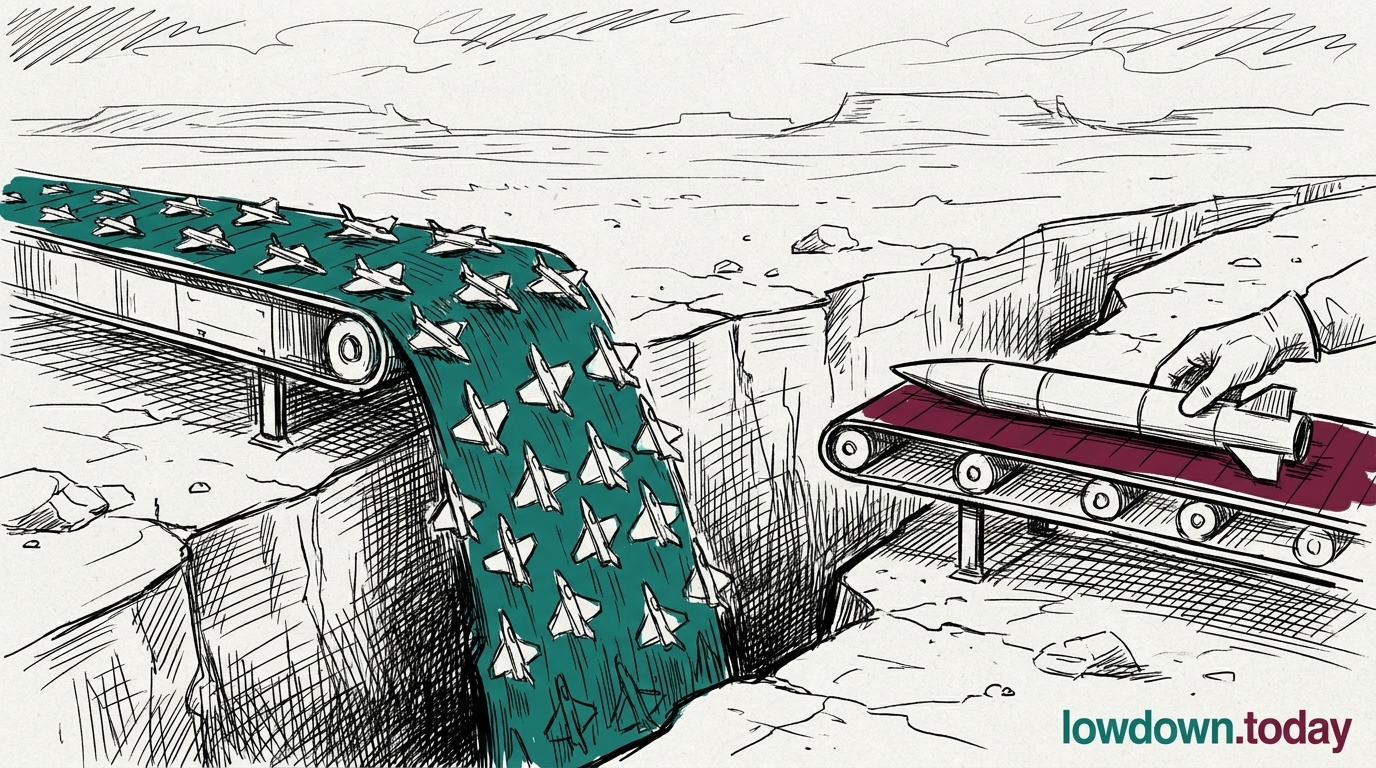
The cost asymmetry is the core of the story. Ukrainian interceptors cost $2,100 to $2,500 per unit, refined through three years of combat against Russian drones. A single PAC-3 MSE round costs millions. Gulf states are spending orders of magnitude more per intercept than necessary because the cheapest solution is locked behind export controls. Zelenskyy disclosed in March that up to 10 drone factories had been built abroad to circumvent the ban ; the shadow factories are a symptom of a strategic choice, not a regulatory accident.

Kyiv's logic is deliberate. Allowing commercial sales would disperse Ukraine's most potent bargaining asset. The SSEC suspension preserves leverage for tightly controlled bilateral 10-year agreements with Saudi Arabia and Qatar . The 228 counter-drone specialists deployed across five Gulf states are the human expression of this strategy: Ukraine is selling expertise and strategic alignment, not commodity hardware.

For Western defence companies, the deadlock temporarily shields premium-priced interceptor systems from low-cost Ukrainian competition. That protection cannot hold if the Gulf conflict intensifies further.

Deep Analysis

In plain English

Ukraine has become very good at making cheap, effective drone interceptors through three years of fighting Russian drones. Gulf countries are now being bombarded by Iranian drones and want to buy Ukraine's interceptors, which cost just $2,100-$2,500 each, compared to millions for the Western alternatives. But Ukraine has refused to allow open commercial sales. Instead it wants to control who gets the technology through long-term government-to-government deals. This keeps Ukraine in control of a combat-proven interceptor technology and means it can use that technology as a bargaining chip in diplomatic negotiations. The downside is that Ukrainian companies like SkyFall are sitting on factory capacity that could be producing tens of thousands of interceptors a month, but they cannot legally sell them.

What could happen next?
  • Consequence

    Ukraine's export control strategy converts its most cost-competitive technology into a diplomatic instrument rather than a revenue stream, concentrating strategic alignment leverage with a small number of Gulf partners rather than distributing it commercially.

  • Risk

    If bilateral agreements with Gulf states expire or lose value after the conflict ends, Ukraine will have foregone substantial hard-currency revenue in exchange for strategic relationships whose durability depends on shared threat perception that may not persist.

First Reported In

Update #5 · Gulf drone war rewrites procurement

Ukrainska Pravda· 13 Apr 2026
Read original
Different Perspectives
Chinese drone manufacturers (DJI, Autel)
Autel's Ralls Corp Fifth Amendment filing and DJI's Ninth Circuit quantification of USD 1.56 billion in 2026 losses are parallel constitutional attacks on a classified-evidence exclusion mechanism; neither company can contest the intelligence allegations directly, so both are betting on due-process doctrine to reopen the FCC authorisation route.
Ukraine (SSEC export regulator)
Baltic states bought Lithuanian Merops and Swedish LVKV 90 stopgaps while Ukraine's cheapest combat-proven interceptors at USD 2,100 to USD 2,500 per unit remain legally blocked under EU conflict-aggravation rules; Perennial Autonomy, built on Ukrainian combat data, can now sell via Munich while direct Ukrainian sales to the same buyers remain prohibited.
Helsing
Helsing
HX-2 combat-proven status, a EUR 1.46 billion German framework, an $18 billion valuation, and the OHB space JV together constitute the first credible European counterweight to Anduril's US stack. The critical test is whether European procurement offices can maintain sovereign AI discipline under operational urgency, or default to the US integration speed that drove the Netherlands Lattice decision.
Anduril Industries
Anduril Industries
A USD 61 billion valuation on USD 2.2 billion revenue prices in the assumption that Lattice becomes the default Western counter-drone software layer. The Netherlands adoption and Project NYX inclusion suggest the architecture bet is converting; the S-1 filing window opens when quarterly growth sustains the 27x multiple.
European Union
European Union
The EUR 115 million AGILE programme was designed before Baltic states began emergency national purchases worth ten times the total EU budget; calling for coordination on 26 May after each country had signed contracts is not a procurement policy, it is a statement of concern with no enforcement teeth.
UK Ministry of Defence
Britain has committed GBP 752 million to Ukraine drones, GBP 115 million to Hormuz, APKWS to Gulf combat, and three concurrent procurement programmes, all driven by the same operational pressure. Project NYX and Corvus together set the British Army's drone architecture through 2036; the autumn down-select will reveal whether Washington or London holds the architectural preference.
