Skip to content
You can now search across every topic, entity and event.What's new
Drones: Industry & Defence
13APR

ISW: Russia stalls at fortress belt

2 min read
13:26UTC

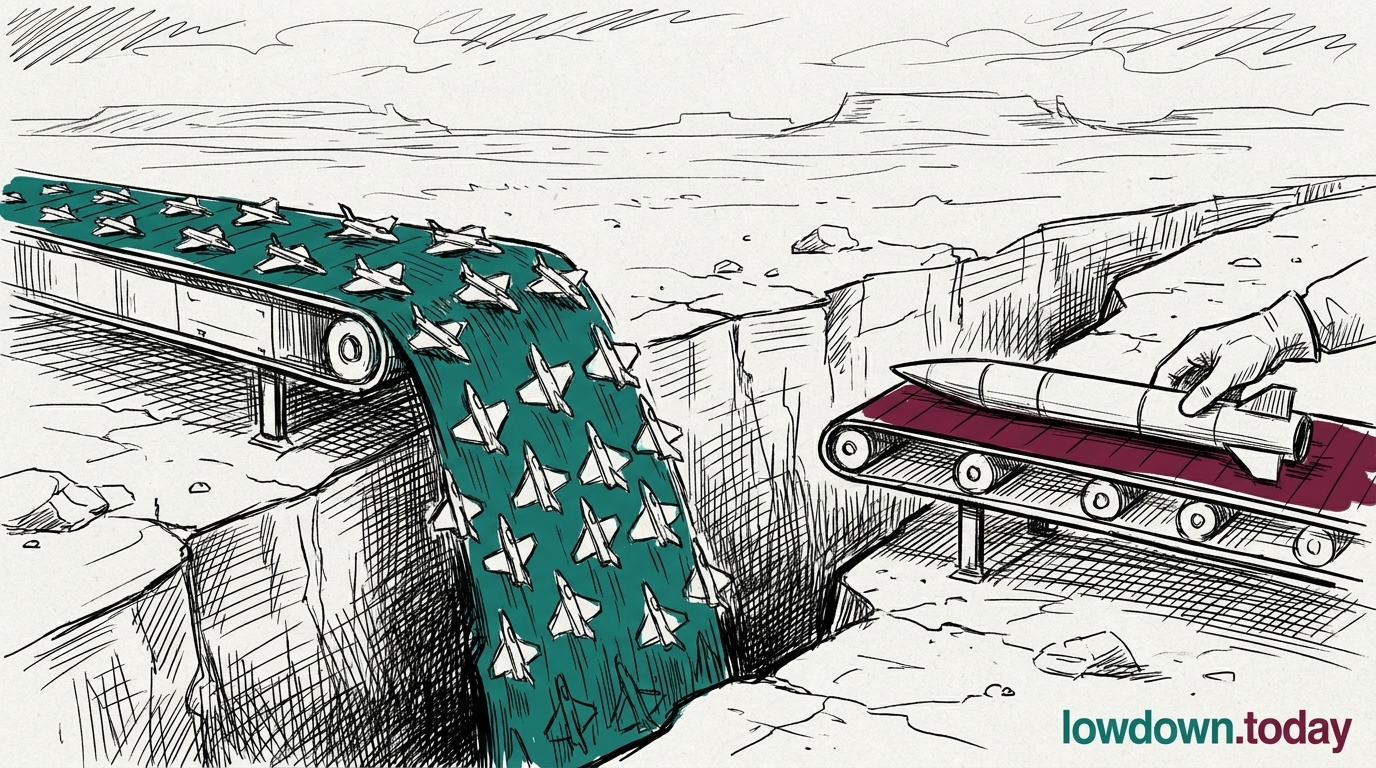
Daily ground engagements dropped by a quarter within ten days of the offensive's opening fury, and ISW assessed Russia is unlikely to breach the fortified line shielding Kramatorsk.

TechnologyAssessed
Key takeaway

Russia's spring offensive peaked in its first week and is now decelerating toward normal engagement rates.

The Institute for the Study of War (ISW) assessed on 31 March that Russian forces are "unlikely to seize the Fortress Belt in 2026" 1. The Fortress Belt is the fortified line anchored on Kostiantynivka and Druzhkivka in Donetsk Oblast, shielding the twin cities of Kramatorsk and Sloviansk.

Commander-in-Chief Syrskyi had reported 619 ground attacks over four days from 17 to 20 March, with 163 on the Pokrovsk axis alone . By 29 March, daily engagements had dropped to 123. On 30 March: 120. Russian forces had already seized Hryshyne northwest of Pokrovsk , but the advance has not translated into a breakthrough. ISW data showed Russian 3rd Combined Arms Army elements near Kryva Luka and Zakitne, east of Sloviansk, making no progress since approximately 22 March.

Ukrainian forces, by contrast, advanced in the Sloviansk direction on 28 March and in the Kostiantynivka area by 30 March. The pattern repeats every major Russian offensive since Bakhmut: an opening surge at unsustainable tempo, followed by deceleration as logistics and casualty replacement fail to keep pace.


Deep Analysis

In plain English

Russia launched a large spring offensive in mid-March, focusing on a region of eastern Ukraine called the Fortress Belt, which protects two major Ukrainian cities, Kramatorsk and Sloviansk. At its peak, Russian forces made over 160 attacks in a single day on just one axis. By 30 March, that had fallen to 120. An independent American think tank, the Institute for the Study of War, assessed that Russia is unlikely to break through this defensive line in 2026. Russian forces had already captured one town, Hryshyne, but the broader assault has not translated into a breakthrough. The pattern repeats what happened in 2024: a fast opening that Russia cannot sustain.

Deep Analysis
Root Causes

Russia's offensive deceleration follows the structural pattern of all its major offensives since 2022: an initial surge that outpaces logistics, followed by a supply-constrained slowdown.

The 3rd Combined Arms Army advancing toward Sloviansk faces a specific constraint: the Fortress Belt's defensive depth means it cannot be cracked by assault alone, requiring encirclement or artillery attrition at a scale Russia cannot sustain given its 62:38 killed-to-wounded ratio and confirmed deaths exceeding 206,000.

The simultaneous Ukrainian advance in the Zaporizhzhia-Dnipropetrovsk sector forces Russia to allocate defensive resources away from the Donetsk offensive. Russia cannot maximise offensive pressure on one front while Ukraine generates territorial gains on another.

Escalation

The offensive is decelerating but not ending. The 120 daily engagements by 30 March remain above the 60-80 range considered routine defensive contact. Russia is probing along multiple axes simultaneously, trading tempo for attrition. The Fortress Belt is holding, but Ukrainian forces are sustaining constant pressure across Donetsk that consumes air defence and manpower.

What could happen next?
  • Consequence

    Russia is unlikely to capture Kostiantynivka or Druzhkivka in 2026 if the current deceleration pattern holds, reducing the risk of a Kramatorsk-Sloviansk encirclement this year.

  • Risk

    Russia may rotate fresh formations into the Pokrovsk axis in April, producing a second engagement surge that challenges ISW's 'stalling' assessment.

First Reported In

Update #9 · Ukraine halves Russia's Baltic oil exports

Institute for the Study of War / Critical Threats· 1 Apr 2026
Read original
Different Perspectives
Procurement sceptics
Two identically sized IDIQs to different primes within seven weeks, and a five-nation pact where one partner moves weeks ahead of the rest, could just as easily read as an industrial base still improvising vendor mix as a deliberate hedging doctrine. Neither ceiling appears sized against a validated requirement yet.
Chinese component suppliers
FCC and Pentagon-level restrictions on Chinese-origin airframes and motors have progressively excluded DJI-linked suppliers from federal counter-drone catalogues, narrowing the field JIATF-401 and Gauntlet II can buy from to a short list of certified domestic bidders. Beijing reads the exclusions as protectionism dressed as security policy.
Quantum Systems
Quantum Systems
Blackstone, Airbus, Advent and Noteus reportedly priced the Munich drone maker at $8 billion, more than double its prior mark, on the strength of 19,000 Ukraine missions rather than confirmed revenue. It is betting production capacity, not current sales, is what buyout capital is now paying for.
United Kingdom
United Kingdom
Britain released the first LEAP effector money three weeks after its defence secretary quit over the size of the drone budget, splitting £3.16 million across three small firms rather than one contractor. It expects the other four LEAP partners to follow its pace, not set their own.
JIATF-401
JIATF-401
The task force handed AeroVironment a $500 million counter-drone ceiling identical to Perennial Autonomy's from seven weeks earlier, while its own Gauntlet II red team prepares to attack the drones the winners of that sprint will build. It expects to keep several qualified suppliers warm rather than certify one.
DroneShield
DroneShield
DroneShield appointed retired Rear Admiral Lee Goddard as an independent director from 1 July, its second board move since founder Oleg Vornik's April exit. The ASIC probe into November's disclosures and share sales stays open, so the admiral steadies the story without closing the file.



