Skip to content
You can now search across every topic, entity and event.What's new
Drones: Industry & Defence
20AUG

Pentagon orders 120 drones in five weeks

2 min read
16:38UTC

The Pentagon advanced 19 of 49 firms in its Drone Dominance programme on 2 July, ordering each survivor to build 120 armed drones within roughly five weeks.

TechnologyDeveloping
Key takeaway

The Pentagon cut Gauntlet II to 19 firms and set a five-week test of who can actually build.

The Pentagon advanced 19 of 49 companies to the final stage of its Drone Dominance programme on 2 July and ordered each survivor to build and deliver 120 armed drones within roughly five weeks 1. Drone Dominance is the US Department of Defense effort to mass-produce cheap attack drones; the 49 firms had tested at Camp Grayling, Michigan, through 20 June , and this cut drops 30 of them .

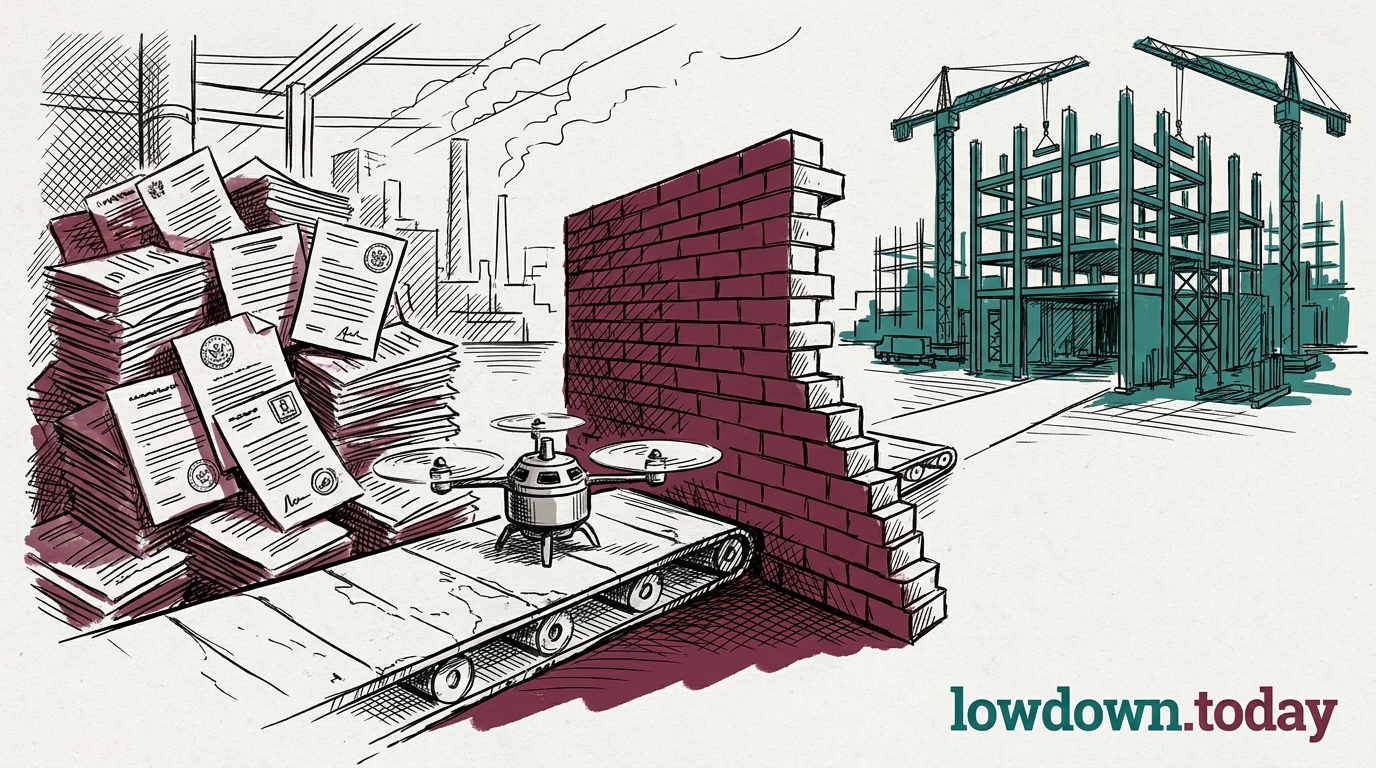
Delivering 120 armed drones in five weeks tests a factory, not a prototype. Stage one ranked prototypes on performance; this stage ranks production lines. A company can fly the best drone at Fort Carson, Colorado, in August and still be dropped for lacking a line that turns out 120 airframes on a war footing. That is the filter the programme, worth $1.1 billion for up to 60,000 one-way attack (OWA) drones, now applies.

The survivors include Teal Drones, the Red Cat subsidiary ; Neros, which cleared 43% acceptance in the earlier FPV round ; and Skycutter, tested alongside Ukrainian entrants in June , plus Auterion, ModalAI, XTEND and the Ukrainian firm General Cherry. No production awards follow until the August live-fire, so the field may thin again before the money moves.

Deep Analysis

In plain English

The Pentagon has been running a competition called Drone Dominance to find companies that can build cheap attack drones, the kind that fly into a target and explode, at massive scale. In the first round, 49 companies had their drones tested at Camp Grayling, a US Army base in Michigan. On 2 July, the Pentagon picked 19 winners and cut the other 30. But instead of just ordering drones from the 19, it told each one to build and deliver 120 armed drones within about five weeks, before an August test-firing at Fort Carson, an Army base in Colorado. This checks whether a company can actually manufacture drones at speed, rather than only design one good prototype.

Deep Analysis
Root Causes

RUSI's finding that only around 10% of drones in a 100-150 UAV salvo against a well-defended target typically get through is the operational logic behind demanding proof of manufacturing volume rather than flight performance alone: a mass-attrition doctrine only works if a production line can replace losses continuously, which a one-off prototype cannot demonstrate.

Phase 1's own shortfall matters more directly. Neros's 43% acceptance rate on contracted Archer units left the programme roughly 10,000 units short of its 30,000 target, and that specific gap, not a general doctrine shift, is why Gauntlet II tests delivery volume before committing further money.

What could happen next?
  • Consequence

    A further culling of finalists is likely before the Pentagon commits full production money, since Gauntlet II adds a manufacturing test on top of the performance filter Stage 1 already applied.

  • Opportunity

    Firms that clear the 120-drone build test gain a strong reference case for allied procurement offices assessing production readiness beyond flight performance, similar to how Skycutter's Phase 1 score opened UK and European conversations.

First Reported In

Update #14 · UK's £5bn drone bet follows Healey's exit

The Defense Post· 5 Jul 2026
Read original
Different Perspectives
South Korea's Defense Acquisition Program Administration
DAPA folded drone and roadside-bomb jammers into an 18-year, KRW 3.448 trillion K2 tank upgrade approved 11 August, rather than fund counter-drone kit as its own programme. Seoul is treating the threat as permanent enough to write into a platform's lifecycle, not urgent enough to buy ahead of it.
NATO Support and Procurement Agency
NSPA named five pre-qualified counter-drone suppliers under new framework contracts on 27 July, giving allies a purchasing route with no published budget attached. A framework without committed money is an instrument waiting for a spending decision, not a guarantee one is coming.
Ukraine's Ministry of Defence
Ukraine's forces strike with more than 70 AI and computer-vision systems drawn from over 200 domestic producers, the ministry said on 18 August, a supplier base neither Washington's tariff fight nor Beijing's export licence touches. Kyiv is scaling capability faster than either government is writing rules for it.
A European drone-component manufacturer
A European manufacturer selling components into the United States faces the same 100 per cent tariff and 3 September deadline as any other foreign supplier, with the duty-free onshoring carve-out available only to firms building on American soil. That leaves it to absorb the cost, relocate assembly, or cede the US market rather than shop around a rival supply chain.
Chinese drone component exporters
Exporters now need a case-by-case licence for each US-bound dual-use shipment after MOFCOM's 5 August order, with no published review clock. The same week Shenzhen logged nearly 200,000 domestic logistics-drone sorties and Hunan reported record spraying coverage, a home market large enough to absorb what the licence regime slows from leaving the country.
US drone manufacturers
The onshoring carve-out protects Performance Drone Works' $820 million War Department loan, but the same 3 September deadline hits Red Cat Holdings and Unusual Machines, both filing over 500 per cent revenue growth on 6 August, on Chinese-sourced components with no qualified domestic substitute yet.
