Joint Laser Weapon System
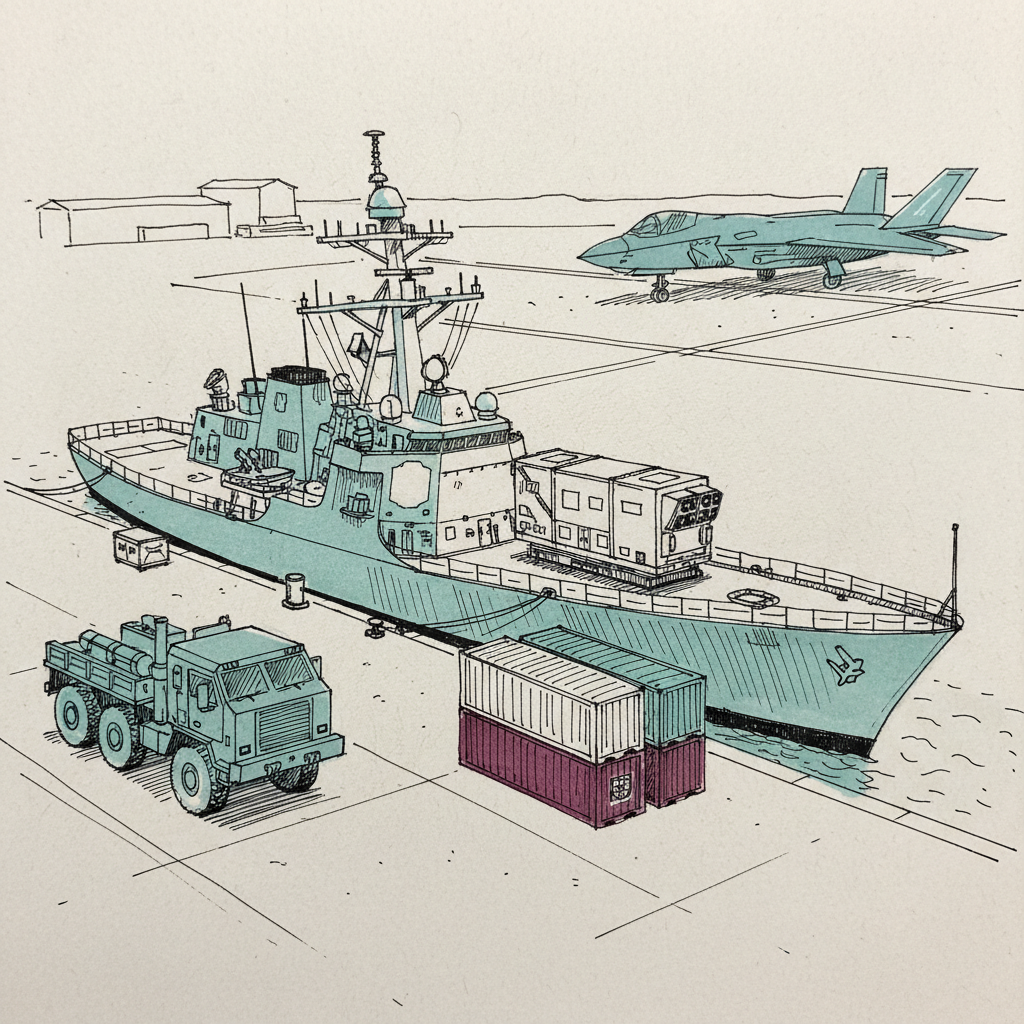
US Army-Navy joint 150-kilowatt containerised directed-energy programme scalable to 300-500 kilowatts, targeting Cruise Missiles; $675.93 million committed through FY2031.
Last refreshed: 5 July 2026 · Appears in 1 active topic
What is the US military's most powerful laser weapon programme in 2026?
Timeline for Joint Laser Weapon System
Related Army-Navy laser programme
Drones: Industry & Defence: Mentioned in: Pentagon orders 120 drones in five weeksReceived combined $675.93 million Army-Navy commitment through FY2031
Drones: Industry & Defence: Army-Navy commit $676m to JLWS laserBackground
The Joint Laser Weapon System (JLWS) is a joint US Army and Navy programme to field a 150-kilowatt containerised high-energy laser scalable to 300-500 kilowatts, designed primarily against Cruise Missiles rather than the smaller Group 1-3 drones targeted by systems such as LOCUST X3 or EHEL. The Army and Navy have together committed $675.93 million through FY2031: the Navy carries $79.84 million in FY2027 plus $243.3 million through FY2031, while the Army adds $337.8 million from FY2028 to FY2031. Defence News identified Lockheed Martin as the likely prime contractor given its prior lead on the HELIOS and IFPC-HEL predecessors.
JLWS sits at the upper end of the directed-energy spectrum, targeting threats that missile-based point defence systems address at FAR higher per-shot cost. The cruise-missile focus distinguishes it from the counter-drone directed-energy programmes competing under EHEL, which target smaller, cheaper drones. The containerised form factor is intended to give the system expeditionary mobility, allowing it to deploy aboard ships or to ground-based sites without fixed infrastructure. Joint Army-Navy development reflects recognition that the cruise-missile threat is shared across service domains.
The JLWS commitment adds to a cluster of simultaneous US directed-energy investments in 2026, alongside EHEL, LOCUST X3, and ODIN, reflecting growing US urgency to field energy weapons that offer a cost-per-shot advantage over kinetic interceptors. Iran's five-week drone and missile campaign against Gulf allies has accelerated this investment logic: interceptor costs per salvo have reached millions of dollars, while directed energy theoretically reduces the per-engagement cost to negligible levels once the system is fielded. The 23 June 2026 White Sands Missile Range demonstration, in which Defence Secretary Pete Hegseth watched five lower-power systems including AeroVironment's AMP-HEL, Epirus's Leonidas and Raytheon's Coyote HPM Block 3 fire live, underscored the gap JLWS is designed to fill: none of the five systems demonstrated that day approaches the 150-500kW range JLWS targets against cruise missiles.
What is the Joint Laser Weapon System and who is funding it?
How does the JLWS differ from EHEL and other US laser weapons?
Who is likely to build the Joint Laser Weapon System?
When will the US have a fielded high-energy laser against cruise missiles?
Was the Joint Laser Weapon System part of the White Sands laser demonstration?


