Skip to content
You can now search across every topic, entity and event.What's new
Drones: Industry & Defence
15JUN

Ukraine blocks drone sales as Gulf burns

2 min read
11:15UTC

Ukraine's export regulator suspended Gulf drone sales applications, keeping combat-proven interceptors costing $2,100 to $2,500 per unit locked away from buyers spending millions per salvo.

TechnologyDeveloping
Key takeaway

The cheapest combat-proven interceptors on the market remain locked away from the Gulf states consuming millions per salvo.

Ukraine's State Service for Export Control suspended Gulf drone export applications, citing the EU Common Position 2008/944/CFSP conflict-aggravation clause. Named manufacturers including General Cherry, Wild Hornets, and Ukrspetsystems are receiving hundreds of enquiries they cannot legally fulfil. SkyFall told Reuters its manufacturing capacity runs into "tens of thousands per month", far exceeding domestic demand.

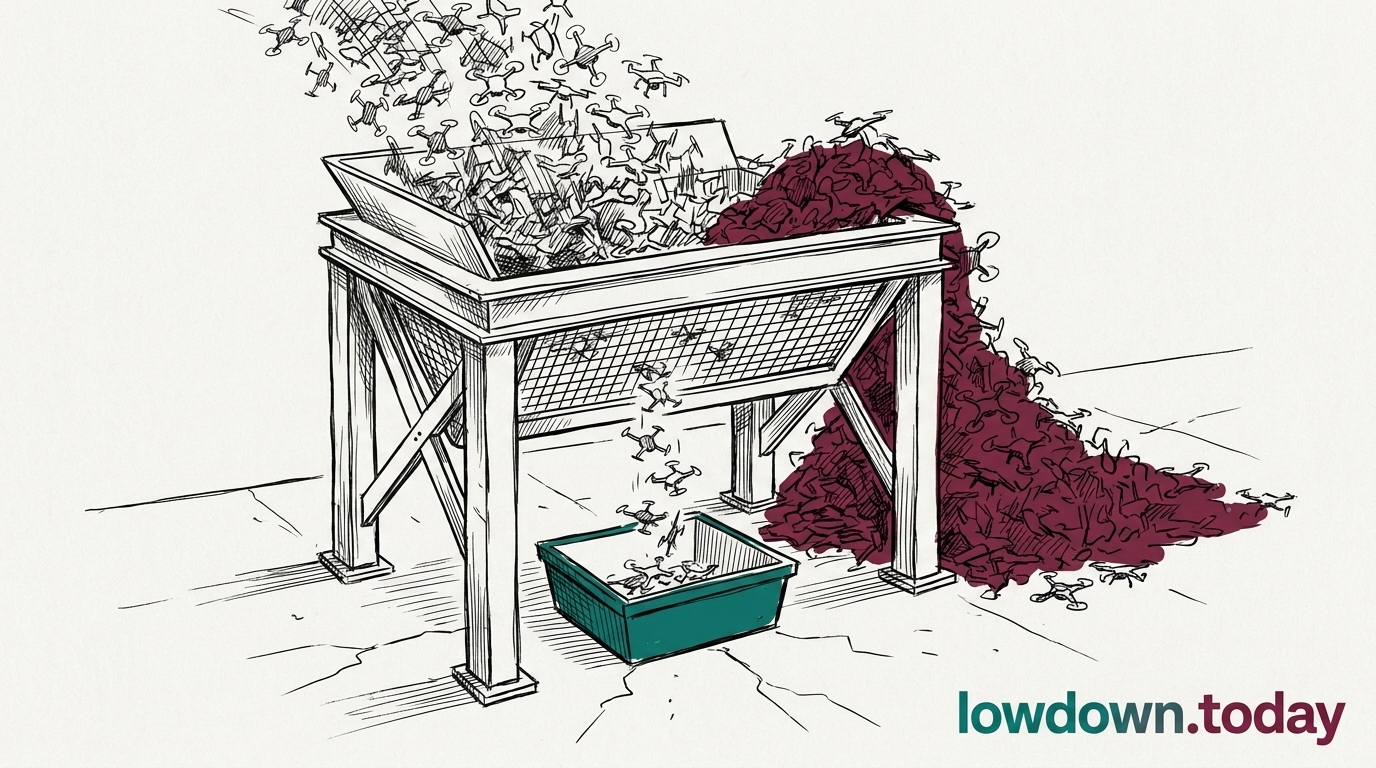
The cost asymmetry is the core of the story. Ukrainian interceptors cost $2,100 to $2,500 per unit, refined through three years of combat against Russian drones. A single PAC-3 MSE round costs millions. Gulf states are spending orders of magnitude more per intercept than necessary because the cheapest solution is locked behind export controls. Zelenskyy disclosed in March that up to 10 drone factories had been built abroad to circumvent the ban ; the shadow factories are a symptom of a strategic choice, not a regulatory accident.

Kyiv's logic is deliberate. Allowing commercial sales would disperse Ukraine's most potent bargaining asset. The SSEC suspension preserves leverage for tightly controlled bilateral 10-year agreements with Saudi Arabia and Qatar . The 228 counter-drone specialists deployed across five Gulf states are the human expression of this strategy: Ukraine is selling expertise and strategic alignment, not commodity hardware.

For Western defence companies, the deadlock temporarily shields premium-priced interceptor systems from low-cost Ukrainian competition. That protection cannot hold if the Gulf conflict intensifies further.


Deep Analysis

In plain English

Ukraine has become very good at making cheap, effective drone interceptors through three years of fighting Russian drones. Gulf countries are now being bombarded by Iranian drones and want to buy Ukraine's interceptors, which cost just $2,100-$2,500 each, compared to millions for the Western alternatives. But Ukraine has refused to allow open commercial sales. Instead it wants to control who gets the technology through long-term government-to-government deals. This keeps Ukraine in control of a combat-proven interceptor technology and means it can use that technology as a bargaining chip in diplomatic negotiations. The downside is that Ukrainian companies like SkyFall are sitting on factory capacity that could be producing tens of thousands of interceptors a month, but they cannot legally sell them.

What could happen next?
  • Consequence

    Ukraine's export control strategy converts its most cost-competitive technology into a diplomatic instrument rather than a revenue stream, concentrating strategic alignment leverage with a small number of Gulf partners rather than distributing it commercially.

  • Risk

    If bilateral agreements with Gulf states expire or lose value after the conflict ends, Ukraine will have foregone substantial hard-currency revenue in exchange for strategic relationships whose durability depends on shared threat perception that may not persist.

First Reported In

Update #5 · Gulf drone war rewrites procurement

Ukrainska Pravda· 13 Apr 2026
Read original
Different Perspectives
DroneShield / Australian C-UAS sector
DroneShield is simultaneously embedded in a US prime's fielded kill chain, selected for the world's largest civil C-UAS deployment, and navigating an open ASIC probe with a first-strike AGM vote on record. Strengthening commercial fundamentals and an unsettled boardroom are running in parallel at exactly the moment US buyers weigh supplier stability.
Ukraine / combat-data exporters
Ukrainian firms entered Pentagon Drone Dominance Phase 2 alongside Skycutter (ID:3988), and Red Cat's formal Spetstechnoexport partnership (ID:3987) carries Black Widow to Japan. Combat-proven data is the export Ukraine can monetise while its domestic export ban blocks hardware sales to Gulf states spending millions per salvo on less-proven alternatives.
Anduril investors
Anduril investors
Bernstein Research's Douglas Harned placed the 27-times-revenue multiple in the context of enterprise-software platform primes: the buyer prices a future monopoly on the Lattice software layer, not 2026 earnings. The Helsing Flytrap result and Phase 1 shortfall are the first live tests of those assumptions since the $61 billion valuation closed.
Helsing / European defence-AI sector
Helsing's 88% GPS-denied hit rate at Pabrade is its first US Army validation credential, arriving alongside an $18 billion valuation and a Bundestag €1.46 billion framework. Nordic, Baltic, and Central European defence ministries now have a US-scored European alternative to reference in procurement without waiting for a US programme of record.
Pentagon / Defense Innovation Unit
The DIU's own programme managers characterised the 43% acceptance rate as within the expected curve for a first-generation industrial ramp. Phase 2's tighter price caps and Chinese-component deadline signal the programme is accelerating supplier-quality selection, not retreating from the 300,000-drone target.
Denmark (host nation)
Denmark accepted Fire Point's Skrydstrup plant after committing to bilateral defence co-production at the B9 Nordic summit in May; the facility sits beside a Danish F-35 base, sharing security perimeters. NATO has published no legal guidance on whether hosting Ukrainian weapons production converts Denmark into a co-belligerent, leaving the host-state obligation unresolved.



