Skip to content
You can now search across every topic, entity and event.What's new
Cuba Dispatch
4AUG

US sanctions Cuba's national oil company

5 min read
10:34UTC

OFAC designated CUPET, the state oil company, on 11 June, closing the last legal channel for fuel imports as the grid ran more than 2,000 MW short with no replacement cargo in sight.

PoliticsDeveloping
Key takeaway

CUPET is the real chokepoint; the head-of-state listing was the signal.

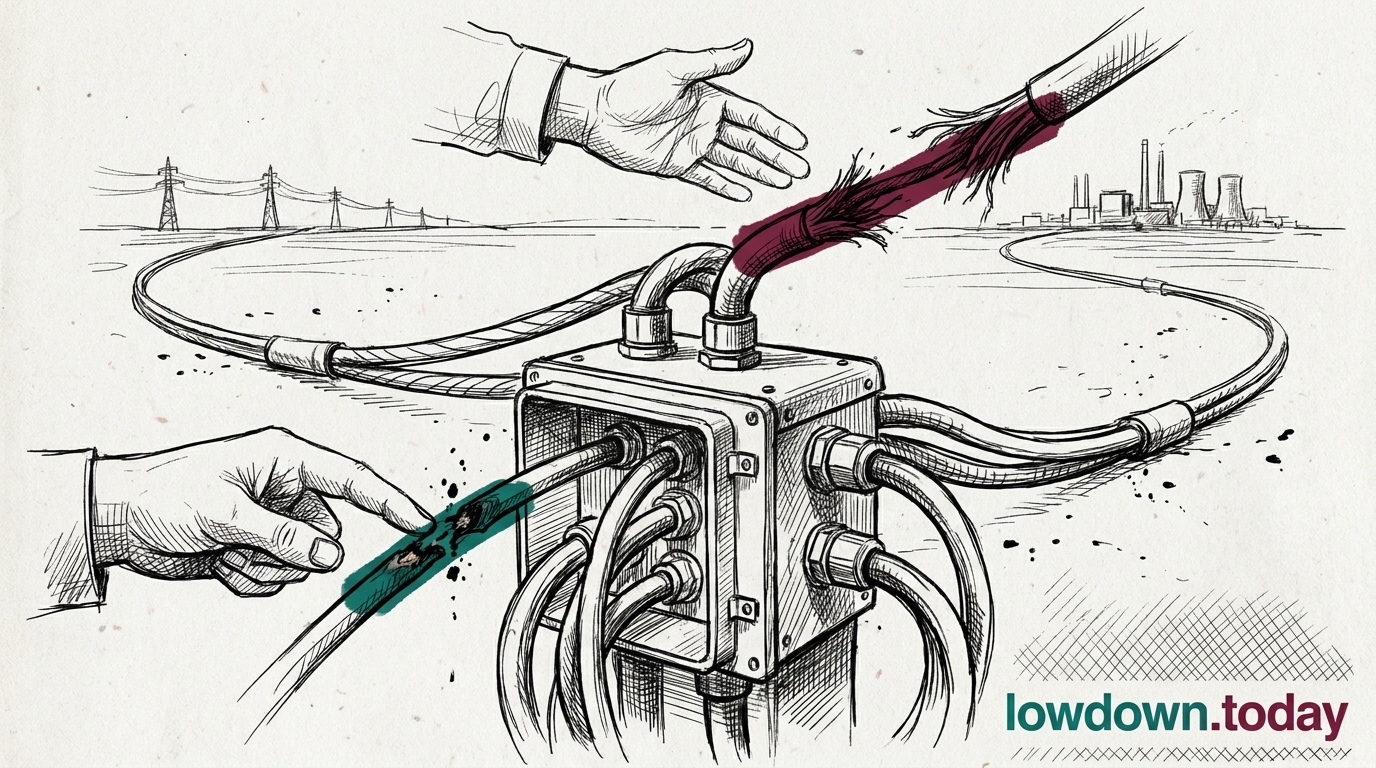
OFAC designated CUPET (Union Cuba-Petroleo) on Thursday 11 June 2026 under Section 2(a)(i)(A) of Executive Order 14404, the state company that licenses the island's fuel imports and runs its own production of roughly 40,000 barrels a day against daily demand of 110,000 to 120,000 1. Marco Rubio, the US Secretary of State, said CUPET's assets had been "unlawfully expropriated from American owners years ago," reaching back to the 1960 nationalisation, and accused Havana of weaponising energy 2. Cuban Foreign Minister Bruno Rodriguez Parrilla answered that Rubio was "further tightening the economic and energy blockade."

The designation closes a door that had been left ajar. The 25 March Venezuela licence permitted crude sales to Cuban private-sector buyers while keeping the state blocked, a loophole sized for cuentapropistas (private-sector entrepreneurs). In practice no private Cuban importer has a pipeline that bypasses CUPET's ports, customs and licensing, so naming CUPET exposes the very channel the carve-out relied on. Rubio's expropriation framing also shifts the legal basis from national-security emergency toward a property-rights claim, which is harder to unwind with a quick future licence because the underlying dispute predates the current order.

The timing lands hard. Cuba has had no confirmed replacement cargo since the Sovcomflot Universal turned away on 26 May , and Energy Minister Vicente de la O Levy has conceded Venezuelan crude has been cut since November 2025 . On the night of 11 June the grid deficit topped 2,000 MW with 106 distributed-generation sets, the small diesel gensets that backstop the grid, idle for lack of fuel and roughly 60 per cent of thermoelectric units offline 3. For an ordinary household that means losing more than half the evening's power at the hour everyone is cooking and pumping water.

Jorge Pinon of the University of Texas at Austin put the structural verdict plainly: conditions will worsen even through a political transition 4. The point is that the same crippled fleet would still be standing the morning after any change of government. With domestic output fixed near 40,000 barrels, demand triple that, and now no licensed import channel at all, the fuel gap is locked in by law as much as by logistics.


Deep Analysis

In plain English

Cuba does not import petrol and diesel the way most countries do, with multiple companies competing. CUPET, the state oil company, controls every step: it licences imports, manages ports and customs, and distributes fuel across the island. When the US government added CUPET to its sanctions list on 11 June 2026, it effectively made it illegal for most banks, insurers, and shipping companies to do business with Cuba's entire fuel supply chain. Even a tanker owned by a non-US company cannot use US-linked insurance or bank transfers if CUPET is at the other end of the deal. The result is that Cuba cannot easily replace the oil it has lost from Venezuela and Russia. Its power grid was already running at a severe deficit; the CUPET designation removes the legal pathway for any new supply to arrive without triggering sanctions exposure on the supplier.

Deep Analysis
Root Causes

Cuba's structural energy dependence on a single state entity reflects a deliberate post-1959 policy choice to centralise fuel infrastructure under state control as an instrument of social rationing and political discipline.

CUPET was designed to be the sole import gateway precisely to prevent market actors from circumventing government allocation priorities. That architecture maximised the state's distributive control in normal times but created a single regulatory chokepoint that a hostile external power could legally target.

The private-buyer loophole left in the 25 March Venezuela licence was structurally inoperable from the start because Cuba has no private import infrastructure of any scale: no private deepwater berths, no private customs brokers with CUPET-bypass licences, no private bonded fuel storage.

The loophole named a category of buyer that did not materially exist in the Cuban logistics system. Designating CUPET formalised what was already functionally true: there is no licensed import channel that does not pass through the state.

Escalation

The CUPET designation moves the sanctions pressure from the financial and commercial economy into physical infrastructure. Previous designations reduced the pool of willing counterparties; CUPET's designation removes the legal channel through which counterparties could operate even if willing. The progression from GAESA (commercial conglomerate) to CUPET (physical chokepoint) suggests the remaining escalation levers within the EO 14404 framework are limited.

What could happen next?
  • Consequence

    Cuba's grid deficit, at 2,000 MW on 11 June with 106 generator sets idle, will deepen as existing fuel reserves run down without a licensed replacement-cargo pathway.

    Immediate · Assessed
  • Risk

    Rubio's expropriation framing creates a property-rights legal layer on top of the national-security-emergency authority; a future administration seeking to issue a wind-down licence faces the additional hurdle of appearing to concede the expropriation claim.

    Long term · Reported
  • Opportunity

    China or Russia could offer crude on barter or renminbi terms through non-US-affiliated maritime channels, as they did for Venezuela post-PDVSA designation, potentially partially offsetting the supply loss outside the US legal perimeter.

    Short term · Suggested
  • Precedent

    Designating a national oil company under a sector-operation authority rather than a terrorism or proliferation authority, as with NIOC, establishes a template for future sanctions campaigns against state energy monopolies in small economy adversaries.

    Long term · Reported
First Reported In

Update #7 · Cuba's president lands on the OFAC blacklist

Al Jazeera· 12 Jun 2026
Read original
Different Perspectives
OCDH (Observatorio Cubano de Derechos Humanos), Madrid
OCDH itemised its previously reported first-half tally of 1,949 repressive actions into named categories, including 91 cases against independent journalists and 50 retaliations against prisoners' relatives. The monitor documents state conduct without endorsing sanctions as the remedy, a distinct position from Washington's designation campaign.
US State Department and OFAC
Four Federal Register notices on 31 July confirmed GAESA's own SDN designation dates to 7 May, closing a gap left by coverage that described only GAESA-controlled assets as sanctioned; Rubio separately called US sympathy for Cuba anti-Americanism. Whether the lagged gazetting reflects deliberate sequencing or administrative backlog is not established.
Unión Eléctrica (UNE), Cuba's state grid operator
UNE's load-dispatch director blamed the 2 August total collapse on a 110kV Havana substation fault and a Felton trip, not the storm damage CNN and AP cited, and a day later Decreto 160 took force, de-listing 46 private-sector activities. Havana's own record was more specific, and more severe, than the wire account.
Spain (Foreign Ministry and hotel investors)
Madrid has worked to shield Spanish hotel operators exposed to Cuba, and OFAC's General Licences 2 and 3 winding down the Guernsey-listed CEIBA Investments fund give those investors a defined exit rather than an abrupt block. Spain's stake in managing an orderly wind-down, not confronting the designation itself, keeps it distinct from Havana's collective-punishment framing.
Cuban Ministry of Foreign Affairs (MINREX)
Foreign Minister Bruno Rodriguez Parrilla called the 23 July designations "castigo colectivo" and defended the medical missions as protecting healthcare access for patients in the countries where Cuban doctors serve, without addressing the evasion allegation against Coral Maritima directly.
US Treasury (OFAC) and State Department
OFAC designated Cuba's medical-missions operators and named the Mariel-Coral Maritima transfer as GAESA sanctions evasion on 23 July, characterisations Washington has not independently substantiated in public documents reviewed. The administration frames the wave as closing hard-currency channels sector by sector, following the same pattern applied to tourism and financial clearing in June and July.