Skip to content
You can now search across every topic, entity and event.What's new
Cuba Dispatch
4JUN

Granma defends GAESA in rare rebuttal

2 min read
11:38UTC

The Communist Party daily ran a named defence of GAESA against US sanctions, a public rebuttal it rarely commits to print.

PoliticsDeveloping
Key takeaway

Granma defended GAESA by name against US sanctions, a rare print rebuttal that concedes the pressure is biting.

Granma, the Cuban Communist Party daily, published an editorial titled "Cuba, the GAE and the United States: anatomy of state slander," defending the military conglomerate GAESA by name against US sanctions accusations 1. Cuban state media rarely rebuts a foreign sanctions programme in print, which makes the choice to do so a signal in itself.

The gesture costs Havana something concrete. Granma cut to weekly Tuesday printing in March 2026 because the fuel shortage broke its supply chain , so devoting scarce print space to a sanctions rebuttal is a deliberate allocation, not routine commentary. It is the only countermeasure the state has produced this week: no tanker, no line of credit, no licence relief, just the editorial.

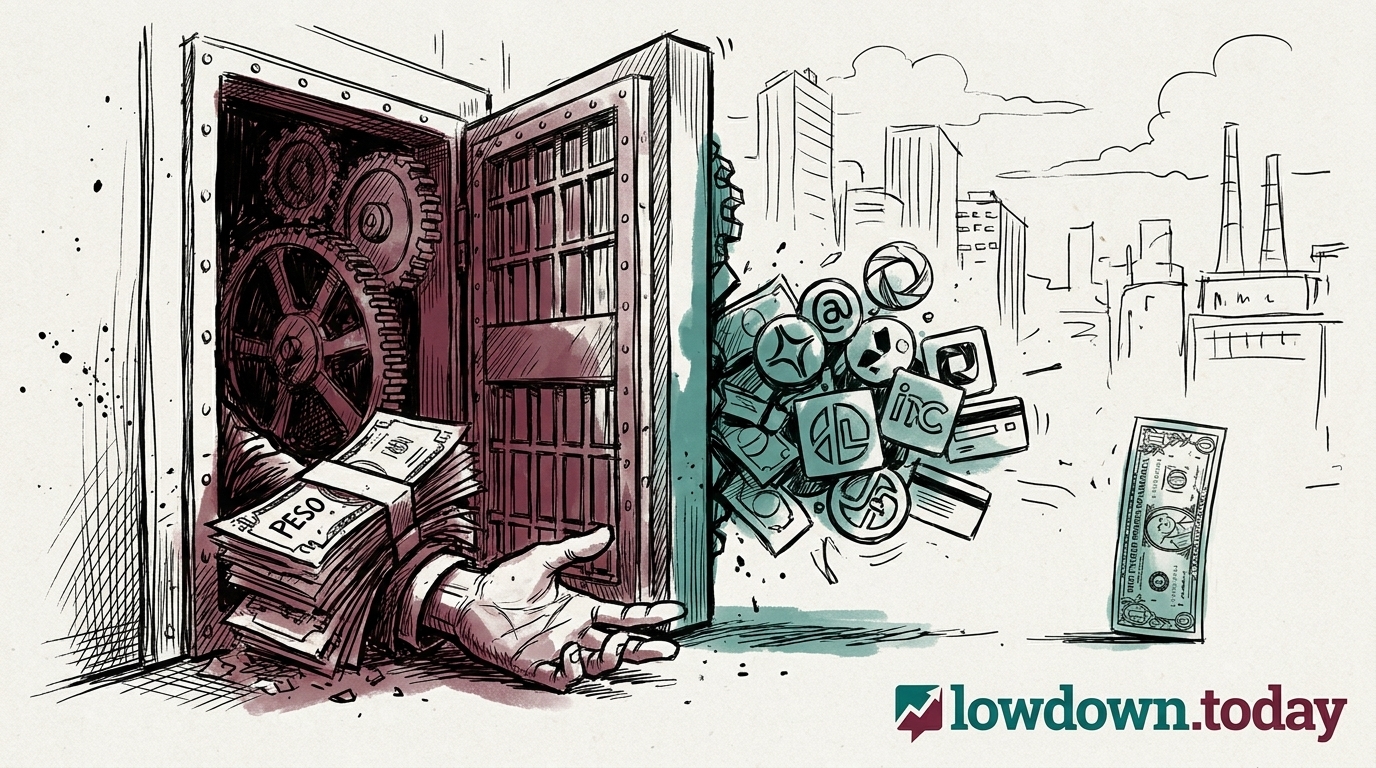
The rebuttal concedes by its existence that the Executive Order 14404 designation of 18 May is working. A programme that was failing would not need a public defence; Havana answered the foreign-firm exodus and the card cut-off with paper because it had nothing material to answer with.


Deep Analysis

In plain English

Granma is the official newspaper of Cuba's Communist Party. On its front page, it does not normally name GAESA; Cuba's powerful military business group; because doing so would draw attention to how much of the Cuban economy is controlled by the military rather than civilians. This week Granma published an editorial that names GAESA explicitly, defending it against US sanctions. The unusual decision to name it publicly signals that the government believes the sanctions are visible enough that ordinary Cubans need an explanation. When a government uses its main newspaper to defend something it usually pretends does not exist, it is a sign that the thing is having a very visible effect.

What could happen next?
  • Precedent

    State acknowledgement of GAESA by name in Granma removes the Cuban government's previous deniability strategy: future sanctions targeting GAESA cannot be dismissed as attacking a fictional entity.

First Reported In

Update #6 · Cuba sanctions hit the cash economy

Granma· 4 Jun 2026
Read original
Different Perspectives
OCDH (Observatorio Cubano de Derechos Humanos), Madrid
OCDH itemised its previously reported first-half tally of 1,949 repressive actions into named categories, including 91 cases against independent journalists and 50 retaliations against prisoners' relatives. The monitor documents state conduct without endorsing sanctions as the remedy, a distinct position from Washington's designation campaign.
US State Department and OFAC
Four Federal Register notices on 31 July confirmed GAESA's own SDN designation dates to 7 May, closing a gap left by coverage that described only GAESA-controlled assets as sanctioned; Rubio separately called US sympathy for Cuba anti-Americanism. Whether the lagged gazetting reflects deliberate sequencing or administrative backlog is not established.
Unión Eléctrica (UNE), Cuba's state grid operator
UNE's load-dispatch director blamed the 2 August total collapse on a 110kV Havana substation fault and a Felton trip, not the storm damage CNN and AP cited, and a day later Decreto 160 took force, de-listing 46 private-sector activities. Havana's own record was more specific, and more severe, than the wire account.
Spain (Foreign Ministry and hotel investors)
Madrid has worked to shield Spanish hotel operators exposed to Cuba, and OFAC's General Licences 2 and 3 winding down the Guernsey-listed CEIBA Investments fund give those investors a defined exit rather than an abrupt block. Spain's stake in managing an orderly wind-down, not confronting the designation itself, keeps it distinct from Havana's collective-punishment framing.
Cuban Ministry of Foreign Affairs (MINREX)
Foreign Minister Bruno Rodriguez Parrilla called the 23 July designations "castigo colectivo" and defended the medical missions as protecting healthcare access for patients in the countries where Cuban doctors serve, without addressing the evasion allegation against Coral Maritima directly.
US Treasury (OFAC) and State Department
OFAC designated Cuba's medical-missions operators and named the Mariel-Coral Maritima transfer as GAESA sanctions evasion on 23 July, characterisations Washington has not independently substantiated in public documents reviewed. The administration frames the wave as closing hard-currency channels sector by sector, following the same pattern applied to tourism and financial clearing in June and July.
