Skip to content
Welcome, thoughtbot's Giant Robots listeners!Start here
Autonomous Systems: Land & Sea
7OCT

Ukraine Revealed Operating from Libya in Mediterranean Sea War

2 min read
12:59UTC

An RFI investigation confirmed 200 or more Ukrainian troops at two Libyan bases, establishing that the 4 March strike on a Russian LNG carrier in the Mediterranean was launched from Libyan soil.

TechnologyDeveloping
Key takeaway

Ukraine extended its anti-shipping war 2,000 km from the Black Sea via Libyan bases, outside any collective defence framework.

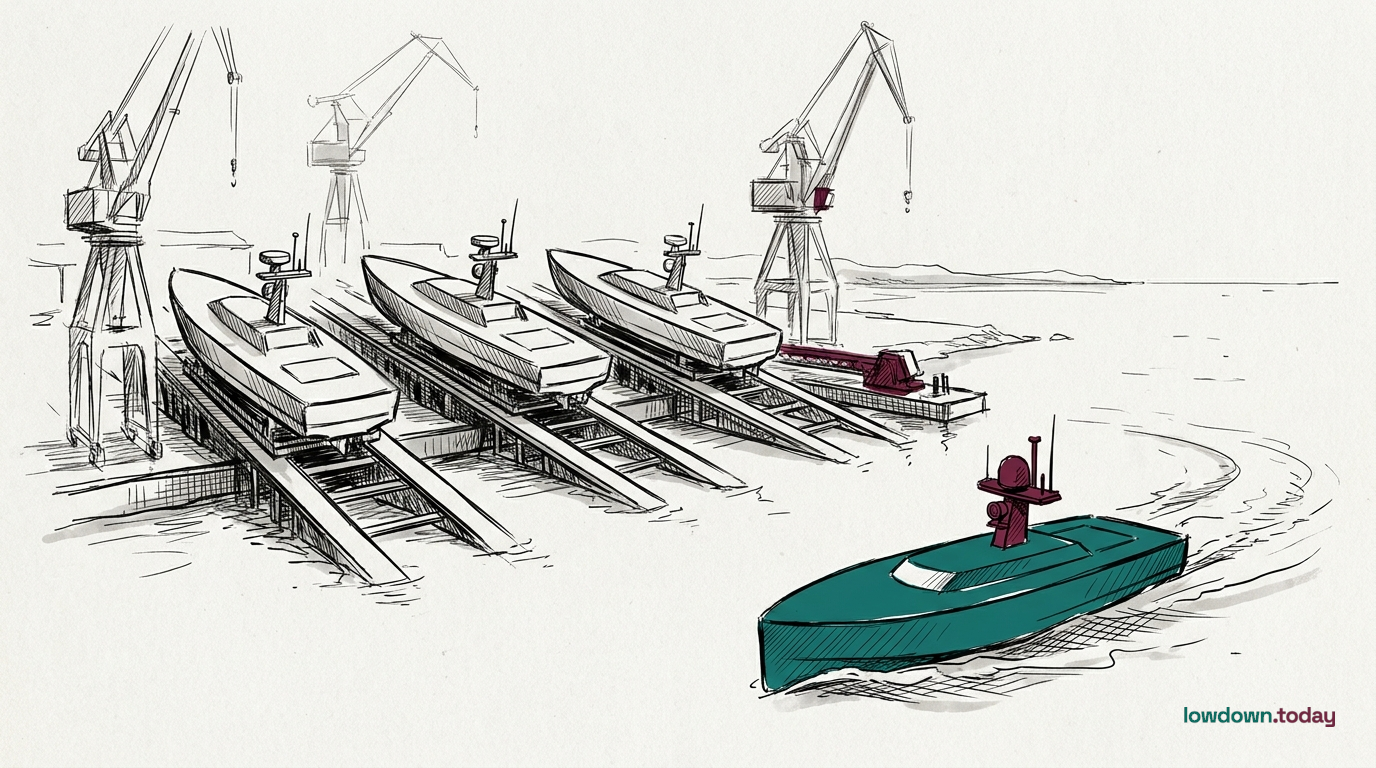
RFI published on 4 April that 200 or more Ukrainian officers are stationed at two sites in Libya: the Misrata Air Force Academy (shared with Turkish, Italian, US AFRICOM, and British intelligence personnel) and a drone launch facility at Ezzawiya port with direct Mediterranean sea access. A Magura V5 autonomous surface drone launched from Ezzawiya disabled the Russian LNG carrier Arktik Metagaz on 4 March. Ukraine's Black Sea campaign (2023 to 2025) operated from Ukrainian soil. The Mediterranean campaign uses a third country's territory with Tripoli government consent but no formal alliance framework.

General Andriy Bayuk brokered the agreement, which includes long-term arms deliveries and Ukrainian investment in Libya's oil sector. Zelenskyy's Gulf security deals signed in March created the diplomatic architecture; Libya provides the physical reach. The operational range now extends more than 2,000 km beyond the Black Sea.

Russia has threatened to strike the Libyan bases. That threat carries different weight than strikes on Ukrainian soil: Libya is outside NATO's Article 5, the EU, and any mutual defence treaty with Ukraine. The Government of National Unity in Tripoli authorised the Ukrainian presence, making any Russian strike a direct attack on Libyan sovereignty, but Libya has no defence guarantee from any major power that would compel a response.

Deep Analysis

In plain English

Ukraine has secretly been running military operations from Libya, a country in North Africa, to attack Russian ships in the Mediterranean Sea. French radio journalists revealed this after investigating a March attack on a Russian gas tanker. This is a significant development because Ukraine is now using another country's territory to fight Russia — and that country, Libya, is not protected by NATO. If Russia strikes back at Ukrainian bases in Libya, it creates a completely new conflict zone with no automatic Western defence obligation.

Deep Analysis
Root Causes

The Zelenskyy Gulf tour in March created the diplomatic framework enabling third-country military presence. Libya's Government of National Unity has strategic incentives: arms deliveries, Ukrainian oil sector investment, and a defence relationship with multiple Western intelligence services already present at Misrata.

Escalation

High escalation risk if Russia retaliates against Libyan targets. The theatre is ungoverned by any collective defence treaty that would trigger a mandatory Western response — Russia's calculation is structurally different from striking Ukrainian soil.

What could happen next?
  • Risk

    Russia may strike Ukrainian bases in Libya, opening a new conflict theatre with no NATO Article 5 protection for Ukrainian personnel.

    Short term · Medium
  • Consequence

    Russia's shadow fleet now faces interdiction risk in the Mediterranean in addition to the Baltic, North Sea, and Channel.

    Immediate · High
  • Precedent

    A non-NATO, non-EU state has been used as a launch pad for attacks on Russian military-commercial assets, establishing a new model for Ukrainian power projection.

    Medium term · Assessed
First Reported In

Update #11 · Russia Sells Less Oil but Earns More

RFI via Euronews· 5 Apr 2026
Read original →
Causes and effects
This Event
Ukraine Revealed Operating from Libya in Mediterranean Sea War
Ukraine has extended its anti-shipping campaign more than 2,000 km beyond the Black Sea into the Mediterranean via a third-country base, creating a new operational theatre outside NATO's Article 5 coverage.
Different Perspectives
DNV and Fassmer
DNV and Fassmer
Signed a memorandum at SMM in Hamburg, announced on 10 September, to seek an approval in principle for autonomous naval vessels. DNV's Rasmus Stute said autonomy is "becoming one of the key pillars in defence".
Belgian Ministry of Defence
Awarded Exail Robotics Belgium €9.87m on 14 September, without competition, for three TRIDENT systems carrying the K-STER C mine-disposal vehicle for Ukraine. It had tendered separately in July for twelve tethered ROVs, not yet bought.
IRGC Navy (Iran)
IRGC Navy (Iran)
IRGC spokesman Hossein Mohebbi said the IRGC Navy seized a US Kingfish mine-hunting vehicle in the Strait of Hormuz on 27 September, valuing it at several million dollars. US Central Command calls the claim "clearly desperate"; no verified imagery exists.
UK Defence Intelligence and Kraken
Defence Intelligence said the 12 September clash "almost certainly marks the first time" Russian and Ukrainian USVs engaged directly. Kraken meanwhile trialled an unarmed Saab radar picket boat on 5 and 6 October.
Ukrainian forces and ARX Robotics
A Ukrainian Sargan-3000 destroyed a Russian robot boat on 12 September, and the first ARX GEREON ground robots reached Ukraine on 29 September. The Sargan-3000 carries a mounted gun.
Indian Register of Shipping
Certified Accurate Industrial Controls' ISACA collision-avoidance software to IMO standards after five audited milestones and 2,500 hours of trials. The firm plans to use it converting six Indian Navy patrol boats.