Skip to content
Welcome, thoughtbot's Giant Robots listeners!Start here
Autonomous Systems: Land & Sea
7OCT

UK sends £115M to Hormuz drones

3 min read
12:59UTC

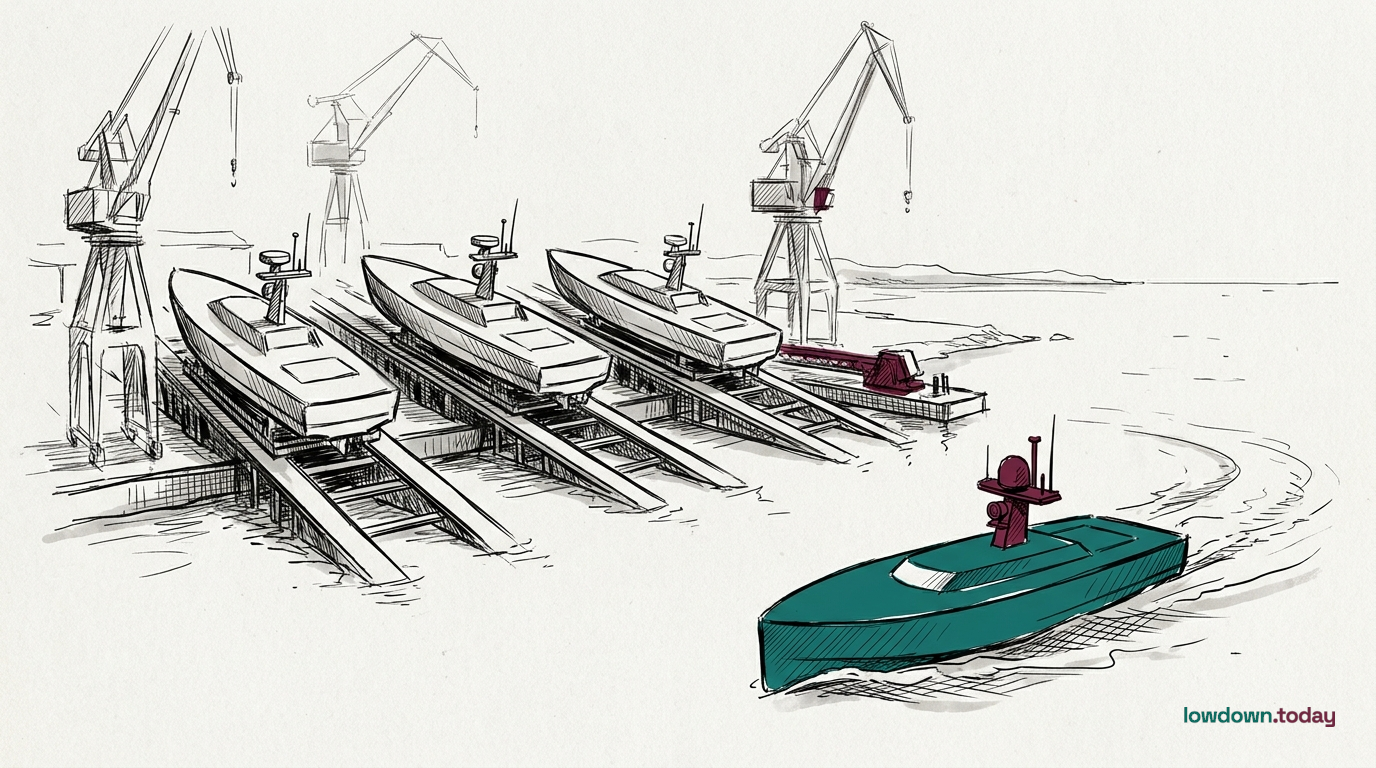
The UK committed £115 million for mine-hunting drones and counter-drone systems to a multinational Strait of Hormuz mission, deploying Kraken drone boats via the modular Beehive system alongside HMS Dragon.

TechnologyDeveloping
Key takeaway

Britain is running counter-drone operations in both the Middle East and Baltic at once.

The UK committed £115 million in new funding for mine-hunting drones and counter-drone systems to the multinational Strait of Hormuz mission. Kraken drone boats deployed via the modular Beehive system work alongside HMS Dragon and its Sea Viper counter-drone capability.

The Hormuz commitment adds maritime counter-drone costs on top of the £752 million Ukraine drone package and the autonomous-systems budget. Britain is now running counter-drone operations in both the Middle East and the Baltic simultaneously, with Project NYX, Corvus, and APKWS layered on top as development and procurement programmes.

The Hormuz theatre is the same environment driving the APKWS operational deployment. Both trace to the Gulf conflict, and both demand drone expenditures at a rate that stretches the UK defence budget's ability to sustain concurrent commitments without trade-offs elsewhere in the programme.

Deep Analysis

In plain English

Britain is deploying small autonomous boats called Krakens to the strait of Hormuz, a narrow waterway through which 20% of the world's oil passes. The boats can hunt for underwater mines and detect drones. They are launched from a special deployment system called Beehive on a Royal Navy warship (HMS Dragon). The warship also carries a counter-drone missile system called Sea Viper. Britain is spending £115 million on this commitment, on top of the £752 million it already committed to Ukraine drones and the £4 billion autonomous-systems programme. The UK is running drone operations in the Middle East and the Baltic simultaneously.

Deep Analysis
Root Causes

The Hormuz commitment reflects two structural forces: the Gulf conflict from 2026 drove immediate demand for mine-hunting capability (Iranian naval mines are a historical Hormuz threat), and the UK's £4 billion autonomous-systems commitment required visible operational deployments to justify the political spending decision.

Hormuz provides both strategic utility and political demonstration value.

What could happen next?
  • Consequence

    Kraken's performance at Hormuz will be closely watched by the Royal Australian Navy (which is procuring autonomous surface vessels under ASCA) and by the US Navy's Unmanned Surface Vessel programme. A successful first deployment validates the Beehive modular launch concept; a failure sets back both UK and allied autonomous maritime programmes.

First Reported In

Update #10 · NATO shoots down drone over Estonia

UK Ministry of Defence· 29 May 2026
Read original →
Different Perspectives
DNV and Fassmer
DNV and Fassmer
Signed a memorandum at SMM in Hamburg, announced on 10 September, to seek an approval in principle for autonomous naval vessels. DNV's Rasmus Stute said autonomy is "becoming one of the key pillars in defence".
Belgian Ministry of Defence
Awarded Exail Robotics Belgium €9.87m on 14 September, without competition, for three TRIDENT systems carrying the K-STER C mine-disposal vehicle for Ukraine. It had tendered separately in July for twelve tethered ROVs, not yet bought.
IRGC Navy (Iran)
IRGC Navy (Iran)
IRGC spokesman Hossein Mohebbi said the IRGC Navy seized a US Kingfish mine-hunting vehicle in the Strait of Hormuz on 27 September, valuing it at several million dollars. US Central Command calls the claim "clearly desperate"; no verified imagery exists.
UK Defence Intelligence and Kraken
Defence Intelligence said the 12 September clash "almost certainly marks the first time" Russian and Ukrainian USVs engaged directly. Kraken meanwhile trialled an unarmed Saab radar picket boat on 5 and 6 October.
Ukrainian forces and ARX Robotics
A Ukrainian Sargan-3000 destroyed a Russian robot boat on 12 September, and the first ARX GEREON ground robots reached Ukraine on 29 September. The Sargan-3000 carries a mounted gun.
Indian Register of Shipping
Certified Accurate Industrial Controls' ISACA collision-avoidance software to IMO standards after five audited milestones and 2,500 hours of trials. The firm plans to use it converting six Indian Navy patrol boats.