Skip to content
You can now search across every topic, entity and event.What's new
Autonomous Systems: Land & Sea
12AUG

One control standard for EU war robots

2 min read
14:17UTC

iMUGS2, the EU's 29-partner ground-robot programme, will finish with a three-day exercise in Norway in 2028, Shephard Media reported on 11 August. A third stage is already under consideration.

TechnologyDeveloping
Key takeaway

Europe will test one shared control standard for military ground robots in Norway in 2028.

iMUGS2, the second stage of the EU's Integrated Modular Unmanned Ground System programme, will conclude with a three-day exercise in Norway in 2028, Shephard Media reported on 11 August, with a third stage already under consideration 1. The consortium launched in November 2025 and runs to 29 partners across 15 EU countries, coordinated by Estonia's Milrem Robotics, with KNDS France, KNDS Germany, Diehl Defence, Safran Electronics and Defense and Kongsberg Defence and Aerospace among the named participants 2.

An uncrewed ground vehicle (UGV) is a driverless land robot, used for resupply, scouting and casualty evacuation. Fifteen national fleets bought separately will each arrive with their own controller, their own radio waveform and their own map format. A Latvian operator cannot then drive a Dutch vehicle when the Dutch one is the one still running. Writing a shared control standard early is cheap; retrofitting one across fielded fleets is not.

The factories opened before the standard did. Milrem started a THeMIS production line with VDL Defentec at Born in the Netherlands in June and signed two non-binding memoranda at Eurosatory a fortnight later . Kongsberg now sits inside the land programme as well as the undersea contest it entered in June , giving one Norwegian group visibility across both halves of Europe's uncrewed procurement.

A 2028 exercise date does useful work on its own. Suppliers building to a deadline they cannot miss make interface decisions two years earlier than commercial incentives would have forced them to.

Deep Analysis

In plain English

The European Union is running a programme to get different countries' militaries using robot ground vehicles that can work together, rather than each country buying incompatible robots from different manufacturers. This second stage, called iMUGS2, involves 29 organisations across 15 EU countries and is coordinated by Milrem Robotics, an Estonian company that makes one of Europe's most widely used military ground robots, the THeMIS. The stage will finish with a three-day exercise in Norway in 2028 to test whether the robots from different countries can actually operate together, and a third stage is already being discussed.

Deep Analysis
Root Causes

The EU's push for a common ground robot architecture exists because European militaries currently buy incompatible UGVs from national suppliers, which prevents joint logistics, shared spares and interoperable command software across coalition operations. iMUGS2's Norway exercise in 2028 tests whether that interoperability actually works in the field rather than only on paper.

Milrem Robotics coordinating a 29-partner, 15-country consortium reflects the company's position as Europe's dominant UGV maker rather than a neutral standards body, which raises the practical question of whether "common architecture" ends up meaning "THeMIS-compatible architecture".

What could happen next?
  • Risk

    Milrem Robotics coordinating the consortium that sets the common architecture creates a structural advantage for its own THeMIS platform over competing European UGV makers.

First Reported In

Update #11 · Chinese cameras in the Navy's robot boats

Shephard Media· 12 Aug 2026
Read original
Different Perspectives
Conservative opposition
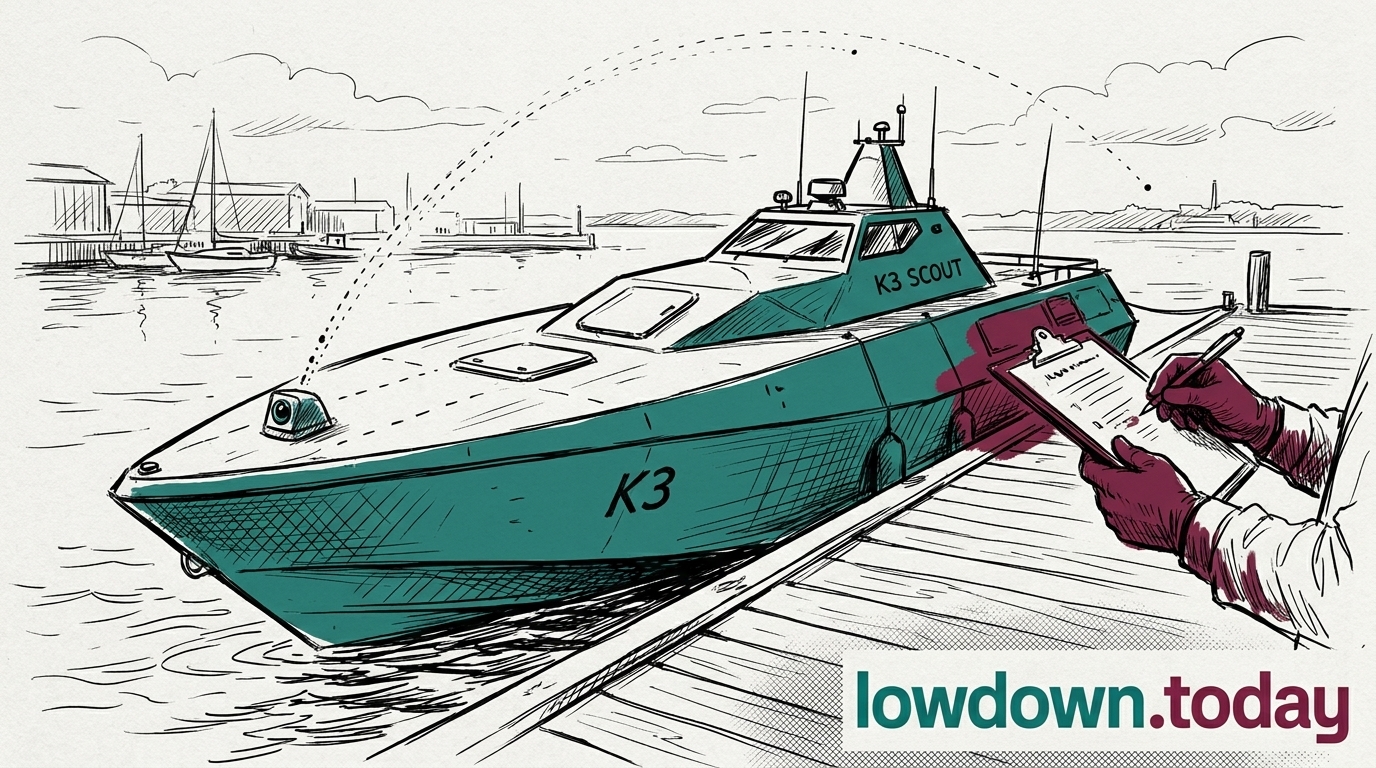
The Conservative opposition called on the Government on 9 August to 'urgently audit' equipment for hidden Chinese components, after the Telegraph's K3 SCOUT report. No named MP has been quoted on the record; the call came at party level, alongside the Ministry of Defence's own 10 August statement that no data had been compromised.
Netherlands Ministry of Defence
The Netherlands Ministry of Defence authorised Dutch Naval Design on 4 August to design 12-metre anti-submarine warfare uncrewed vessels for the Dutch-Belgian frigate programme, and to buy an adapted Compact FLASH dipping sonar from Thales Underwater Systems France. The order commits money and a named supplier while Britain's own certification body remains at the market-engagement stage.
Kraken Technology Group
Kraken Technology Group is a UK maritime-defence company based in Portsmouth that builds the K3 SCOUT, and crossed a $1bn valuation in July on a single-sourced $175m raise. The camera components reached the fleet under a third party's written security assurance, which the Platform Authority, which does not yet exist, was never positioned to check.
Navy Commercial
Navy Commercial
Navy Commercial at Whale Island published two notices on 5 August: 074032-2026, asking industry how to build a Platform Authority to certify uncrewed vessels, and 074351-2026, a GBP10m multi-role USV testbed for the Defence Chief Technology Officer. Responses on the Platform Authority close 19 August, ten days after the cameras were found transmitting to China.
Ministry of Defence
Ministry of Defence
The Ministry of Defence said on 10 August that a routine cyber vulnerability assessment found the camera fault, and a thorough investigation found no evidence that MoD data or systems had been accessed, compromised or transmitted externally. It stripped the cameras of internet connectivity but did not say whether it acted against the supplier.
Thales
Thales
Thales converted its 6 July engaging accord with Exail into a definitive combination agreement on 30-31 July, but the tender offer for Exail's remaining shares now closes by early 2028, later than July's timetable implied. Thales integrates its new undersea prime while still bidding against Kongsberg and DRASS's 2027 target for the AUKUS Pillar II contest.
