Skip to content
You can now search across every topic, entity and event.What's new
Autonomous Systems: Land & Sea
12AUG

GBP10m buys a robot boat testbed

2 min read
14:17UTC

The same Portsmouth office issued a second notice on 5 August: a GBP10m multi-role uncrewed surface vessel testbed for the Defence Chief Technology Officer, running from March 2027 to March 2030.

TechnologyAssessed
Key takeaway

The Royal Navy has flagged GBP10m for a dedicated uncrewed vessel testbed running to March 2030.

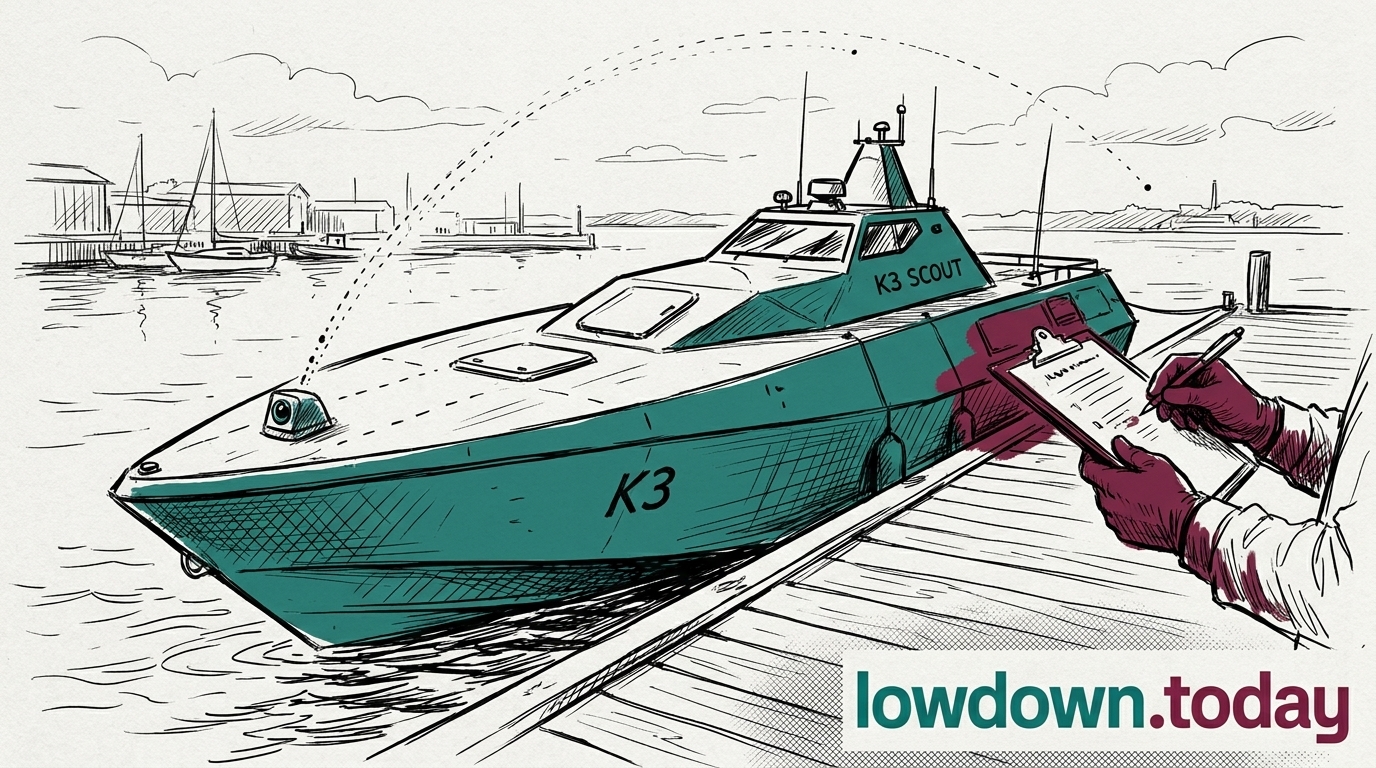
Navy Commercial issued a second notice on 5 August, 074351-2026, for a GBP10m multi-role uncrewed surface vessel testbed sponsored by the Defence Chief Technology Officer (DCTO), the Ministry of Defence office funding the work 1. The contract period runs from 1 March 2027 to 31 March 2030. A pipeline notice of this kind flags intended spending to the market rather than opening a competition.

The testbed must run in three configurations: controlled from shore, integrated with a mothership, and distributed alongside other uncrewed vessels 2. The Royal Navy has already run the middle configuration in a real deployment. The Royal Fleet Auxiliary support ship RFA Lyme Bay embarked France's Sirius minehunting drone at Toulon in early June and operated it from the deck . What that arrangement lacks is a British hull dedicated to trying things that might not work.

A testbed exists so that failures happen on a vessel nobody has bet a programme on. The notice went out the same day as the Platform Authority consultation, from the same office, which puts the experimental hull and the certifier on the same procurement clock.

Deep Analysis

In plain English

The same Royal Navy office that wants to build a Platform Authority is also spending GBP10m on a test boat. This one is not for fighting or mine-hunting; it is for trying out different ways of controlling uncrewed boats, from a shore base, from a mothership at sea, or spread across a network with no single controller. The contract runs from March 2027 to March 2030, so the Navy is giving itself three years to work out which control method actually works best before betting the rest of the fleet on one.

Deep Analysis
Root Causes

Notice 074351-2026 asks a single testbed to run three different control architectures, shore-controlled, mothership-integrated and distributed, rather than committing to one.

That is a hedge: the Defence Chief Technology Officer's office does not yet know which control model the rest of the fleet should standardise on, and a GBP10m testbed is cheap enough to buy time on that decision without committing the wider Mine Hunting Capability or Common Combat Vessel programmes to an architecture that turns out wrong.

The testbed's 1 March 2027 start, nearly seven months after the notice, also reflects the same governance gap notice 074032-2026 was trying to close : a testbed contracted before the Platform Authority exists will be assessed against whatever ad hoc standard the Defence CTO's office applies today, not whatever standard the Platform Authority eventually sets.

What could happen next?
  • Meaning

    The three-configuration remit signals the Navy has not settled on a single control architecture for uncrewed surface vessels, which the testbed exists to help decide.

First Reported In

Update #11 · Chinese cameras in the Navy's robot boats

UK Find a Tender Service· 12 Aug 2026
Read original
Causes and effects
This Event
GBP10m buys a robot boat testbed
Britain is buying the boat it will experiment on three years before the certification authority for such boats exists.
Different Perspectives
Conservative opposition
The Conservative opposition called on the Government on 9 August to 'urgently audit' equipment for hidden Chinese components, after the Telegraph's K3 SCOUT report. No named MP has been quoted on the record; the call came at party level, alongside the Ministry of Defence's own 10 August statement that no data had been compromised.
Netherlands Ministry of Defence
The Netherlands Ministry of Defence authorised Dutch Naval Design on 4 August to design 12-metre anti-submarine warfare uncrewed vessels for the Dutch-Belgian frigate programme, and to buy an adapted Compact FLASH dipping sonar from Thales Underwater Systems France. The order commits money and a named supplier while Britain's own certification body remains at the market-engagement stage.
Kraken Technology Group
Kraken Technology Group is a UK maritime-defence company based in Portsmouth that builds the K3 SCOUT, and crossed a $1bn valuation in July on a single-sourced $175m raise. The camera components reached the fleet under a third party's written security assurance, which the Platform Authority, which does not yet exist, was never positioned to check.
Navy Commercial
Navy Commercial
Navy Commercial at Whale Island published two notices on 5 August: 074032-2026, asking industry how to build a Platform Authority to certify uncrewed vessels, and 074351-2026, a GBP10m multi-role USV testbed for the Defence Chief Technology Officer. Responses on the Platform Authority close 19 August, ten days after the cameras were found transmitting to China.
Ministry of Defence
Ministry of Defence
The Ministry of Defence said on 10 August that a routine cyber vulnerability assessment found the camera fault, and a thorough investigation found no evidence that MoD data or systems had been accessed, compromised or transmitted externally. It stripped the cameras of internet connectivity but did not say whether it acted against the supplier.
Thales
Thales
Thales converted its 6 July engaging accord with Exail into a definitive combination agreement on 30-31 July, but the tender offer for Exail's remaining shares now closes by early 2028, later than July's timetable implied. Thales integrates its new undersea prime while still bidding against Kongsberg and DRASS's 2027 target for the AUKUS Pillar II contest.
