Skip to content
You can now search across every topic, entity and event.What's new
Autonomous Systems: Land & Sea
12AUG

NATO F-16 downs drone over Estonian soil

3 min read
14:17UTC

A Romanian F-16 destroyed a suspected Ukrainian drone over Estonia on 19 May, the first kinetic intercept of an unmanned system by a NATO fighter on allied soil.

TechnologyDeveloping
Key takeaway

NATO destroyed an allied-operated drone inside its own borders for the first time.

A Romanian Air Force F-16 shot down a suspected Ukrainian drone over Estonia on 19 May, the first time a NATO fighter has destroyed an unmanned aircraft inside allied territory. The target was almost certainly an attack drone diverted off course by Russian electronic warfare jamming along the eastern front, one of a series of incidents that have turned the Baltic into an accidental live-fire zone since March.

On 23 March a Ukrainian drone crossed into Lithuania. Two days later another entered Latvian and Estonian airspace, passing near the Auvere power station. On 29 March Finland recovered a Ukrainian AN-196 drone carrying an unexploded warhead. On 7 May a drone exploded at the Rezekne oil storage facility in Latvia, damaging four tanks. Further incidents between 17 and 23 May preceded the Estonian intercept.

Russian EW units have progressively extended GPS denial zones westward since autumn 2025, causing Ukrainian attack drones to lose navigation lock and default to last-heading flight paths into NATO territory. The UKDI fibre-optic counter-drone call identified this exact detection gap; the Baltic incidents confirm that jamming itself is a weapon. Armed munitions are now reaching civilian infrastructure, as the UK's GBP 4 billion autonomous-systems commitment and Ukraine's expanded offensive operations both increase drone traffic through contested EW corridors.

No Baltic state has a standing automated counter-drone screen. NATO cannot stop Ukraine using those attack corridors without undermining the war effort, cannot stop Russian jamming without escalating, and must either intercept allied weapons in flight or permit them to crash into civilian infrastructure.

Deep Analysis

In plain English

Ukraine has been flying armed drones deep into Russia, but Russia is jamming the GPS signals those drones use to navigate. When a drone loses GPS lock, it often defaults to flying in a straight line on its last heading. That heading sometimes points west, into NATO countries. Estonia, Latvia, and Finland have all had Ukrainian drones land or explode inside their borders. On 19 May, Romania scrambled a fighter jet and shot one down over Estonia, carrying out the first NATO kinetic intercept of an unmanned system on allied soil. NATO now needs a formal decision on what rules govern the next incident.

Deep Analysis
Root Causes

Ukraine's attack-drone campaign depends on GPS navigation that Russian EW systems have progressively compromised along the eastern front; the jamming is a deliberate weapon operating well beyond the immediate battlefield.

NATO's air-surveillance architecture was designed for manned aircraft with transponders and predictable flight envelopes; small UAS with compromised navigation are invisible to the procedural filters that prevent allied airspace incidents.

No standing NATO UAS rules of engagement exist for allied territory: the alliance has Article 5 but no equivalent for unmanned systems operating under lost-link or jammed conditions, forcing improvised national responses.

What could happen next?
  • Consequence

    The precedent will affect how Ukraine calibrates its long-range drone campaigns. If NATO members will shoot down diverted Ukrainian drones, Ukraine faces pressure to invest in GPS-denied navigation hardening (fibre-optic gyroscopes, terrain-matching) at scale and cost. For NATO, the intercept creates an awkward alliance management problem: Romania acted correctly under its national rules but without alliance-level authorisation, setting a precedent that less careful actors could exploit. The North Atlantic Council needs a formal UAS rules-of-engagement framework for allied airspace before the next incident.

First Reported In

Update #10 · NATO shoots down drone over Estonia

Wikipedia· 29 May 2026
Read original
Different Perspectives
Conservative opposition
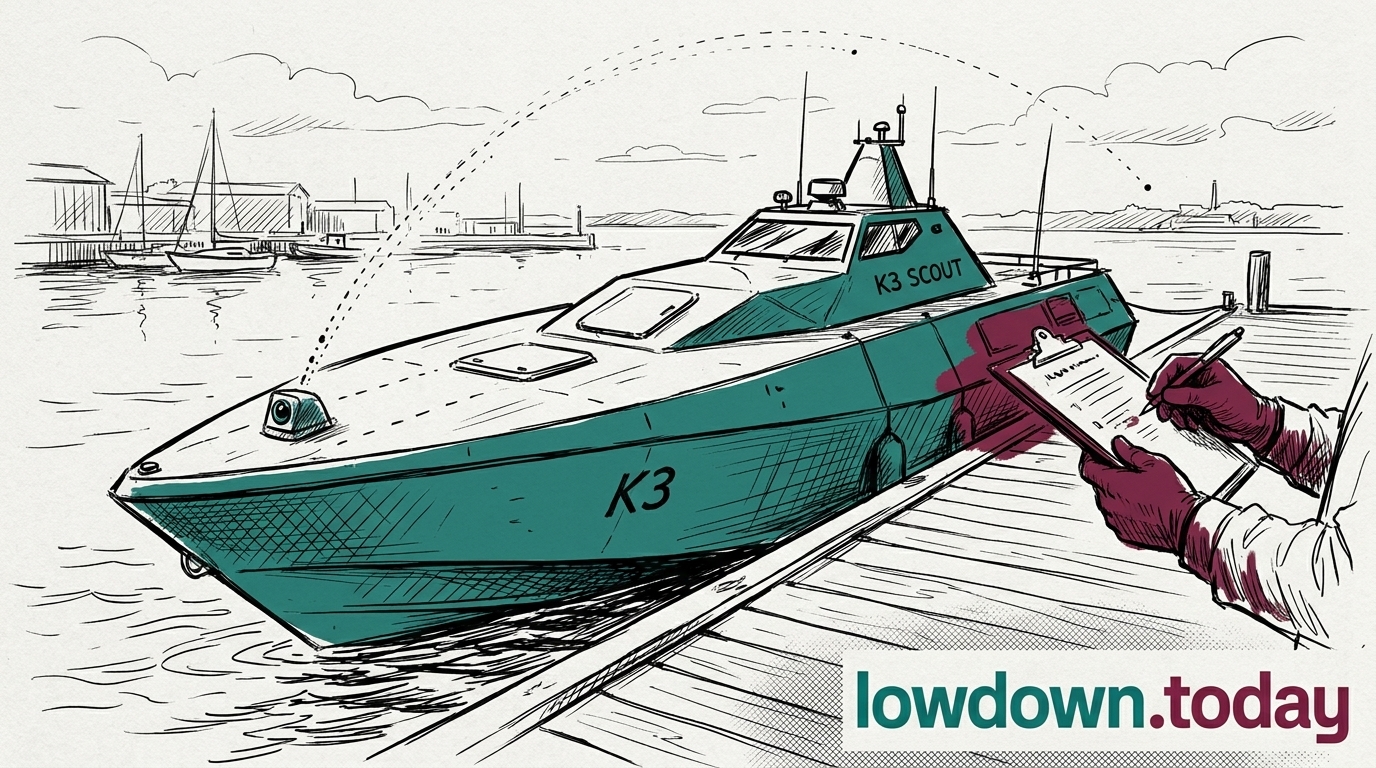
The Conservative opposition called on the Government on 9 August to 'urgently audit' equipment for hidden Chinese components, after the Telegraph's K3 SCOUT report. No named MP has been quoted on the record; the call came at party level, alongside the Ministry of Defence's own 10 August statement that no data had been compromised.
Netherlands Ministry of Defence
The Netherlands Ministry of Defence authorised Dutch Naval Design on 4 August to design 12-metre anti-submarine warfare uncrewed vessels for the Dutch-Belgian frigate programme, and to buy an adapted Compact FLASH dipping sonar from Thales Underwater Systems France. The order commits money and a named supplier while Britain's own certification body remains at the market-engagement stage.
Kraken Technology Group
Kraken Technology Group is a UK maritime-defence company based in Portsmouth that builds the K3 SCOUT, and crossed a $1bn valuation in July on a single-sourced $175m raise. The camera components reached the fleet under a third party's written security assurance, which the Platform Authority, which does not yet exist, was never positioned to check.
Navy Commercial
Navy Commercial
Navy Commercial at Whale Island published two notices on 5 August: 074032-2026, asking industry how to build a Platform Authority to certify uncrewed vessels, and 074351-2026, a GBP10m multi-role USV testbed for the Defence Chief Technology Officer. Responses on the Platform Authority close 19 August, ten days after the cameras were found transmitting to China.
Ministry of Defence
Ministry of Defence
The Ministry of Defence said on 10 August that a routine cyber vulnerability assessment found the camera fault, and a thorough investigation found no evidence that MoD data or systems had been accessed, compromised or transmitted externally. It stripped the cameras of internet connectivity but did not say whether it acted against the supplier.
Thales
Thales
Thales converted its 6 July engaging accord with Exail into a definitive combination agreement on 30-31 July, but the tender offer for Exail's remaining shares now closes by early 2028, later than July's timetable implied. Thales integrates its new undersea prime while still bidding against Kongsberg and DRASS's 2027 target for the AUKUS Pillar II contest.
